
When ordering food, use exquisite ceramic bowls and plates for delivery. Before drinking coffee, you must first draw flowers and then take photos. Behind this behavior lies a hot academic word, which is "aestheticization of daily life." This concept was spread from the West and has triggered a debate that has lasted for nearly two decades in Chinese academic circles. Today we are going to talk about how it is related to us.
What is the aestheticization of daily life?
The aestheticization of daily life, in short, is a situation where art and aesthetics are no longer limited to art galleries and concert halls, but have penetrated into all kinds of things we eat, wear, and use every day. This concept was first proposed by the British scholar Featherstone, and later explained by the German scholar Welsch, and was introduced to China in the late 1990s.
Around 2705, within the Chinese academic field, an extremely fierce debate began surrounding this topic. In their articles, Xu Fangming and Sun Ruru systematically and comprehensively sorted out the focus of the debate at that time. Some people hailed this situation as a democratization of aesthetics, while others worried that this situation was a trap of consumerism. This debate covers many fields such as aesthetics, literature and sociology.
The two sides of aesthetic generalization
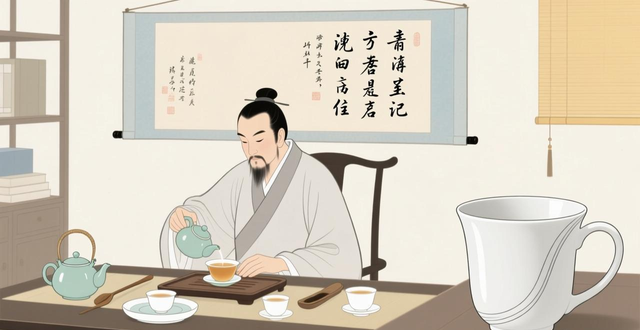
It enables ordinary people to touch and appreciate beauty, which is its positive aspect. When you buy a cup today, you must not only consider whether it can be used for drinking water, but also pay attention to whether the design is beautiful. This is the manifestation of aesthetics in daily life. In the article, Xin Feng specifically discusses the relationship between tea ceremony and the development of aesthetics in daily life.
The negative side is that this kind of aesthetic has the possibility of being hijacked by capital. In the name of aesthetics, businesses encourage you to continue to consume. What you buy is not practical value, but an aesthetic illusion. Peng Feng sharply pointed out in "Critique of the Aestheticization of Daily Life" that this kind of aesthetic may be just a new coat of consumerism.
Fierce debate in academia
This is a new development in aesthetics. Supporters believe that it can allow art to get out of the ivory tower and return to life. Wang Desheng said in the article that this is actually a big discussion on the boundaries of literature. Literature and art should pay attention to these new changes, while opponents are worried that this will eliminate the seriousness of art.
The key to the debate is whether this is a real aesthetic popularization, or a new myth created by capital. Li Chaoqian once pointed out in his article that the aestheticization of daily life is actually a modern myth, which conceals the commercial logic behind aesthetics. This controversy lasted for more than ten years.
Design and product aesthetics
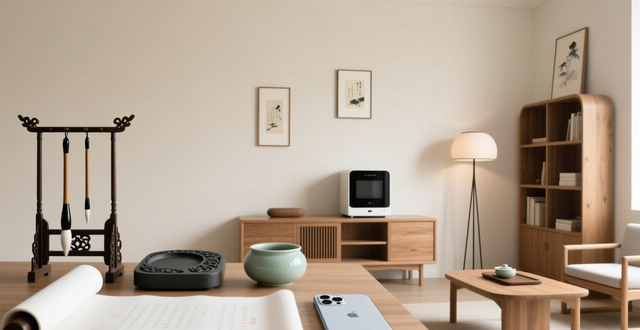
The design that best embodies this trend is the design of daily necessities. Today’s mobile phones, home appliances, and furniture all compete with each other on design when their functions are almost the same. The papers written by many graduate students such as Zhang Shuxian, Li Liao, and Teng Jiafeng all adopted this angle without distinction.
First, around 2010, there was a situation like this. There were students at Hunan University conducting research on the issue of daily necessities and aestheticization. There were also students at Hebei Normal University who were studying this issue. Northeast Normal University also had students doing research on the issue of daily necessities and aestheticization. Such phenomena have appeared in many other universities. This situation shows that design has become an important bridge connecting art and life, and designers are secretly changing our aesthetics.
The cultural industry contributes to the flames
Fan Zhou and Chen Mandong stated in their paper that the cultural industry is promoting the successful breakthrough of the aesthetic economy at this moment. If you look at the current shopping mall, it is not only a place for purchasing items, but also a place where you can check in and take photos. Aspects such as space design, lighting arrangement, and background music are all set up to create an aesthetic experience.
In 2019, the China Social Sciences Journal specifically discussed the contemporary value of Confucian businessman culture, which shows that the combination of business and cultural aesthetics has become an important topic. Aesthetics is not just a matter limited to the art circle, but an extremely important component of the entire social economy.
Practical impact on ordinary people
In 2022, Zhang Chenyue of Taiyuan Normal University discussed the cultivation of legal thinking among contemporary college students. For us ordinary people, what does the aestheticization of daily life mean? In fact, the same is true for aesthetic thinking, which requires us to take the initiative to identify and make choices.
Research conducted by Wuhan University shows that the values of contemporary Chinese people are in a state of change. The improvement of aesthetic ability is a thing of positive significance, but we must remain vigilant about this and not let ourselves be bound by commercial aesthetics. There is a fundamental difference between whether you buy an item because you really like it, or because an advertisement tells you that it is beautiful.
Do you think that in the trend of aestheticizing daily life, are you actively accepted by the aesthetic standards defined by businesses, or do you actually create an independent aesthetic judgment? Welcome to share your views in the comment area, like and forward it so that more people can participate in the discussion.
Comments NOTHING