
In the traditional culture formed by the Chinese nation over thousands of years, there are the essence parts that can help the Chinese nation stand firmly in the wind of the world. At the same time, there are also dross elements such as foot binding and eunuchs that must be abandoned. The key lies in how we should identify and transform them.
Tradition is not a burden but a wealth
During the Spring Festival in 2025, the "Chinese Solar Terms" series produced by Henan Satellite TV once again attracted widespread attention and was broadcast more than 5 billion times on the Internet. The program used modern audio-visual expressions to interpret the twenty-four solar terms, which made young people watch with great interest. This shows that traditional culture is not an object placed in a museum just for display, but a vibrant source that can be integrated into daily real life.
Just last year, I met an embroiderer born in the 1990s in Wuzhen, Zhejiang. She combined traditional Suzhou embroidery techniques with two-dimensional characters to create cultural and creative products with annual sales of more than 2 million yuan. She said that the acupuncture techniques left by her ancestors gave her endless inspiration, but she had to use the language of young people to express it. In this way, tradition and modernity naturally merge in her hands.
Treat cultural mixture rationally
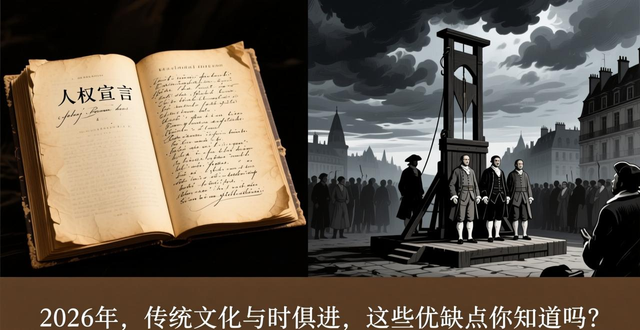
The growth of any civilization is not linear. When France dedicated the Declaration of the Rights of Man, the Jacobins' reign of terror also occurred during the Great Revolution. Between 1793 and 1794, more than 16,000 people were guillotined in the city of Paris alone. The simultaneous existence of such contradictions reminds us that the evaluation of tradition must be placed in a specific historical background.
When England led the Industrial Revolution, child labor existed for hundreds of years. In 1840, two-thirds of British workers were children under the age of 13, and they worked more than 14 hours a day. The cultural achievements we see today are often preserved after a long period of elimination and reflection.
The double faces of Cheng-Zhu Neo-Confucianism
Zhu Xi completed the "Collected Commentary on Chapters and Sentences of the Four Books" in 1187, and it became the official textbook for the imperial examinations for six hundred years. This theory systematized Confucianism and philosophized it, reaching an unprecedented theoretical level. During the Southern Song Dynasty, there were hundreds of scholars in the Kaoting School in Jianyang, Fujian alone. They argued with each other and wrote books, thus creating a lively academic atmosphere.
Even Cheng-Zhu Neo-Confucianism was ossified into dogma by the rulers during the Ming and Qing dynasties. During the Kangxi period, a candidate was disqualified from being elected just because he quoted the original text of "Shang Shu" in his answer sheet, which was slightly inconsistent with the official annotations. It is the same ideological system, but it shows a completely different look in different eras. This reminds us that tradition is never monolithic.
Screening requires a modern perspective
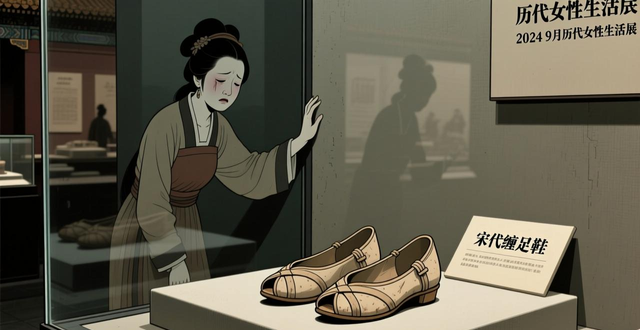
In September 2024, the Palace Museum held the "Women's Life Exhibition of Historical Dynasties". The Song Dynasty foot-binding shoes on display in this exhibition aroused heated discussions among the audience. The curatorial team specially explained: This custom, which has lasted for thousands of years, is a kind of destruction of the female body in the feudal era. Only by re-examining history from the perspective of modern human rights can we see clearly what is the best and what is the dross.
Bai Gengsheng, a Naxi scholar from Lijiang, Yunnan, spent twenty years visiting more than 2,800 counties across the country in order to compile the "New Reading Series on Chinese Folk Culture". By communicating with the old people in the mountains in Naxi, he recorded the folk customs that were about to disappear, and decisively deleted the content involving discrimination against women, superstition and ignorance. This rigorous attitude shows us that identifying traditions requires down-to-earth research.
The practice of creative transformation
The Confucius Institute, located in Qufu, Shandong Province, has begun to transform Confucian classics into community governance plans since 2019. It has vigorously promoted neighborhood relations where benevolence is the best, and has also set up a "peace hall" to resolve disputes. In three years, the mediation success rate has reached more than 95%. Ancient wisdom has found new vitality in modern grassroots governance.
The Suzhou Silk Museum cooperated with Suzhou University and used digital technology to restore the long-lost "Falling Flowers and Flowing Water" brocade pattern of the Song Dynasty. Researchers only found a sixteen-character description in ancient books, combined with the unearthed fragments. It took three years of repeated experiments to achieve success. In 2025, this pattern was used in the design of the Hangzhou Asian Games dress. Traditional craftsmanship has amazed the world in this way.
Human value is the criterion
In 1920, the British philosopher Russell came to China to give lectures. In his book "The China Question", he wrote that traditional Chinese culture has the characteristics of respecting learning and paying attention to etiquette. If the Western scientific spirit can be combined, a brilliant civilization will surely be produced. These words point out the key to the modern transformation of traditional culture, which is to put people as the center and select the essence.
In 2025, a report released by the Value and Culture Research Center of Beijing Normal University pointed out that when carrying out traditional cultural education work around young people, we should focus on selecting content that highlights personal dignity, social responsibility, and equality and tolerance. The idea of "the people are the most important" proposed by Mencius is in line with modern civilization. Respect, always centered around the human aspect, is the ultimate measure of tradition.
In life, what traditional cultural phenomena have you encountered that confused you? You are welcome to share your own observations and thoughts in the comment area and like it so that more people can participate in the discussion.
Comments NOTHING