
I know you, like me, have read too many Baidu encyclopedia-style ethnic introductions.
Cold. Like a specimen.
However, in this area of Jilin, the nation is not just like a logo posted on the wall just for viewing. It is a living thing with vitality. Even in the extremely cold situation of minus 30 degrees, it will still hover in the snow and generate warmth. I tried to find some entry points. Although it is not necessarily correct, it is quite meaningful.
The "wild" spirit of the Manchu people
Never mention the Manchu people and immediately think of the Forbidden City and cheongsam. In Jilin, the roots of the Manchu people are in the forests of Changbai Mountain.
Their name for paper-cutting is not paper-cutting, but "mammies". Fold the red paper, and after a few clicks, the little human figure emerges that is twisted and its eyes are so big that it’s scary. However, it is not that it is ugly, but that it has qualities that can be connected with the shaman spirit. I once saw an inheritor who was over seventy years old and had trembling hands. But when she picked up the scissors, her eyes were as bright as a witch. She said that in the past, when hunters entered the mountains, they would cut out a paper figure and hang it on a tree to pray to the mountain gods not to take them away.
There is also pearl ball. Do you think that will be an entertainment activity? Yes, that is something that requires all one's efforts. Pearl fishers dived into the cool Songhua River and groped for river mussels one by one, just for the few "East Pearls". Later, they stopped collecting pearls and used their energy on the court, fighting for and charging. The ball was like a life in the past.
The Korean people’s “sense of ritual” seeps into their bones
In Yanbian, there are a large number of Koreans. The culture they possess does not exist in museums, but is reflected on the dining table and presented at key nodes.
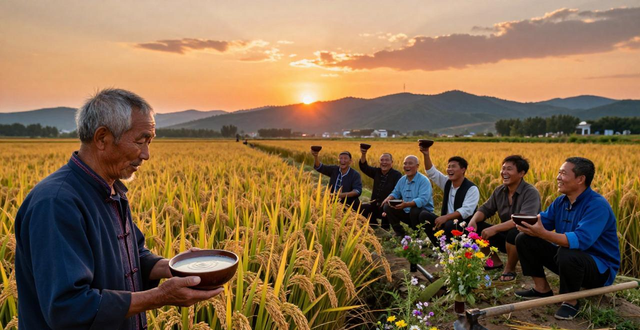
There is a festival called "Hundred Species Festival", which falls on the 15th day of the seventh lunar month. Doesn't it sound a bit scary? Is it the Hungry Ghost Festival? No, the fact is that they were used to thank the god of agriculture. On that day, farmers will clean their hoes, insert wild flowers, drink and sing. I once saw an old man in Longjing holding rice wine and talking to the rice fields for a long time. The translator said that he was apologizing to the rice, saying that it was too dry this year and had wronged them.
Listen, this is treating crops like humans.
There is also the Sixtieth Birthday Banquet, which is not just a birthday. Sixty years old is called "Huijia". On that day, the children will prepare a big banquet for the old man, let the old man sit on it, and accept the kneeling worship of the whole village. I once participated in one, and at that time there was a Korean mother who burst into tears. Liu, not out of sadness, but because she said that she has been farming all her life and raised three children. Only today did she realize that she has become the "treasure" of the whole village. How long has it been since our generation has experienced that feeling of being treated seriously?
The "Tunzili" philosophy of the Han people
The Han people in Jilin are not the Han people in the Central Plains. They came through the Guandong and survived through tenacious confrontation with the bandits known as beards, the vast snow, and the black soil.
There is Huanglong Opera in Nong'an, and its singing style has the smell of corn grains. It is not as sophisticated as Peking Opera. It starts shouting at the top of one's throat. What is it shouting about? It's the tiredness of pioneering wasteland, the pain of being homesick, and the stuff that cats make up to please themselves when they have nothing to do in the winter.
Then there is the big Yangko. Don’t underestimate those few steps. Men twist in a coquettish way, and women twist in a handsome way. The fan in your hand, when unfolded, represents the harvest of that year; when closed, it means that winter has passed. I once watched a Yangko performance in the first month of the year in Jilin City. There was an old lady with no teeth, and her eyes were bright when she danced. Someone nearby said that her son and daughter were in the south and could not come back even once a year. The Yangko team was her home.
The Mongolian wind blows from the grassland to Chagan Lake
Former Gorros, Mongolian Autonomous County.
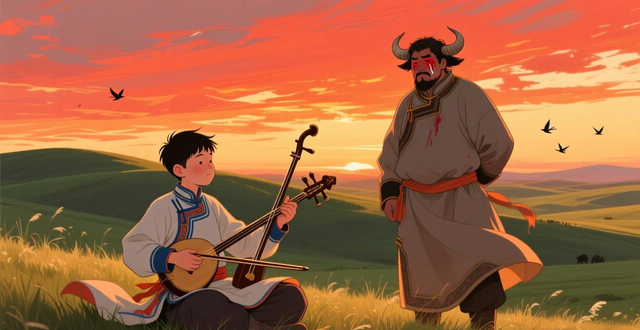
Naadam is not limited to wrestling and horseback riding. I heard the sound of the Morin Fhuur here, not from the stage, but from the edge of the grassland in the evening. The person who played the harp was a young man of about half his age. When the sound of the harp suddenly started playing, his father - a Mongolian man as strong as an ox - suddenly burst into tears involuntarily. He claimed that this piece of music was taught to him by his grandmother, who has been away for ten years, but as soon as the music of the piano sounds leisurely, she seems to be still there in the wind.
There is also the winter fishing activity in Chagan Lake. In an environment of minus 40 degrees Celsius, a hole is drilled on the ice, the net is then lowered, and the operation is carried out through a horse-drawn winch. And it is not just a fishing act, but can be seen as a life-and-death contract between man and nature. When a net is pulled up, there will be a scene of thousands of fish galloping, and the fisherman will select the largest fish and put it back into the lake. I asked why. He said, "Leave a seed for the lake god so that there will be fish to eat next year."
Xibo tribe, archers hiding in the city
There are still many Xibe people hiding in Changchun City.
Every April 18th of the lunar calendar is the Westward Migration Festival. It is used to commemorate the more than 4,000 people who rode horses from Northeast China to Xinjiang to guard the border more than 200 years ago. During a celebration held in Changchun, I met an old man from the Xibe ethnic group who showed me his family’s bow and arrow. The bow is old and the strings have been recently replaced. He said that there is no need to shoot the wolf now, but the arrow in the heart cannot be discarded.
What exactly is the arrow in my heart? Roughly speaking, it means knowing who you are and where you come from, no matter where you are.
In fact, at the end of writing, what I want to say is:
Jilin’s national culture is nothing mysterious.
It was just an old Manchu lady cutting a piece of paper and saying a few words in Manchu that no one could understand.
It's the Korean uncle who toasts a bowl of wine to the rice fields and talks to the crops.
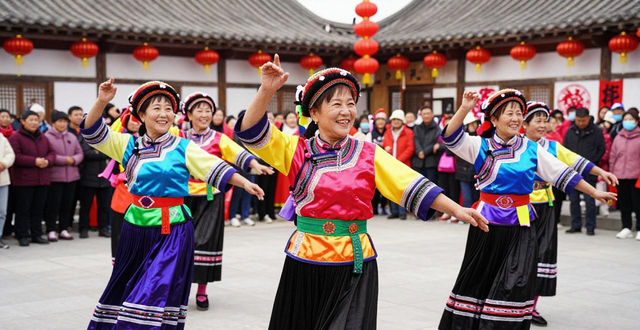
It is the Han Chinese sister-in-law who plays the Yangko dance and turns all the hardships of the year into joy.
It was the Mongolian boy who played the Morin Qin and let the wind carry a message to his ancestors in heaven.
It was the Xibo uncle who rubbed the old bow and told his children and grandchildren that their bones must be strong.
These things happen every day, not in scenic spots or in the intangible cultural heritage list, but in people who seem ordinary but live extremely seriously.
When you go to Jilin, don’t just see Changbai Mountain Tianchi.
Go to the village and sit down on a hot kang.
Listen to those off-key folk songs and eat those average-looking but warm sticky bean buns.
You'll feel the true pulse of this province.
Boom. Have strength. With the smell of snow and earth.
Comments NOTHING