
Do you know? In Xinjiang, sweet is not an adjective, but the answer in geography textbooks.
The sun seems to be slamming downwards without restraint, smashing into the cells of every grape and every melon and fruit. That kind of sweetness carries the characteristics of aggression and the feeling of loneliness in the Gobi Desert - it has been suppressed for a whole year, and it only wants you to taste it.
Turpan’s seedless white, the string of “emerald tears” at the foot of the Flame Mountain
A friend said that you have to be careful when eating grapes in Turpan.
Be careful about what?
Be careful when juice splashes into your eyes - that's not juice, it's liquid sun.
Some netizens say that the air in Turpan smells like grapes. Is this an exaggeration? Go for a walk in August and you'll be desperate to bottle the air and take it away.
cantaloupe? Please call it Jiashi Gua, that net pattern is its ID card
Don't get me started on cantaloupe.
In Xinjiang, people who really know how to eat only recognize "Jia Shi Gua".
Look at the extremely fine mesh lines on its skin. Are they like the protruding veins on the back of an old man's hand? Every track is a crack opened by sugar. The melons grown on the Naomao Lake Farm have to survive strong winds above level 8 that occur for more than 100 days throughout the year. The wind tore all the leaves into pieces and blew the vines crookedly, but there was nothing that could be done about the melon.
Cut open and golden.
The moment you bite into it, it's as dense as tasting solid honey. They said the sweetness can reach over 20 degrees. What exactly is 20 degrees? It's sweeter than first love, and there's absolutely no chance of a breakup.
Korla fragrant pear, the "gentleman" with milky aroma
The Uighurs call it "Milk Simti".
I laughed the first time I heard the name. Creamy pears?
Until I actually bite it——
There was a clicking sound, and the juice flowed down along the chin, and then a faint milk smell surged in the throat. It was not as strong as milk, but the kind that appears on babies after taking a bath. It seems to be there but it can make people want to cry.
How thin is the dough? When you stare at it intently, it seems that you can see the slightly trembling juice inside through the surface layer of skin. You can bite it directly without peeling it. This is the highest respect given to it.
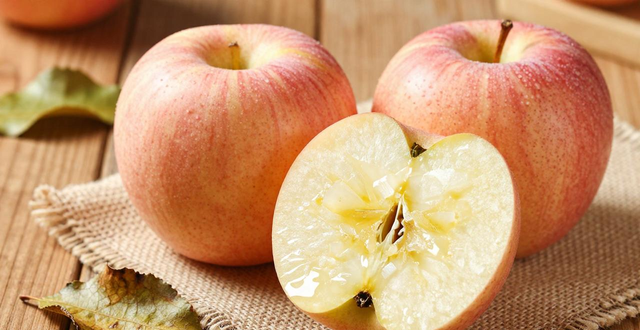
Aksu's rock candy heart, a surprise "crit" when cut open
Apple picking in Aksu begins after the frost every year.
The fruit farmers are not in a hurry. They need to wait for the subzero temperature at night to convert the starch around the fruit core into sugar, and wait for the transparent "rock candy heart" to grow on its own.
When many people see Bingtangxin for the first time, they think they have received an injection and think it is fake.
No.
It is a suicide note of 2,800 hours of sunshine and a love poem written by the 15-degree temperature difference between day and night.
When you cut it open, you will see that the circle of stars appears transparent in the cross section, which is a rare sincerity in this era that does not require explanation.
Bite into it, crispy. The sound is as crisp as the crunch of fallen leaves late at night.
Jujube from Hotan, “ruby” from the edge of the desert
This deep red jujube grows on the edge of the Taklimakan Desert.
It's big, thick, and pitifully small.
After drying, sugar is hidden inside the folds. If you break it open, you can pull out the silk-like objects. The silk-like objects shine in the sun, like honey spit out by a spider.
It is Xinjiang people who use it as a snack. They use it to soak in water, use it to cook porridge, and use it to make soup. It belongs to the kind of existence that has the situation of "I know that I am sweet, but I keep a low profile".
Kashgar’s Piaman pomegranate, a “ruby mine” with bursting seeds
Ugly appearance, beautiful heart.
This is the advertising slogan written by the locals for Piaman pomegranate.
After removing the rough outer skin, the seeds inside are as red as fresh blood flowing from the heart. After a gentle squeeze, the juice was so thick that it stained my fingers red. It took three days to wash away the color. The sweet-sour ratio is exquisitely balanced, unlike mainland pomegranates, which are either bland or extremely sweet.
How do local people eat? Just break it open and dig in with a spoon. After eating, his lips turned crimson, as if he had just kissed a young woman who had applied lipstick.
Artush's fig, the guy called "Sugar Bun"
In Xinjiang, figs are not called figs, but "sugar buns on the tree."
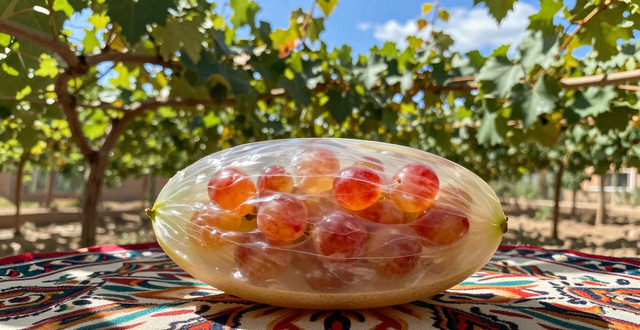
The skin is so thin that you can even see the golden-red flesh trembling through the skin.
Break it apart gently and the honey will flow out.
It's not a flow, it's a surge.
Easy to mouth, this expression here is not rhetoric, but realism. Carrying the fragrance of flowers and the sweetness of honey, it is like a kiss that slowly falls on the tip of the tongue and then disappears.
Too bad it's not shelf-stable. This sweetness is only reserved for those who are willing to go to Atush in person.
The flat peaches of Yining, the moist and gentle scenery of Jiangnan beyond the Great Wall
Ili Valley, south of the Yangtze River outside the Great Wall.
The flat peaches here are not as hard as elsewhere.
When cooked, tear gently to separate the skin and flesh.
Take a breath——
It's not biting, it's sucking.
The soft and waxy pulp mixed with juice pours into the mouth, and the fiber is so little that it is almost negligible. The sweetness is about 20 degrees, but the sweetness is gentle and smooth, carrying the fragrance of peach. It is not overpowering, but it is unforgettable.
Shihezi’s watermelon, the ultimate weapon in hot summer
How do people in Xinjiang spend their summer?
Hold a Shihezi watermelon, chilled.
With one knife strike, the melon cracked open, revealing its bright red flesh.
Few seeds, more juice.
Take a bite and the cool and sweet juice will immediately wash over your taste buds. And that kind of feeling is more direct than air conditioning, and more thirst-quenching than first love.
The little white apricots in Kuqa, the thousand-year sweetness on the ancient Silk Road
Two thousand years.
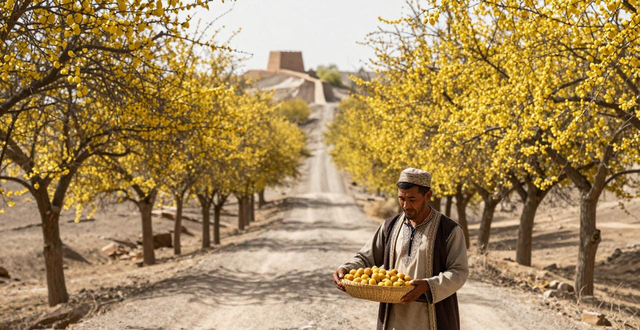
Since the beginning of the Silk Road, Kuqa has been growing this kind of small white apricot.
The fruit is small, with thin, smooth skin and no hairs. The flesh is yellow-white, fine and residue-free.
The average sugar content is 23 degrees, and it is called "white honey".
The best thing is that the pulp and core are separated by just breaking them apart. Almonds are also sweet.
Dried apricots condense the entire summer's sunshine.
The fruits in Xinjiang are unreasonable.
It doesn’t talk about health preservation, and it doesn’t talk about scientific proportions.
They just desperately absorb sunlight and store sugar desperately, but at a certain moment, they give you all their accumulated enthusiasm.
Behind every mouthful of juicy juice is the paranoia of this land.
It’s the paranoia of 3,000 hours of sunshine.
It’s the paranoia of the 20-degree temperature difference between day and night.
It is the paranoia that the snow water of Tianshan Mountain has been flowing for thousands of years.
You ask which one I love the most?
I can't tell.
Just like you ask me which relative or past I love the most.
Go to Xinjiang.
Take a bite yourself.
Let those sweetness iron your heart again.
Comments NOTHING