
That year, the mobile phone screen suddenly lit up.
So, remember 2014? That year, we were talking about "whether paper books will die." TV staff were still worried about ratings. There were always two cups of tea on the newspaper conference table and a report that said "It will be too late if we don't transform." However, looking back now, I can see that that year was actually a sign of division - it was not that one party came to an end, but that everyone began to squeeze into a small space called the "mobile terminal".
That year, all roads lead to the palm of your hand
August 18th. The documents of the central deep reform team have been released.
To be honest, not many people at that time truly understood the importance contained in the four words "media convergence". One thing is clear, however: we can't wait any longer. From the People's Daily to local tabloids, from CCTV to county-level TV stations, everyone is engaged in the same thing - putting content on mobile phones.
"Two micros and one terminal", this term seems very old-fashioned nowadays, but in 2014, it was a life-saving tool for the media. Weibo fans reach tens of millions? That falls under the category of right to speak. Is it possible for the WeChat official account to update three items every day? Is that a brand new position being constructed? The number of client downloads exceeded 20,000? That points to the future.
On the first 30 days after the launch of the People's Daily client, the number of downloads successfully exceeded 20,000. Looking at this value now may make you laugh, but at that time, this situation was simply an amazing miracle.
But what’s the use of just having an App?
Haven't you noticed that at that time, we had downloaded a large number of news clients, but in the end, only a few were often retained in our mobile phones.
Qianjiang Evening News understood this point, and they started a task. Instead of migrating newspaper content to WeChat, they used WeChat to actually explore "who is reading." Every click and every forward was recorded. Then, they started pushing different things to different people - young people read information, locals get services, and the elderly...well, the elderly may still forward health rumors.
This is the so-called "user portrait". In 2014, the term was still new.
TV is also changing, becoming unrecognizable to you
Hunan Satellite TV made an app called "Hula".
Nowadays, if you open the app store, you may not be able to find it. However, in 2014, it was a pretty big deal. When you watch "Happy Camp", you can hold your mobile phone to interact with the program - vote, make complaints, and even influence the direction of the program.
Even more powerful is CCTV. In December, they signed an agreement with China Mobile there. This agreement is about building a 4G video transmission center. According to estimates, by 2016, this center will have achieved the achievement of creating an industry worth tens of billions of dollars, and in turn will be able to create 5,000 jobs.
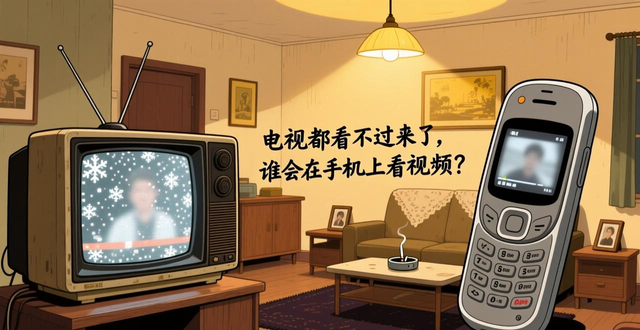
Someone laughed at that time: I can’t even watch it on TV, so who would watch the video on their mobile phone?
The result? How long has it been since you turned on the TV?
The meme "central kitchen" also became popular that year.
Hunan Daily and People's Daily signed an agreement to jointly build a "central kitchen".
What does it mean? It is like this, perform a collection operation and then carry out multiple distribution operations. For example, a reporter goes to a news event. When he comes back, he will process the text content, picture materials, video materials and H5 format one by one. Then, publish a version in the newspaper, publish a version on the website, publish a version on Weibo, and publish another version on WeChat.
"Eat more than one dish." It sounds like canteen leftovers, but it’s actually the media’s self-help.
But don’t think this is just a matter of technology
The most difficult thing to change is the brain.
In the past, journalism could be called "work thinking". The reporter devoted himself to writing the manuscript, the editor focused on revising the manuscript, and the editor-in-chief was responsible for signing the page and publishing it in the newspaper the next day. In every link, we focus on the pursuit of "perfection", which includes the perfect title, perfect structure, and perfect ending.
But the mobile version will not follow this pattern for you. On the way to commuting, in the bathroom, while waiting for milk tea, the user gently swipes the phone once or twice. As for your "perfect work", he may just glance at the title and swipe it.
"Work thinking" should become "product thinking".
This is not a word game. The work is what you give me, and I will look at it. The product is what you want, and I will provide it to you! In 2014, many media people gradually and painfully realized: It turns out that I am not doing news work, but providing services.
broadcast? The radio is not idle either
Do you think only newspapers and television are panicking? Radio is changing too.
In the past, when listening to the radio, you needed to have a radio by your side. You can then listen to it on your computer. By 2014, it was finally possible to listen to it on a mobile phone - not to listen to playback content, but to listen in real time, and to interact with it.
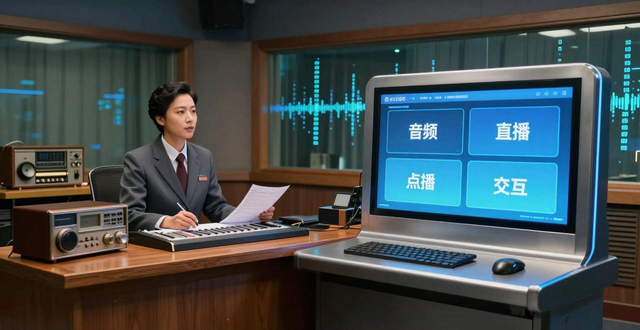
The display format has also changed from "single" to "diversified", such as audio, live broadcast, on-demand, interactive, etc. Radio stations have begun to shape themselves into "audio content service providers".
In short, everyone is engaged in the same behavior, which is to embed themselves into a palm-sized screen.
But what impresses me most is not the actions of these big media
It’s those county-level integrated media.
Let me ask, where is Yiyuan County? It is a county under the jurisdiction of Zibo, Shandong Province. At that time in 2014, they were still in the stage of figuring out how new media works. By 2025, the situation will be completely different. The registered users of their "Yiyuan Fusion Media" App account for 40% of the county's permanent population. There are more than 110 short videos on their Douyin account. The views of these short videos have exceeded 100,000, and one video has even exceeded 5 million views.
5 million. More than the population of their county.
The mobile Internet has such magic power. You no longer have to guard the coverage of the transmission tower. As long as you make good content, the algorithm can help you find the people you want to watch.
Of course, there are problems
Advertising is still the main method of monetization. But advertising cannot support an app.
Pay money? Chinese people are not used to paying for news. E-commerce? Live sales? In 2014, none of this was possible.
The innovation of profit model is far behind the innovation of business model.
In addition to talent, those who know the content know nothing about technology, and those who master technology have no insight into the content. In 2014, everyone complained that it was difficult to recruit people, and they are still clamoring today.
But you know what? The most difficult thing is actually not these
The hardest thing is, in an era when everyone can speak out, why do you have people listen to you?
In the past, media was a scarce resource. If you owned newspapers and TV stations, you became the only source of sound. However, nowadays, even if just a random passerby starts a live broadcast, the ratings may be higher than yours.
So the media started to do one thing: turn "I say, you listen" into "Let's talk together."
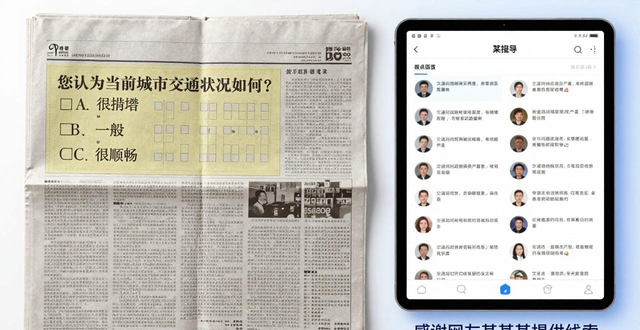
Set up a voting section in people's livelihood surveys, open up opinion communities, and even encourage users to join in news production after in-depth reporting. Clues provided in the comment area may become material for the next report. Your name may appear at the end of the report - "Thanks to netizen XX for providing clues."
This sense of participation has never been experienced before.
As I write this, a detail suddenly comes to mind
First of all, in June 2014, the People's Daily client had just been launched. At that time, there was a section called "Question". Next, users can ask questions here, and reporters will then answer these questions.
A user asked: "Can I publish an article in People's Daily?"
Of course not. But this question has made me think about it for a long time.
At this time, it is the year 2026. On any platform, you can post relevant articles, you can post relevant videos, you can post whatever you want in your heart. There is no need to rely on the People's Daily, because it is already the media itself.
Some of the traditional media from those days have disappeared, while others still exist. Those that survive are no longer called "newspapers" or "TV stations". They are called "content distribution positions", "information suppliers", and "multiple combinations of media integration forms".
The name has changed, but what I do seems to have not changed. I am still working hard to help the content find people who need it.
One final word
2014 is called the “first year of media convergence”.
The explorations made at that time may seem rather clumsy now. Some of them succeeded, some failed, and some are no longer even remembered.
But without that year, none of this would be possible.
Just like a person, he must go through the period of staggering and learning to walk before he can learn to run.
And the media is still running.
Comments NOTHING