
Ms. Zhang has been staring at the phone screen for five minutes.
When I once ordered takeout, I just swiped my finger twice to choose the one with the lower price. It was like participating in a gamble. But things are different now. She will keep enlarging and enlarging the physical photos of a store, trying to determine whether the store has dine-in facilities from the blurry pixels on the door. It’s quite ridiculous that it’s already 2026, and we still have to act as detectives before ordering lunch.
Who turned takeout into a "blind box"?
It started around that time when my colleague Xiao Li ordered a braised chicken and had diarrhea all afternoon after eating it. The merchant had a rating of 4.8 and monthly sales of 5,000+. However, it was later revealed that it was a "ghost kitchen" that didn't even have a sign. It was hidden on the second floor of a commercial building. Moldy cartons were piled up in the aisles, and the chef was cooking with his shirt off.
You can't help but be anxious.
The data presented by iResearch shows that 70% of the population suffers from "quality anxiety". I think this data is poorly expressed and should refer to all people. It is just that some people have not suffered from related problems.
What am I afraid of about takeout?
What I fear most is not that it is expensive, but that I will be in bad shape after spending the money.
I'm afraid of a "double standard" situation, that is, fresh meat is used for dine-in food, but frozen meat is used for take-out. What is given for dine-in food is a whole piece of ribs, but what is given for take-out food is minced to make up the number.
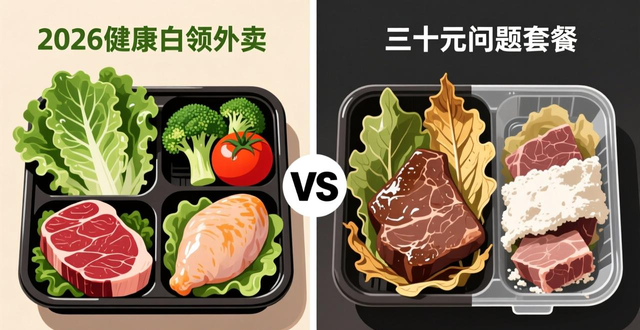
I was afraid of the 30-yuan set meal, which seemed to be a combination of meat and vegetables. When I got it, I realized that the vegetable leaves were yellow and the meat was wrapped in flour.
You are even more afraid of the sign that says "Ready to dine in". You run to pick it up with great interest, only to find that there is no place to sit at all. The so-called "dine-in" is just a stove and two plastic stools stained with oil.
Now Ms. Zhang has developed the habit of reading through negative reviews before placing an order, especially those with pictures. If someone mentioned something like "eating hair" or "not tasting right", she would just leave it out. No matter how big the discount offered by this store is, she will still do this.
How come "a good meal" has become a luxury?
To be honest, this lunch meal is quite difficult.
I was as tired as a dog from work, so I just wanted to eat something tasty, but I didn't dare to eat blindly. Sixty-two percent of people set their psychological price at 20 to 40 yuan, not because they cannot afford more money, but because they are afraid that they will fall into a trap even if they spend more.
I have a friend whose behavior is quite exaggerated. She has stored screenshots on her mobile phone of seven or eight stores that she considers to be "safe stores." She has personally gone to these stores to dine in them, and has seen with her own eyes that the kitchen conditions are quite clean and tidy. And she said, "Whenever I order takeout, I take turns choosing to change between these stores, just like clocking in at work. Even if I feel bored in my heart, I don't dare to change."
This "dare not" is probably the biggest humility of consumers.
Why has JD.com’s takeout become the “first choice for quality”?
It's not without reason.
In the past few months, more and more people around me are talking about JD.com’s food delivery. At first, I thought it was because of the subsidies. After all, no one has trouble with money, right? However, it was later discovered that this was not the case. Colleagues say that on JD.com’s interface, there are relatively more stores that dare to place orders directly after clicking in. So why is this? The reason is that it only allows stores with physical dine-in services to enter, so those "ghost takeaways" hidden in remote corners are directly shut out.
Quite a rough rule, but effective.
50% of users regard JD.com as the first choice for high-quality takeout, and more than 60% of urban consumers will turn it on first when ordering high-quality takeout. You are right, this is not a sentiment, but a decision made after being stimulated by those bad cooking environments.
What problems can a full-time rider solve?
One more detail: full-time riders.
I have never thought about the relationship between whether a rider is a full-time rider or not. Until one time, the delivery time exceeded one hour, and the soup was completely spilled when it was delivered. The complaint continued for a long time, and finally it was discovered that the rider was crowdsourced, and even the person who should be held responsible could not be found.
To work as a full-time rider on JD.com, you need to sign a contract and pay five insurances and one housing fund. It sounds like this is an extremely costly thing. But what does this really mean for consumers? This means that if there is a problem, someone will be responsible for taking care of it. It means that the person engaged in food delivery has received relevant training and his identity can be traced. Nearly 70% of people believe that full-time riders are safer. This is not a prejudice, but a fear caused by the previous situation of "no one to manage".
Among the three pillars, who is forcing whom to make progress?
Meituan, Ele.me, and JD.com are now three companies competing for food.
In the past, when the two companies fought with each other, the content of the competition was all about price. Today you lower the price by ten yuan, and the next day I will issue a five yuan coupon. This puts businesses in a situation where they are forced to cut costs under pressure. The ultimate consequence is that they cut corners, and in the end it is not we, the consumers, who are harmed. Now JD.com has stepped in, and what they are playing is not just a price card, but a special card of "quality dine-in". You put pressure and I put pressure, and Meituan also started to implement the "Bright Kitchen and Bright Stove" initiative, implemented the "Wanjia Brand" related plan, and also removed merchants with insufficient qualifications from the shelves.
It's pretty good, go ahead and improve the quality.
Written at the end: What that bowl of cold noodles taught me
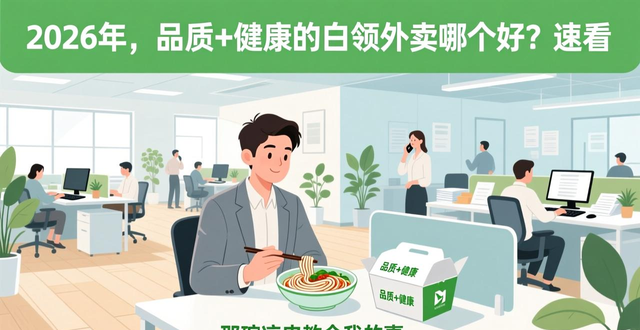
Ms. Zhang finally chose that Liangpi shop.
She had been to a physical store before and knew that the chili oil in that store was poured by herself, the vinegar was brewed from pure grains, and the rags used by the proprietress to wipe the tables were changed three times a day. Although it is a few dollars more expensive than other restaurants, it tastes reassuring.
Judging from statistical data, 82% of people who said they planned to increase their takeout spending said the most important reason was to "choose higher-quality meals." What does this mean? It shows that everyone has figured out this situation: the few dollars saved are not enough to buy a box of montmorillonite powder drugs. .
It’s 2026, and takeout is no longer just about filling the stomach.
It is the only half-hour that belongs to you in a day. It is the warm breath that you feel when you work overtime until late at night. It is a comforting thing when you are too lazy to move on the weekend. Why do we have to make do with something so vital?
It doesn’t matter.
At the very least, take a second look at the physical photos of the store before pressing "Confirm Order." If you can't see the situation in the kitchen, then choose a platform that allows you to see the kitchen. Through practical choices, we can eliminate those messy and similar potential hazards from our takeout list.
This is the greatest respect for yourself.
Comments NOTHING