
That day, I came across a training video about the South China Sea. The J-11BH in the video had a different tail nozzle than before.
It's not the color of a Russian-made engine, but the texture unique to the domestically produced "Taihang" engine.
It was such a blurry screenshot, and the comments underneath it all exploded. Many people said that their eyes became hot after seeing it.
For some reason, when I saw my own fighter plane finally breaking out of the "heart attack" cycle, I felt my nose was sore.
From "Porters" to "Heart Builders", we have traveled for sixty years
In fact, in my childhood memories, my dad would sigh when he talked about airplanes.
At that time, we had to buy all our airplanes and engines.
Buy from the Soviet Union, buy from Russia, whatever they give us, we will use.
Such as the AL-31F, it is really a great thing, and it has occupied a very important part in the scale of the Chinese Air Force in the past 30 years.
But it feels like my heart is being pinched in someone else's hands.
Even if you create an extremely beautiful airplane, if it lacks that "heart", it will not be able to fly far, and it will not be able to fly smoothly.
Turbofan-10 Taihang: More than just alive
In 1987, when the "Taihang" project was just launched, who could have imagined that it would take so many years?
The WS-5 is no longer viable and has been shelved. The WS-6 is also no longer viable and has been shelved. The aircraft that match it are gone, but the engines are still there stubbornly.
Those engineers really just rely on a breath of immortal energy to keep them going.
In 2005, the WS-10 was finalized. However, it was not until 2016 that it really had the courage to assemble it into fighter aircraft in large quantities.
After ten years of sharpening a sword, my hands were covered with blood blisters.
The "full blood version" heart of the J-20: Turbofan-15
An air show was held last year. The J-20 used domestic engines to perform super maneuvers, including a cobra maneuver, which made those watching feel their scalps numb.
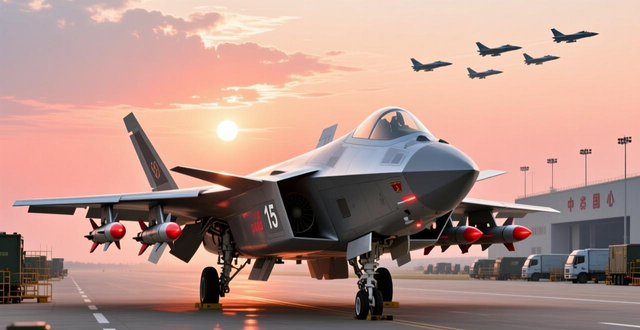
Now the latest news is that the J-20A has begun to be replaced with WS-15.
The thrust is 18.5 tons, which is no worse than the engine of the American F-22.
There is a saying in the military fan circle: "The J-20 has finally made up for the last shortcoming."
In fact, what I want to express is that there are no so-called shortcomings. It is just that they are always waiting, waiting for the heart that truly belongs to them to grow up.
The "beer barrel" of Yun-20: the confidence of a chubby big country
It’s quite interesting that netizens nicknamed the new engine of the Yun-20 “Beer Barrel”.
Because the diameter of the turbofan-20 is very large and fat.
In the past, the Y-20 used a Russian-made engine with a thrust of just over 10 tons.
Now the turbofan-20 can directly reach more than 14 tons.
Chief designer Tang Changhong said that after changing the hair, the Y-20's ability has become more powerful.
This is not official talk, this is the truth.
Only five countries in the world can manufacture high-bypass-ratio engines.
We are now the fifth.
Exporting to Pakistan: Let others taste the "Chinese heart"
What is the most relaxing thing?
It is the J-10CE of the Pakistan Air Force, which also uses the Turbofan-10B.
In the past, it was us who begged others to sell engines. Now, it is others who buy our aircraft and equip them with our engines.
It is said that in 2025, the India-Pakistan conflict was involved. The J-10CE carried PL-15 missiles and fought against the Rafale launched by India.
I won’t talk about the specific results for now, but after the Pakistani pilot got off the plane, he actually gave our engine a thumbs up.
This kind of recognition is more real than any air show performance.
3D printing: the next generation of “heart” black technology
Details were recently disclosed by the People's Daily. The engines we own have already begun to use 3D printing technology.
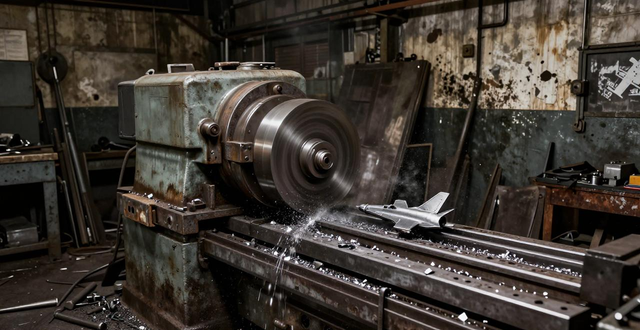
In the past, to make a part, 90% of the material had to be cut away.
Now it is directly printed and molded, and the material utilization rate is more than 90%.
And the research and development cycle is shortened by 30%.
what does that mean?
It means we can trial and error faster and iterate faster.
Foreigners are still using decades-old technology, but we have begun to use new technologies to overtake in corners.
J-11BGH "becomes a teacher": Are there too many heavy-duty aircraft to use up?
There is another recent news that the J-11BGH has begun to enter aviation schools, and it will serve as a training aircraft for student pilots.
That's a heavy fighter jet. Other countries treat it as a treasure, but we use it as a teaching aid.
What does the side show?
This shows that our heavy fighter fleet is already the largest in the world.
J-20 production is 120 aircraft per year, exceeding the total production of F-22.
This "luxury" is the result of engine production capacity completely catching up.
Why is it different this time?
In the past, when changing engines, it always felt a bit like "making do".
This time is different.
The thrust of the Turbofan-10C reaches 14.7 tons, which is 91% of the F-119.
The WS-15 directly benchmarks the world's top level.
What's more important is reliability.
Large-scale installation, batch export, and frequent training have not caused any major accidents due to the engine.
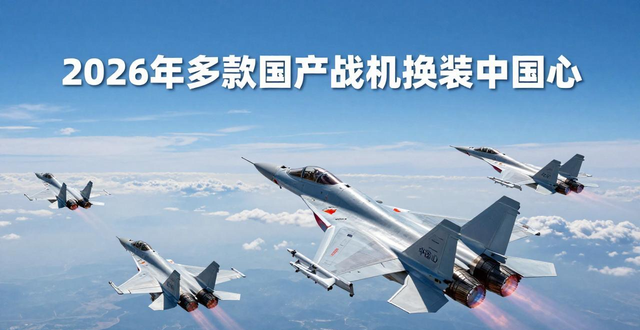
This means that our "heart" is really mature, reliable, and capable of fighting.
The unknown stories
Those names that were rarely mentioned during the interviews were those engineers who had been working hard and perseveringly for decades at the experimental stations deep in the mountains.
A senior expert once said that people who are engaged in engine research and development may never see the models they design complete in their lifetime.
Because the cycle is too long.
From project establishment to maturity, twenty years is considered fast.
Now, we see the J-20s roaring past, carrying the youth of generations behind them.
They burned their lives into that handful of tail flames.
When the J-11BH in the South China Sea took off, the heat wave from the tail nozzle distorted the air.
Someone posted a screenshot to the group and said, "Look, the Chinese heart."
I suddenly thought of the sentence in the textbook when I was a child: "Self-reliance and hard work."
I didn’t understand it at the time and thought it was a slogan.
Now I understand, it was really a life-and-death struggle.
There are no shortcuts when it comes to engines.
Design drawings can be bought, but craftsmanship cannot be bought; material recipes can be copied, but experience cannot be copied.
I can only grind a little by myself, try a little, and fall a little.
Fortunately, we fell out.
First, the Turbofan-5 failed and exited, then the Turbofan-6 failed, then the Turbofan-10 struggled to advance, and finally the Turbofan-15 was amazing.
Sixty-six years.
Finally I can say it confidently:
"The heart belongs to you."
Comments NOTHING