
Do you also think that it’s damn hard to make money now?
I invested hundreds of thousands in a brand advertisement, but there was no splash, not even a sound.
You are trying to use a super powerful trick to imitate those Fortune 500 companies in telling brand stories, such as the inheritance of craftsmanship and direct access to the pasture. However, the users will not even raise their eyelids and directly tell you: it is none of my business.
In an attempt to get some side work, I posted a hundred pieces of content, but except for your mother who liked it with tears in her eyes, all the others were unresponsive like a decent zombie.
Don't worry, today we will use some economics to clarify this matter.
It used to be "what I produce, you buy"
Now it’s “the streets are full of alcohol”
In the past, supply exceeded demand. As long as you could tinker with the goods, you could sell them.
Now?
Supply far exceeds demand.
No matter how deep your alley is, the aroma of the wine will almost go rancid, and no one will come in.
Do you think that moving offline shelves to Taobao and Douyin will be done?
Innocent.
Online is a new species, and the logic has completely changed.
Principle 1: Content is the electronic content of the new world
Ten years ago, if you could be on CCTV, you would become a relative of the common people across the country. The reason why I say this is because the common people had no other choice at that time. After all, the remote control could only adjust a few channels.
What now?

You post a hard message, and the user’s fingers are faster than their brains, and it’s gone with a swipe.
Attention is more valuable than gold, and the content contained in it is the only rope that can pull people's eyes back.
Principle 2: What I want is not “another one”, but “just this one”
There is a saying of marginal utility in economics. The first bun you eat is delicious, but the fifth one makes you want to vomit.
The same goes for merchandise.
If the basic needs are met, why should users buy from you?
Such as milk.
I used to drink it to supplement calcium.
Now?
There is a possibility that it is the protein powder you drink while doing iron lifting after working out. Another possibility is that it is a cup of healing drink late at night when you are extremely depressed. There is also a possibility that it is just a feeling of supporting a local ranch.
If you still shout "We are very nutritious", no one will listen.
How to fix it?
Take three steps to continue this breath.
Step one: Stop selling goods, sell content
Competing over price and functionality is courting death.
You have to use content to identify needs that users don’t even think about themselves.
Don't just let the sales department do the work. The boss takes the lead and lets me do all the engineering, customer service, and research and development.
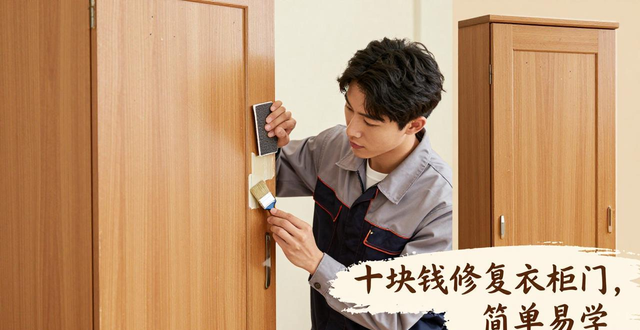
Make a short video, shot by someone who knows the technology, to teach you how to repair a wardrobe door for only ten yuan, and bring along the tools used, so sales will come naturally.
Don’t talk about “how wonderful my soymilk machine is” and instead say “how can a mother who is pressed for time in the morning prepare a nutritious breakfast for her children in 60 seconds?”
Embed the product into a specific dilemma.
In Douyin and Xiaohongshu, search for the keywords of your product, take a look at the content that has received high praise, what kind of scenes and groups are they talking about, and then copy the instructions directly.
This was how Perfect Diary was created back then. Its content was to teach how to put on makeup, but its essence was to sell cosmetics. In this way, it suddenly tore a hole in the fiercely competitive Red Sea.
Step 2: Tear the brand story into 10,000 user stories
In the past, brands relied on CCTV and celebrity endorsements, which were risky and expensive.
Now we have to break up the trust and give it to countless living ordinary people.
Stop staring at sky-high-priced celebrities.
Go explore and find those 100 ordinary users who really like the products you launch, deliver new products to them, and let them use their own words of expression to shoot creative videos and publish graphic content.
Realism is the best PS.
Just like you do in summer, don't always tell the history of the brand. Instead, show the photos and random thoughts of users when they placed the aromatherapy in the study room, on the bedside, and in the bathroom.
Create an atmosphere of "Oh my God, this is the life I want."
A certain brand that specializes in yoga wear suddenly caused a sensation in a certain small circle by inviting amateurs of all shapes and sizes to take pictures of their experiences wearing it.
Content that is generated by users themselves and contains certain flaws is 10,000 times more credible than perfect copy that you have carefully created.
Step 3: Don’t focus on categories, grab scenes
If you stick to the original category, your profits will be thinner than paper.
You have to think about, where else can your product appear in new places?

When selling air fryers, don’t always say they heat evenly.
The content should be "Renting party doesn't have a kitchen? An air fryer can be used for weekend girlfriends gathering."
Portable Juicing Cup, don’t always think about squeezing juice.
Change it to "make instant smoothies while camping outdoors" and "make protein shakes at the gym".
Isn’t this sales ceiling broken?
Wang Baobao Oatmeal did not struggle in the fiercely competitive red sea of so-called "nutritional breakfast", but directly broke into the new fields of "healthy office snacks" and "weight loss meal replacement", and suddenly emerged.
Of course, scenes cannot be grafted blindly.
It must be based on real functions and conform to the living habits of your users.
A far-fetched scene that makes people roll their eyes, it’s better not to do it.
If you want to make money today, whether it's a business or a side job, your logic really changes.
From grabbing limited shelves to creating unlimited content.
From telling grand narrative brand stories to empowering thousands of vivid user stories.
From obsessing over "Who am I" to thinking about "Where am I in your life?"
Let's put it this way, from an economic point of view, in this era of oversupply, rely on content to create new demands, rely on other people's words to reduce the cost of trust, and escape from involution through new scenarios.
This style of play is a new map that you can use immediately.
Stop talking to yourself.
Go into the user's life and find the place where you should stand.
Comments NOTHING