
The art of paper-cutting is a treasure among traditional Chinese folk crafts. It carries the cultural memory of the Chinese nation for thousands of years and also carries the aesthetic taste of the Chinese nation.
It uses paper as a medium, scissors or carving knives as tools, and uses hollow carving techniques to create a visual image with a sense of rhythm and virtual reality.
This art form actually embodies the wisdom and creativity of working people, and it is also a very vital component of intangible cultural heritage.
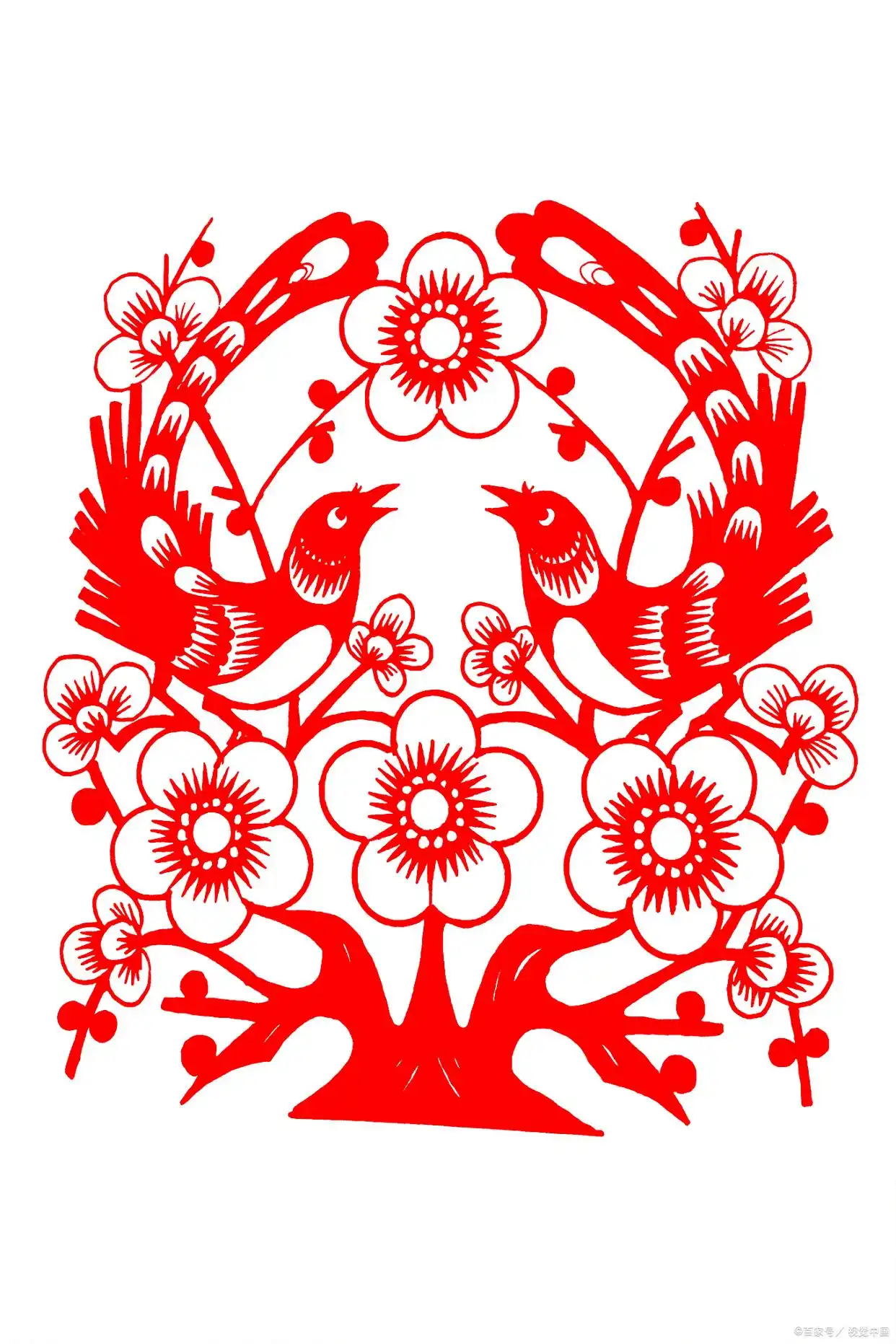
When tracing the historical origins of paper-cut art, we can see that there is an inseparable connection between this art and social life in ancient China.
As early as the Han Dynasty, with the invention and popularization of paper, the initial form of paper-cutting began its gestation process among the people.
By the time of the Southern and Northern Dynasties, the art of paper-cutting had initially reached a certain scale. Unearthed in the Astana Tomb in Turpan, Xinjiang, the "Horse Tuanhua" paper-cutting and the "Monkey Tuanhua" paper-cutting belonging to the Southern and Northern Dynasties period are the earliest existing physical witnesses.
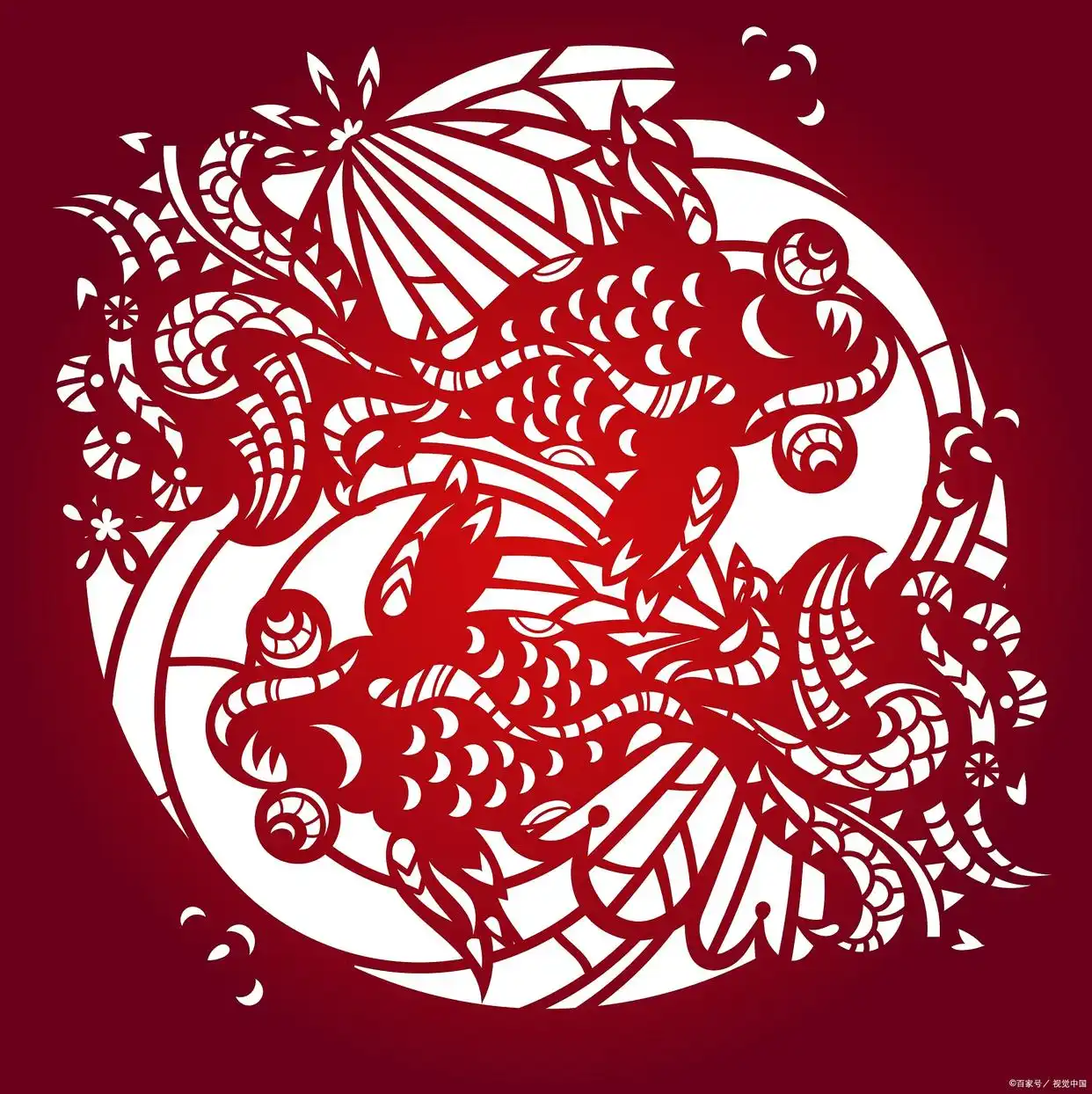
Paper-cutting was more widely used in the Tang Dynasty. In Du Fu's poems, there is a description such as "Warm soup bathes me, paper-cutting greets my returning soul." This can reflect the role of paper-cutting in folk activities.
During the Song and Yuan Dynasties, due to the prosperity of the handicraft industry, paper-cutting developed in a professional direction, and artists specialized in paper-cutting emerged.
During the Ming and Qing dynasties, the art of paper-cutting reached its most prosperous state, and its application scope expanded to various aspects such as decoration during festivals, patterns required for embroidery, and embellishment of gifts, etc., thus forming a relatively stable graphic language and technical system.
From the perspective of technical characteristics, paper-cutting art has unique craft aesthetics.
The key point is to "use the knife as a pen and the paper as silk", and achieve the modeling presentation through hollow carving.
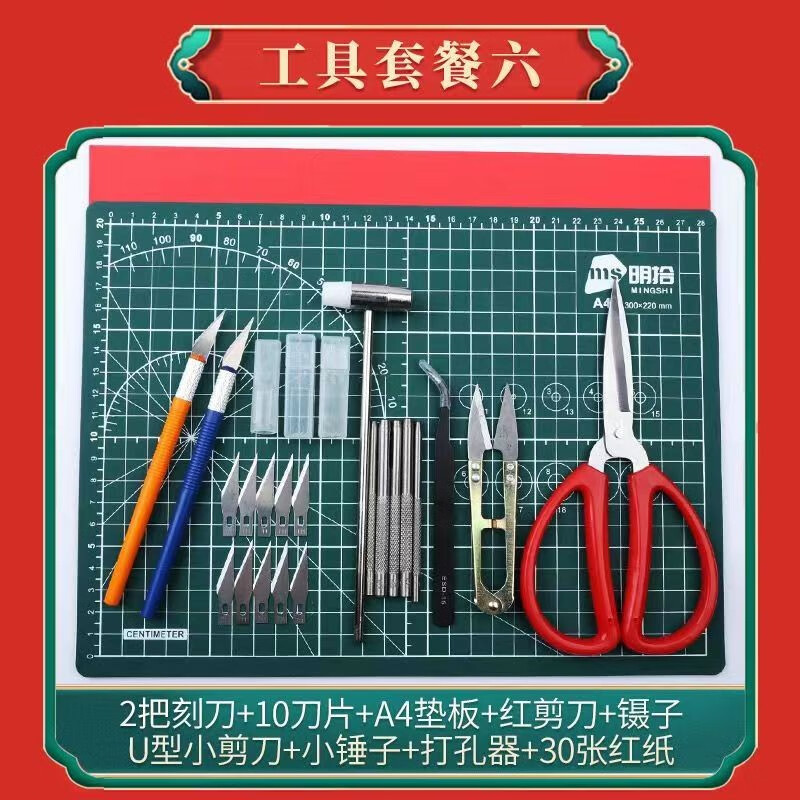
Techniques can be roughly divided into two categories: cutting and engraving. Cutting often uses sharp scissors, focusing on smooth and continuous lines, which is suitable for improvisational creation. Engraving is carefully carved on a wax plate or backing board with the help of a carving knife, which is suitable for showing complex patterns.
As for the form of expression, there is simple cutting and carving of red paper. At the same time, there are also colorful paper-cutting techniques such as spot dyeing, lining and color matching.
No matter what method is used, the creator is required to make a high-level summary of the image and achieve a visual effect of virtuality and reality, and whiteness and blackness based on limited materials.
The modeling system of paper-cut art contains profound cultural connotations.
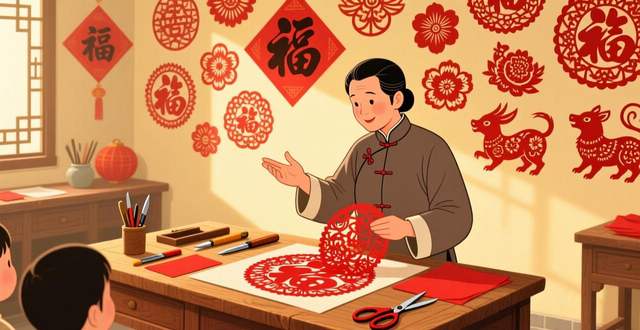
Traditional paper-cutting often uses homophonic, symbolic, allegorical and other techniques to express people's good wishes.
"Sustainable years" is composed of lotus and fish, and "good fortune and longevity" is symbolized by bats and longevity peaches. These formulaic patterns have become visual symbols in folk culture.
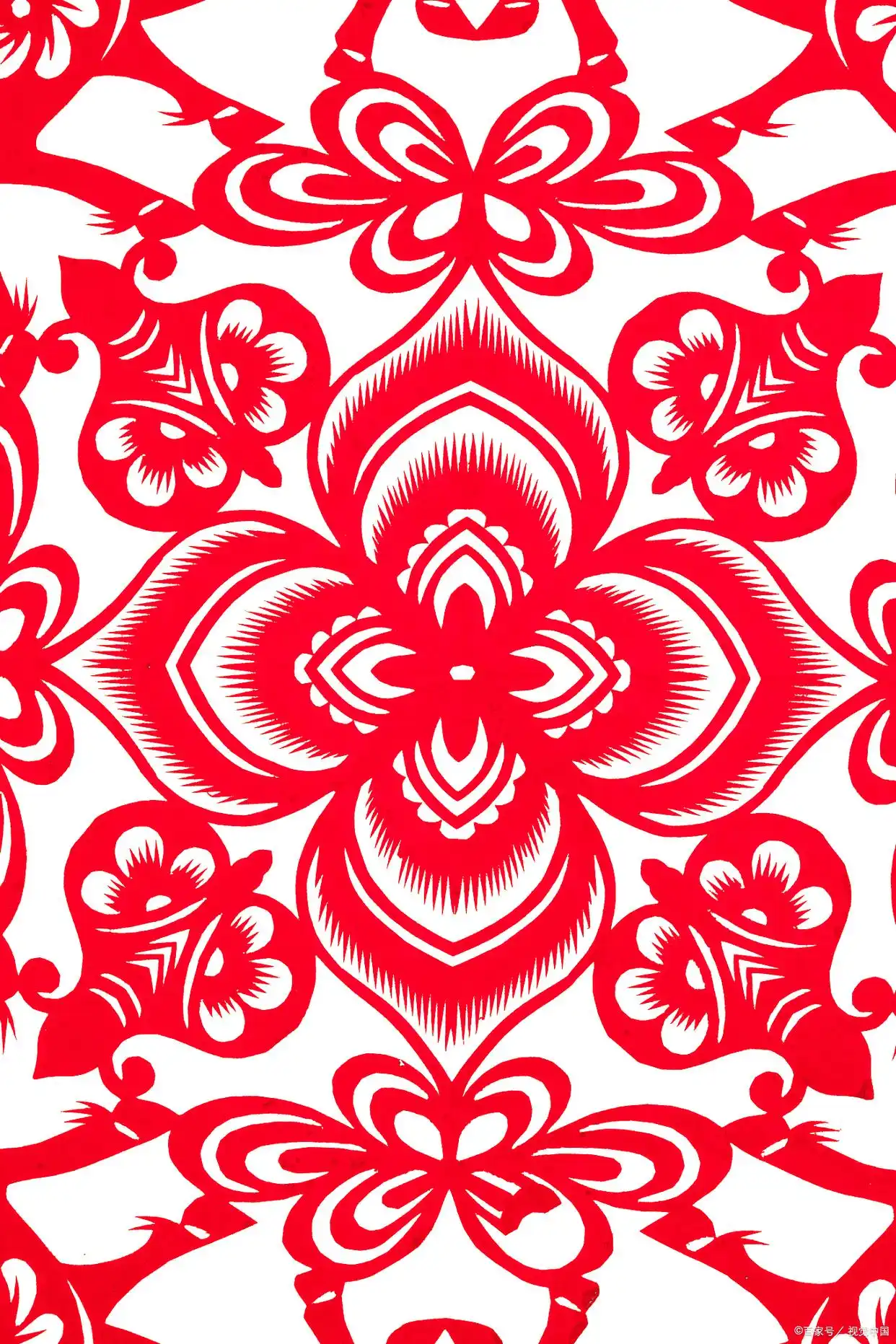
In terms of composition, paper-cutting breaks the limitations of time and space. It can combine flowers of different seasons and integrate objects in different spaces into one. This reflects the unique way of thinking of folk art.
This modeling concept is not a simple imitation of nature, but a refined and generalized expression of imagery.
The nourishment of regional culture makes paper-cutting present diverse artistic styles.
Shaanxi's paper-cutting with scissors retains the powerful and simple charm of Qin and Han art, with rough lines and exaggerated shapes; paper-cutting in Nawei County, Hebei uses carving instead of cutting, with bright colors, and most of the themes are taken from characters in operas; the composition of Shanxi paper-cutting Full of interest and complex writing, the overall appearance is exquisite and translucent; the paper-cutting produced in Yangzhou, Jiangsu has slender but continuous lines, and the composition is exquisite and elegant; Guangdong Foshan paper-cutting uses a combination of copper foil, gold foil and other materials, and the finished product shows splendor.
After a long-term development process, paper-cutting in various places has established a relatively stable skill inheritance system and shaped its style characteristics, thus becoming an important carrier of regional culture.
The inheritance of paper-cutting skills is not only the continuation of techniques, but also the transmission of cultural memory.
Most traditional paper-cutting artists master their skills with the help of oral and heart-taught formal methods. They have accumulated rich experience through long-term practice.
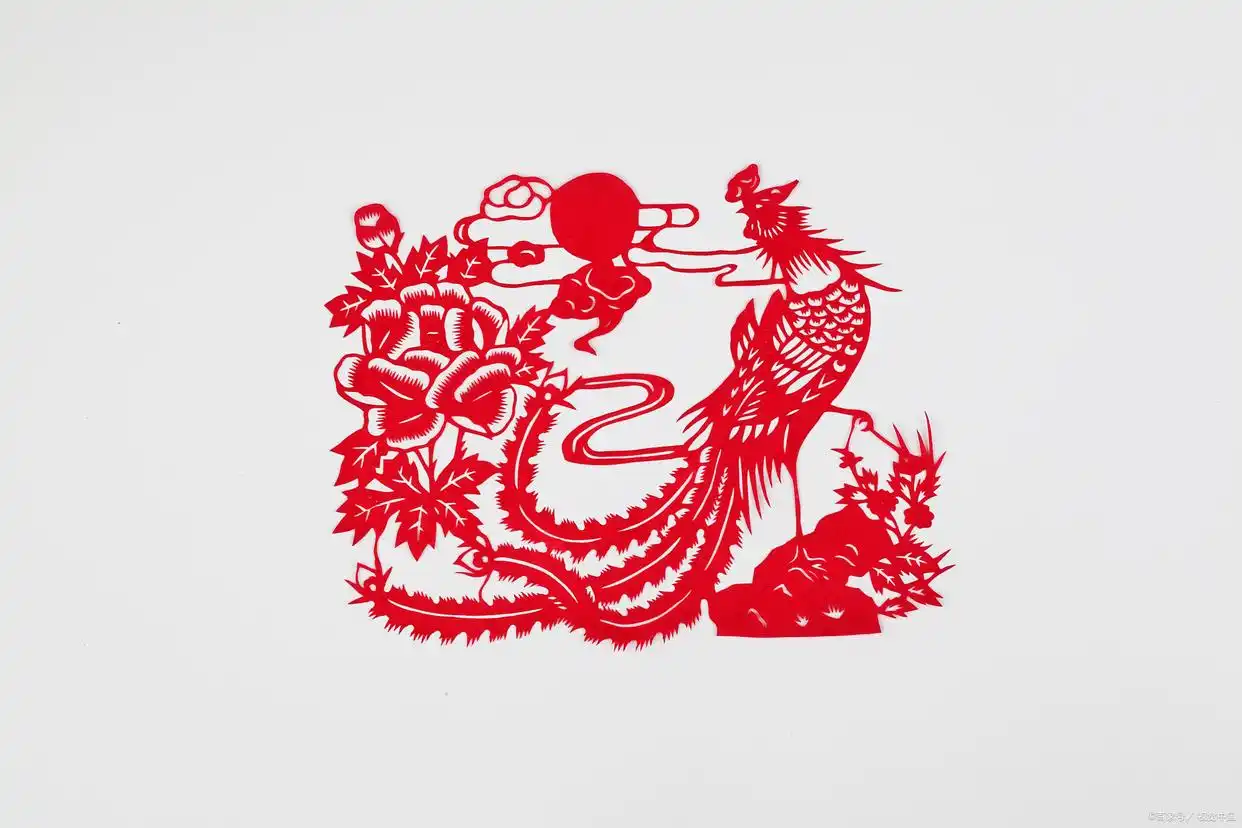
They are very familiar with the composition rules of various patterns, have a thorough understanding of the cultural meaning behind the patterns, and can flexibly cope with and make adjustments at will when faced with actual needs.
This living way of inheritance enables paper-cutting art to maintain its traditional context on the one hand, and to adapt to the development of the times on the other.
A closer look at the value of paper-cutting art in contemporary times lies not only in its aesthetic significance as a traditional craft, but also in the national memory and cultural identity it carries.
Each paper-cut work embodies the creator's understanding of life and longing for beauty, conveying a form of emotional expression unique to the Chinese nation.
If we deeply understand the historical context of paper-cutting art, appreciate its technical characteristics, and understand its humanistic connotation, then we can more truly perceive the profound heritage of this intangible cultural heritage.
Comments NOTHING