
Chinese paper-cutting: the living inheritance of folk art and the new charm of the times
Paper-cutting, a Chinese art, is an important carrier of China's excellent traditional culture. It has experienced thousands of years of inheritance and evolution, and it still exudes vigorous vitality to this day.
Paper-cut art, as an important representative of intangible cultural heritage, not only witnesses the continuous development of Chinese civilization, but also depicts the life talents and spiritual aspirations of people of all ethnic groups with its unique form of artistic expression.
The origin of Chinese paper-cutting can be traced back to the Han Dynasty.
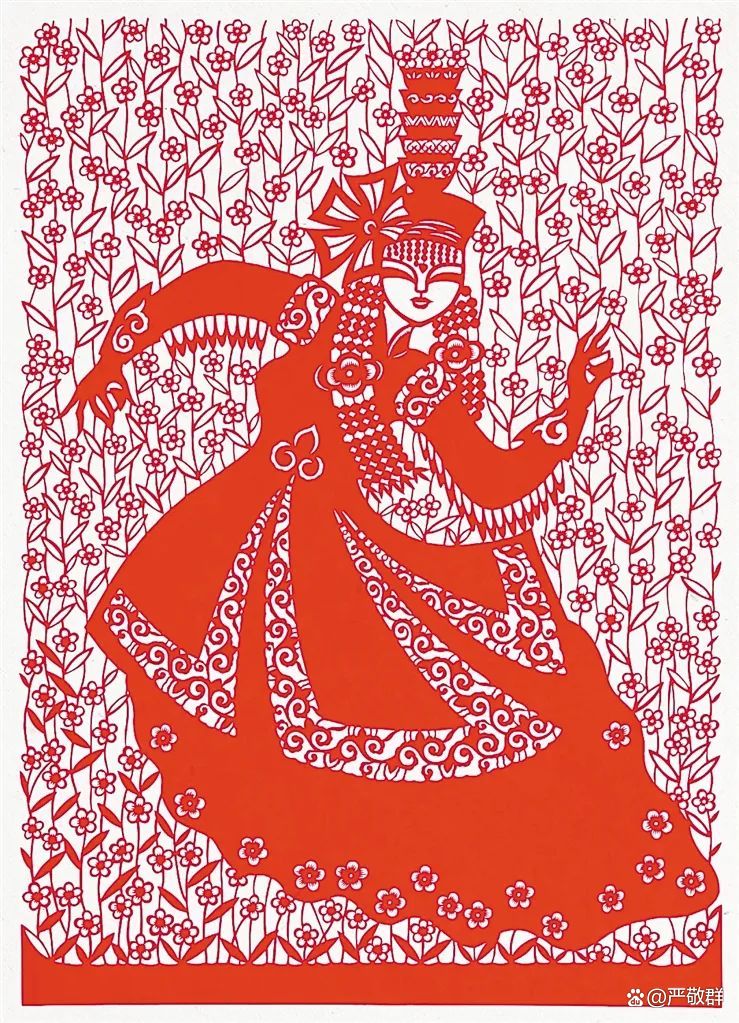
Sima Qian's description of "cutting tung trees to become a younger brother" in "Historical Records", as well as the verses like "The concubine of the Han Dynasty held her baby and played in front of the window, skillfully cutting tung leaves to shine on the window screen" that was praised by people in the Guanzhong area, both of which together confirmed the rudimentary appearance of the early paper-cutting art.
During the Wei and Jin Dynasties, the "Ren Sheng" worn by women was made of paper, gold foil and other materials.
In "Youyang Zazu" written by Duan Chengshi of the Tang Dynasty, there is a description such as "the colorful flowers are cut lifelikely", which fully demonstrates the exquisite level of paper-cutting skills at that time.
In the Ming and Qing dynasties, the art of paper-cutting reached its most prosperous state. Zhang Dai praised it in his book "Tao'an Mengmei" as "exquisite and better than natural".
From a functional perspective, paper-cutting art carries multiple social values.
In life rituals, the "pines and cranes in spring" on the window lattice during birthday celebrations, the happy flowers that appear during weddings, and the paper bundles used to express grief in funeral customs all deeply demonstrate the Confucian cultural concept of "death is like life."
The Naxi people in Yunnan must cut the word "longevity" during festivals to express their praise for life.
During the festival celebrations, the paper-cuts of dramatic characters and New Year's door stamps in the Lantern Festival lanterns not only create a strong festive atmosphere, but also express people's wishes for a better life.
In religious beliefs and customs, exorcism paper-cutting relies on metaphorical and symbolic techniques to satisfy people's psychological needs for praying for good luck. At the same time, it can also satisfy people’s psychological needs to avoid disasters. In this way, tangible paper-cutting and intangible cultural concepts are harmoniously integrated.
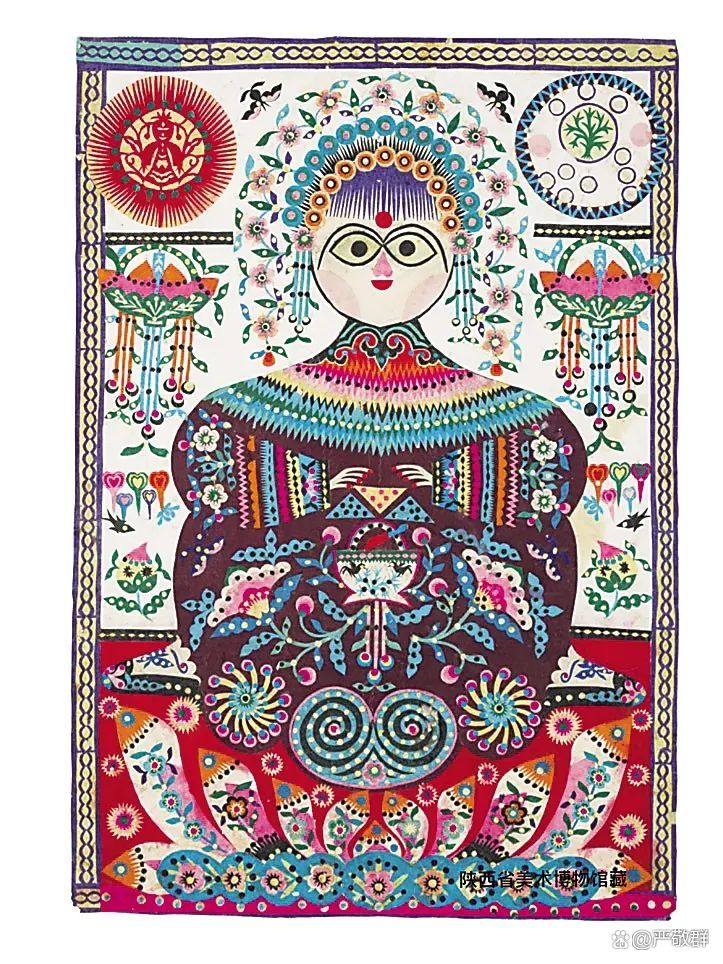
In terms of technical characteristics, Chinese paper-cutting shows distinct regional and national characteristics.
There are more than 30 ethnic groups in our country, and these ethnic groups have paper-cutting traditions. This paper-cutting tradition is still alive and inherited, and their artistic styles are different from each other, and their interests are also different.
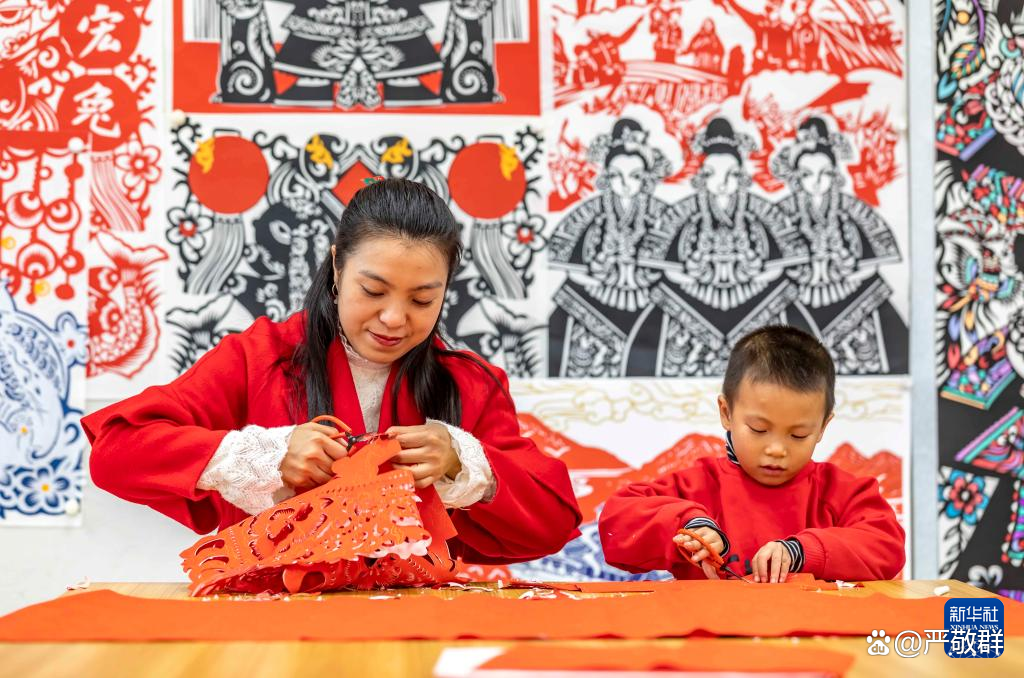
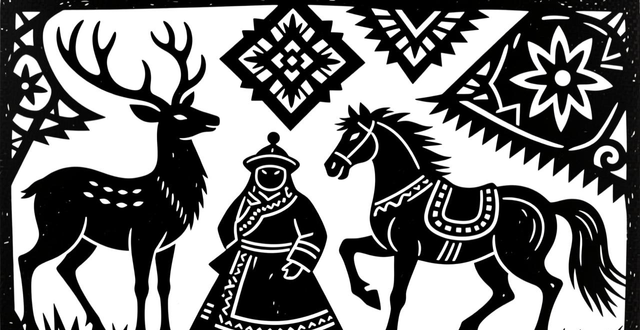
The Oroqen, Hezhe, Manchu and other ethnic groups in the north belong to the northern ethnic groups. The paper-cutting themes of these ethnic groups mostly show deer, horses and other animals. Their paper-cuttings stand out with their simple silhouettes, and their style is characterized by a simple, rough and bold style.
The themes of southern ethnic groups such as the Zhuang, She, and Yi are richer and more diverse, including sun and moon landscapes, ears of rice and lotus flowers, dragons, phoenixes, cows and horses, and even humanoid patterns, showing slenderness, elegance, and exquisite workmanship.
A poet from the Qing Dynasty wrote a poem like this: "Now I see the paper cutting in the south." This sentence quite accurately describes the exquisiteness of the paper-cut art in the north and the south.
In terms of cultural connotation, paper-cut patterns carry rich symbolic meanings.
Among the geometric patterns, the triangular paper-cut has a profound meaning. It symbolizes the three talents of heaven, earth and man, which is in line with the Taoist philosophical concept of "three lives and all things". The hexagonal paper-cut also has a profound meaning. The "six corners" entrust the wish of success, and the folk "three, six, nine, go up." "The idioms echo each other. The horse paper-cut unearthed from the Astana Tomb in Turpan, Xinjiang is of this hexagonal style. The word "eight" is a homophone for "fa", which represents development and access. The Bagua paper-cut, eight-petal flower pattern, Bagua fish pattern, etc. are widely spread.
After entering the new century, paper-cut art has encountered the proposition of the times that requires creative transformation and innovative development.
Today's paper-cut artists rely on their keen perception of the times to open up new realms on the basis of inheriting tradition.
Li Shoubai's "Guests Arrive from the Sea" cleverly uses the connotations of ancient poetry to express the longing for people from afar.
Among the colorful paper-cuts created by "Flower Cutting Lady", one created by Ku Shulan can be regarded as a very typical work among the examples of folk art.
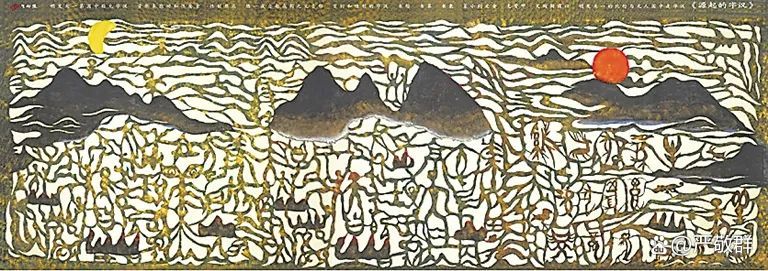
Zhang Shuxian has a series of works such as "Terraces in Hometown", "The Origin of Chinese Characters", and "Heaven, Earth, and Man". These works rely on bizarre concepts and refined colors to create a visual effect like an ink painting.
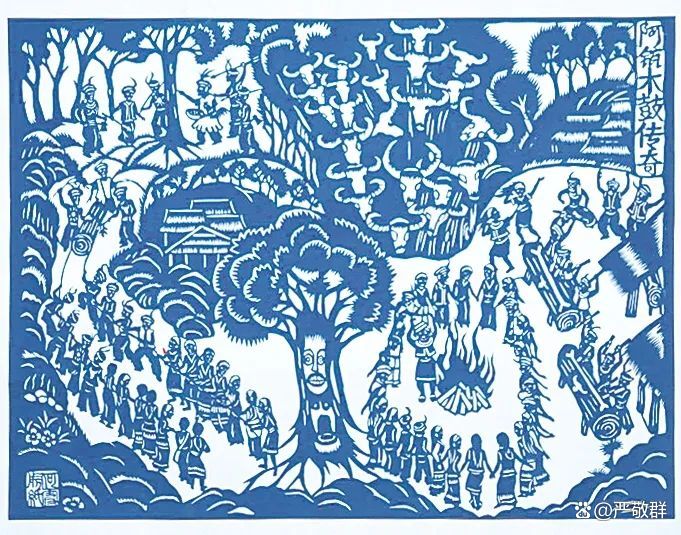
Zhao Xigang used simple and simple knife skills to rediscover innocence and innocence, conveying the "harmony, beauty, joy" contained in the Winter Olympics movement.
Zhang Xiaomei uses smooth lines to express the twenty-four solar terms in poetry, thereby demonstrating the harmony and unity of formal beauty and abstract beauty.
Paper-cutting artists used a cross combination of dots, lines and surfaces to vividly reproduce the Northern Song Dynasty genre painting "Along the River During the Qingming Festival" on a paper roll of tens of meters.
In the process of inheritance and development for thousands of years, Chinese paper-cutting art has always maintained a close connection with people's lives and has always remained so.
This is the "encyclopedia" of social life, recording everything from food, clothing, housing and transportation, birth, old age, illness and death; it is also the carrier of spiritual culture, conveying the moral concepts, aesthetic tastes and life ideals of people of all ethnic groups.
In the contemporary context, paper-cut art will continue to uphold the spirit of advancing with the times, reflect the style of the times, and continue to write a dazzling chapter of this intangible cultural heritage with a richer artistic language.
Comments NOTHING