
The aroma of steamed pork with rice flour on the stoves of Bashu people is the nostalgia engraved in the bones
In Sichuan, there is a wordless food book hidden behind the stove of every household.
For mothers, making their children eat to a state of satisfaction is the simplest principle in this sutra.
What we are going to tell today is a story about a mother from Sichuan who tried to make steamed pork for the first time because her son had a special love for pork belly. This story has a warm taste.
What is cooked in this way is not only a reproduction of home-cooked dishes, but also a vibrant flow of Bashu food culture in daily life.
Selection of materials and coding of flavors: the original flavor philosophy of Sichuanese cooking
The starting point for this dish is choosing a good piece of pork belly .
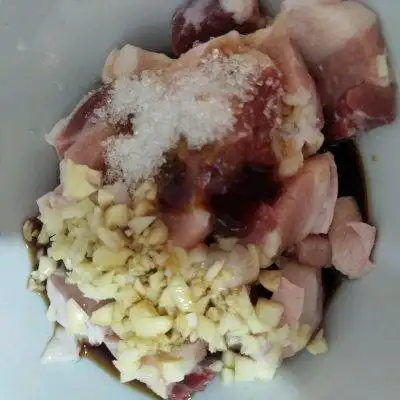
In the humid climate conditions of the Sichuan Basin, people are quite fond of this kind of fat and lean meat, thinking that it can provide sufficient, high-quality protein and fatty acids, which can replenish the body's physical strength and nourish the body that is slightly deficient due to humidity and heat.
Cut the meat into palatable thick slices, and the next step is the soul step that determines the flavor - flavoring .
Some cuisines use sugar to enhance the umami taste, but this mother is very familiar with her son's taste. She only uses minced garlic, light soy sauce and oyster sauce for marinating. In this way, the salty and umami flavor can be firmly penetrated into the texture of the meat.
If it's a summer night, people from Bashu who like spicy food will definitely cut out a few millet millets to wake up dull taste buds with the refreshing spiciness. This is exactly a manifestation of Sichuan cuisine's versatility and versatility.
Breading and steaming: the transformation of water vapor
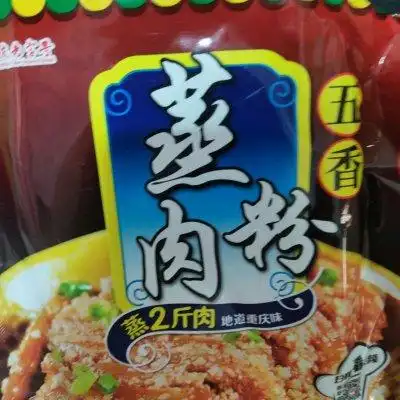
After marinating and adding flavor, the "steamed pork powder" comes on the scene.
This powder is made by frying rice or glutinous rice with spices, and then grinding it into coarse grains. It is not only a kind of attachment to the outer layer, but also a medium to absorb the meat juice and achieve a soft and glutinous taste.
Sichuan people adhere to such a strict rule, that is, the flour should not be in a dry state, and the meat should not be in a watery state. The flour and meat should be stirred evenly until every piece of meat is evenly coated, and there is no visible excess moisture on the surface. Only in this way can it be considered to be just right.
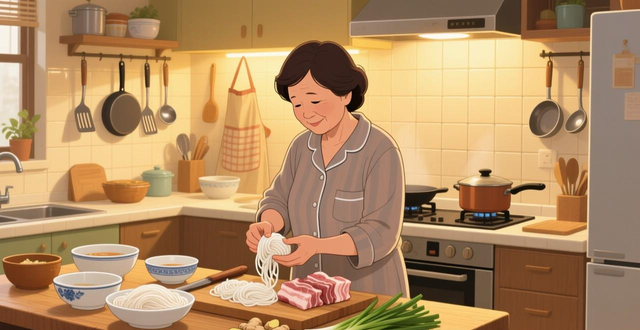
What this step tests is the precise control of the state of the ingredients. This is what the older generation often refers to as "having an accurate sense of proportion in the hand."
The processed meat was put into the rice cooker and went on a date with water and fire .
During more than an hour of steaming, the heat becomes the gentlest carver.
It forces the fat in the fat to seep out, and is greedily absorbed by the outer layer of rice flour.
The rice noodles, which were originally in a dry and hard state, transformed into a crystal clear, soft and chewy texture, while the pork belly, after undergoing the process of oil separation, achieved the effect of being fat but not greasy, and thin but not dull.
This is the key to Sichuan-style steamed dishes: we don’t pursue complicated cooking methods, but we deeply understand the secret of the transformation of ingredients.
The moment the lid of the pot is lifted, a mixed aroma spurts out. This is a signal that the aroma of meat, rice and base ingredients have been perfectly integrated under high temperature.
Tasting and inheritance: cultural imprints in home-cooked flavors
The finished steamed pork is bright red in color and melts in your mouth.
If you sprinkle a handful of emerald green onion, it will not only add color, but also enhance the fragrance, thus bringing a fresh field flavor (this mother did not sprinkle it due to personal preference, but green onion is indeed an indispensable and important finishing touch for this dish to reflect the classics).
There is no need to add additional salt to this dish. The saltiness of the light soy sauce and oyster sauce is already enough. This is exactly the seasoning of Sichuan cuisine. There is flavor in the salty part and aroma in the light part.
This seemingly ordinary steamed pork dish is actually full of Sichuan people’s love for life and their wisdom and understanding of life.
It can be used not only as a home-cooked meal to satisfy cravings , but also as a final dish at festival banquets.
In the theory of traditional Chinese medicine, pork is considered to have the effect of nourishing the kidneys and blood, and can also nourish yin and moisturize dryness. It is especially suitable in an environment with heavy humidity like Sichuan, helping people to take care of their bodies and thereby enhance their physical fitness.
Eating a steaming bowl of steamed rice noodles not only satisfies his son's desire for delicious food, but also unknowingly imprints the taste code of his hometown into the lives of the next generation.
There are no world-shaking skills in making this delicacy, but only the love given by a mother to her child, as well as the cooking wisdom accumulated by the land of Bashu over thousands of years.
It reveals to us that the most touching food is often produced on the most ordinary stove, carrying body temperature and love, and then becomes a special taste that is difficult to forget no matter where we go.
Comments NOTHING