
On the map of Chinese cuisine, every city has its own unique taste imprint.
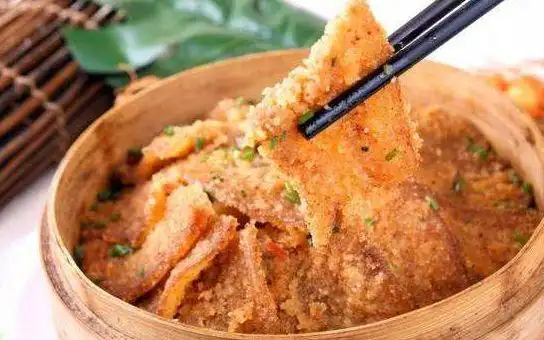
On this day, we will lead you into the core area of Na Huazhong to find a classic delicacy that crosses regional boundaries but is deeply rooted in the local food culture. This delicacy is called steamed pork with vermicelli.
This dish has evolved in many places across the country. In Hubei, Hunan and other places, it not only often appears on home-cooked tables, but is also a very important part of street snack culture.
Familiar with the four secret tips passed down by chefs, you can also recreate it at home and reproduce the ultimate taste that softens immediately in your mouth and has a lot of fat but no greasy feeling.
1. The essence of ingredients: from a grain of rice to a piece of meat
A successful steamed pork dish first depends on the careful selection of core ingredients .
Unlike northerners who prefer to use aniseed for pickling, southerners focus on restoring the original flavor of food when making steamed pork.
The first is the choice of rice noodles .
In Hubei, people prefer to use indica rice to make rice noodles. The reason is that its viscosity is relatively low, so it can better adhere to the meat. After steaming, the grains will be clearly separated from each other, with a soft and waxy texture and a salty taste.
Remember, the size of the rice noodle particles is extremely important: if it is too small, it will tend to clump together and become mushy, but if it is too thick, the texture will appear stiff.
Many locals still adhere to the tradition, adding some star anise and cinnamon to the rice, frying it in a pot until it turns slightly yellow, and then use a stone mortar or a food processor to beat it into coarse particles. This is the wisdom contained in homemade rice noodles, and its aroma is far beyond that of the finished products sold in the market.
Next is the selection of pork belly .
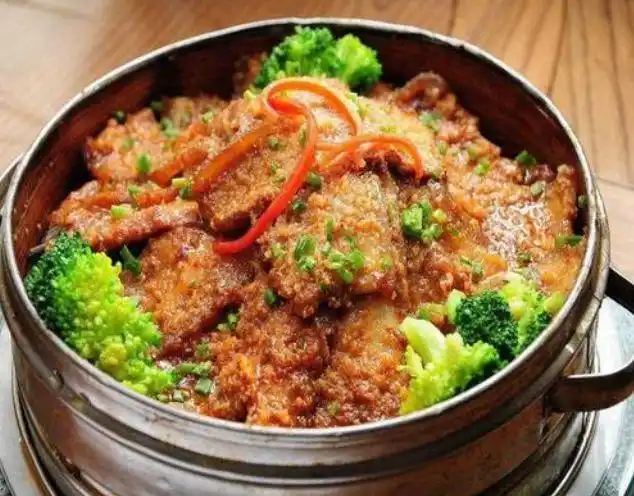
At street food stalls in Hunan, the bosses will tell you that authentic steamed pork must be made from fine pork belly with alternate fat and thin, which is what we usually call "three-layer pork".
Only this kind of meat can slowly melt the fat during the long steaming period and penetrate into the lean meat, achieving a high level of fat but not greasy.
If you choose the wrong lean meat, the finished product will be dry and tasteless, losing the soul of the dish.
2. The art of ingenuity: relax and taste first
With all the ingredients ready, the next step is to test your patience and skills.
Many people slice and marinate directly, but ignore a key step - the relaxation of the meat .
Wash the fresh pork belly. Don't rush to use the knife. Instead, use the back of the knife or a special meat mallet to beat the surface of the meat evenly.
This process takes at least ten minutes and is known locally as "massaging the meat."
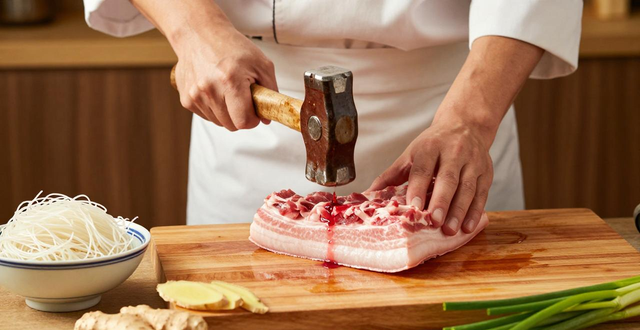
Beating can break up the muscle fibers, causing the meat to become extremely soft. Moreover, it can also effectively force out the blood and impurities, thereby completely removing the meat smell.
The meat treated in this way is then cut into large pieces with uniform thickness and width, and then marinated, so that the subsequent seasoning and the aroma of the rice noodles can be absorbed to the greatest extent.
3. Cooking wisdom: the finishing touch to the bottom of things
This is a tip that chef friends repeatedly emphasize but is most easily ignored by home cooks.
Many people make steamed pork at home, directly spreading the meat wrapped in rice flour on a plate and steaming it.
However, when placed in a high-temperature steamer, the temperature at the bottom of the plate is extremely high, and the meat slices are in direct contact with the heat source, making it extremely easy to be cooked and aged. At the same time, the oil will seep out in large amounts due to excessive heat, causing the taste to become greasy.
In some places, such as Hubei and Jiangxi, a clever cooking method is used, which is to put a layer of stuff on the bottom of the container. This stuff is potato cubes, sweet potato cubes, or pumpkin slices.
Place the processed pork belly slices one by one on these "bottoms".
This inconspicuous step actually hides a secret:
In terms of heat insulation and buffering, the vegetables on the bottom isolate the direct high temperature from the bottom of the plate, allowing the meat to slowly mature in a gentler steam environment, thus ensuring the tenderness of the meat.
2. Add flavor and relieve greasiness: During the steaming process, the fat of the pork belly will slowly seep out, and it will be absorbed by the potatoes or sweet potatoes placed underneath it.
The vegetables become oily and sweet, and the meat is fat but not greasy due to the release of oil, and it is also tainted with the fresh smell of vegetables. The two work well together here.
4. The creation of flavor: the magic of time and the inheritance of culture
After everything is ready, it's a long wait.
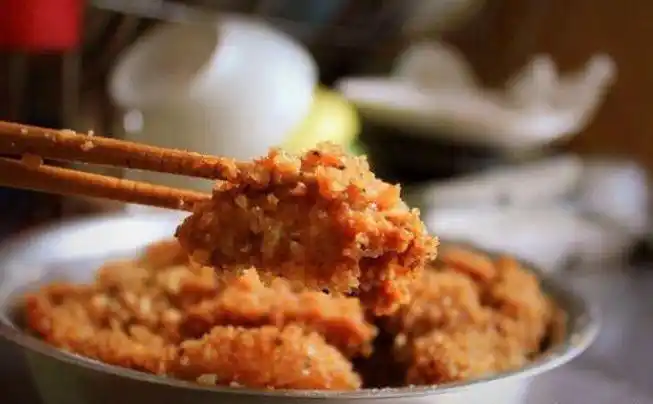
The steaming time of steamed pork with rice flour should not be too short, usually more than 1.5 hours.
Under the slowly and continuously higher temperature, the rice noodles fully absorb the meat juice and oil, and become soft and savoury; the pork belly has reached the point where it melts in the mouth and breaks apart with just a gentle pinch with chopsticks.
This dish now not only represents Hunan cuisine, nor just Hubei cuisine, it has become a bridge connecting the flavors of the north and the south.
In Hubei, in the land of peaches, and in Mianyang, steamed pork with vermicelli was more brilliantly developed, and then developed into a grand pattern of "Mianyang Three Steamings", pushing the steamed vegetable culture to the extreme.
When you taste this dish, what you taste is not only the soft, glutinous and salty aroma, but also the people in the Yangtze River Basin who have experienced thousands of years of deep understanding of the mutual penetration of food and the mutual achievement of each other.
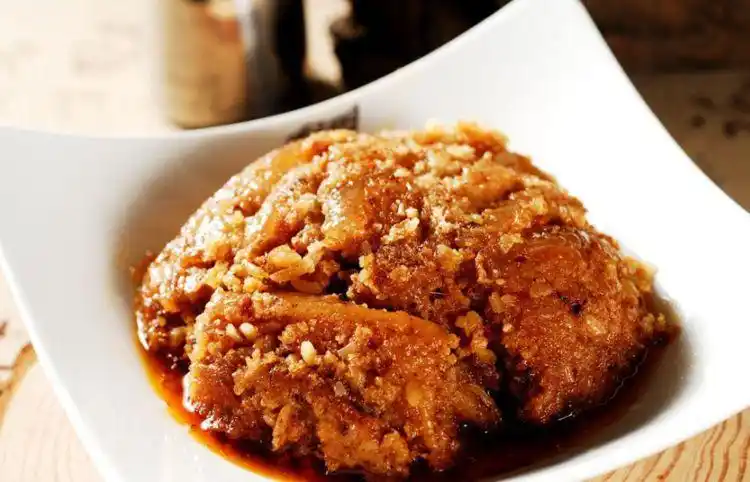
Knowing these 4 tips, you can also cook this unique, melt-in-your-mouth and famous local flavor at home, allowing your taste buds to enjoy an unparalleled feast when regional characteristics and food culture are integrated.
Comments NOTHING