
The land of Sichuan and Chongqing: the spicy and delicious code of steamed pork with rice noodles
In the daily fireworks of Sichuan and Chongqing people, steamed pork with rice flour is a "final dish" .
Different from the bland style in other regions, the steamed pork here focuses on the numbing taste, the spicy taste, the fresh texture and the fragrant smell, which together form a wonderful symphony of taste.
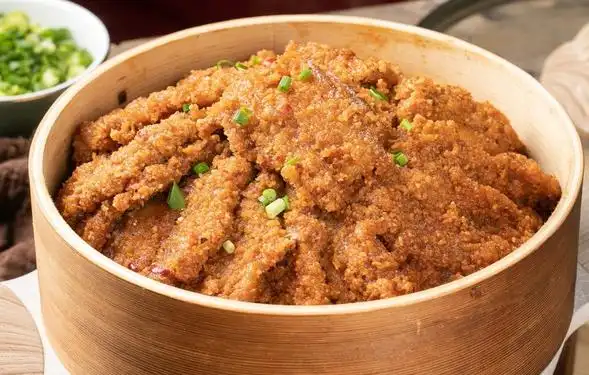
If you plan to recreate this authentic flavor at home, you must master two core secrets. One is frying steamed pork rice noodles, and the other is marinating pork belly.
1. Sichuan style rice noodles: expertly stir-fried with a spicy base
The soul of Sichuan-Chongqing steamed pork with rice noodles lies first in the layer of rice noodles wrapping the meat .

Although there are ready-made steamed pork noodles on the market, to achieve the authentic flavor, many gourmets mostly choose to do it themselves.
Choose indica rice, mix it with a small amount of glutinous rice, add star anise, kaempferia, pepper and other spices, place it in a hot iron pot, stir-fry slowly over a slow fire, and use punctuation.
This process requires great patience until the rice grains show an attractive golden color and the fragrant aroma of spices is completely integrated into the rice.
After frying, wait for cooling, and then grind it into a coarse powder with a grainy feel. If it is too slender, it will easily become a paste, and if it is too thick, it will be difficult to adhere. Only rice noodles with the right thickness can form that layer of crispy and soft coating wrapped in gravy after steaming.
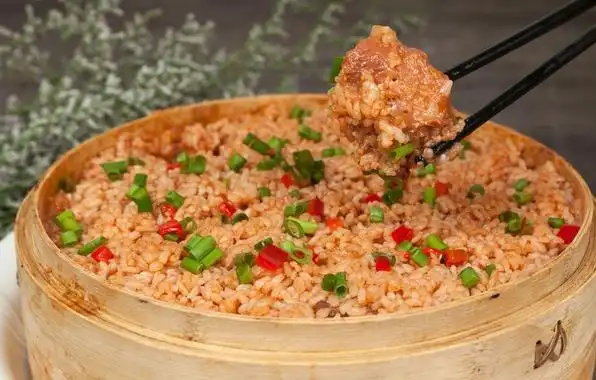
The rice aroma and spicy undertone after being stir-fried over slow fire are unmatched by machine mass production.
2. Three layers of pickled magic
Meat selection is another art that requires particular attention. You must choose the kind of pork belly that is fat and thin in alternating states and of high quality. The local people call it "five-flowered three-layer pork belly".
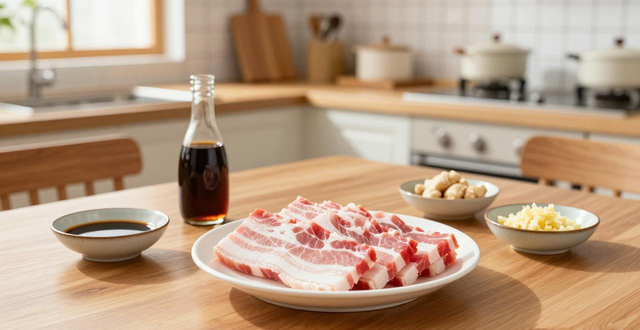
After the meat is cut into slices of even thickness, the marinating process begins, which determines the flavor.
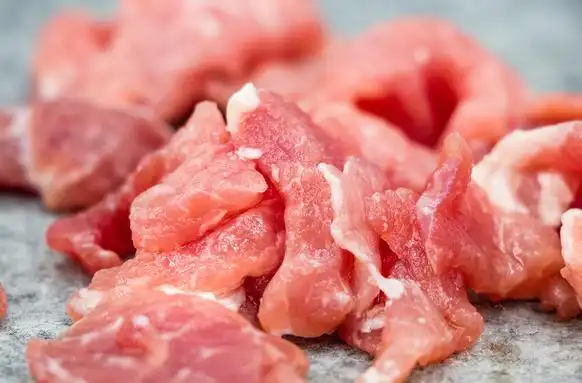
Removing the smell is the first step, but it is by no means simply rinsing with water.
People in the Sichuan and Chongqing areas will use minced ginger, peppercorns, and a little white wine to fully knead the meat slices, so that the spicy and fishy deodorizing effect can penetrate into every texture of the meat slices.
Then, it’s time to infuse the meat slices with a complex flavor: add an appropriate amount of Pixian bean paste (this is the soul of Sichuan cuisine), add sweet noodle sauce, then add light soy sauce, and add a little sugar to enhance the freshness.
This type of seasoning not only removes the fishy smell from the meat slices, but also further enhances the flavor of the meat slices. It takes up to half an hour to let the flavors of salty, sweet, spicy and numb achieve a perfect fusion.
There is such a thing as pork belly. It has been marinated, as if magic has been cast on it. The original fishy smell has faded away, and the strong soy sauce aroma has been replaced.
3. Fusion and sublimation in the steamer
The golden rice noodles and marinated meat slices are fully embraced together. Each piece of meat is evenly coated with a layer of spiced powder coating, and then it can be placed in a basket and steamed.
In Chongqing and in rural markets in Sichuan, you can often see this scene, that is, using bamboo steamers to steam layers of steamed pork, and the steam is mixed with the aroma of bamboo and meat.
Slowly steaming for a long time causes the fat part to turn into shiny oil, which penetrates into the rice noodles, making the rice noodles soft, waxy and oily; the lean part absorbs the essence of the oil and seasonings, becoming crispy but not hard.
In the end, the rice noodles absorbed the oily aroma of the meat and the compound flavor of the seasonings. As for the meat, the moisture and tenderness were locked in due to the wrapping of the rice noodles. The two complemented each other and reached the peak state of being soft and tasty.
The moment you take a bite, the first thing you feel is the numbing and slightly spicy feeling brought by the rice noodles. Then you experience the wonderful state of the pork belly quickly transforming into a mellow taste. The oily taste and the aroma of rice suddenly explode in the mouth. Such a subtle explanation of the true meaning of "homely but not as simple as ordinary" in Sichuan cuisine.
In the food-related landscape of Bashu, steamed pork with rice noodles has long been more than just a dish. In ordinary families, it is placed on the dining table on weekends to bring warmth and comfort to people. At the same time, it is also used as one of the indispensable "nine bowls" for banquets.
It carries the Sichuan and Chongqing people’s obsession with spicy taste, their respect for the original taste of the ingredients, and their emphasis on family reunion.
This soft, glutinous and salty mouthful is the imprint of hometown engraved deep in the taste buds of Sichuan and Chongqing people.
Comments NOTHING