
Exploring the Chinese Donburi Rice Bowl: Memories on the Tip of the Tongue in Those Provinces
Speaking of donburi, it can be said to be the soul of Chinese fast food culture.
There is such a situation that no matter those office workers who are always busy and in a hurry all day long, or students rushing home after a busy day of classes, as long as a steaming rice bowl appears, it can comfort their hungry stomachs in the blink of an eye.
If you combine this common family delicacy with the different regional characteristics of each place, you will realize that each province originally has its own "business card" related to donburi. They are not just a dish, but also responsible for the culinary secrets that represent a region.
Taste of Anhui: The authentic taste of a bowl of braised pork rice
Speaking of Anhui, many people will think of Huangshan. However, in the vast world of food, there is a dish called Anhui Braised Pork Rice, whose reputation has spread throughout the country.
Different from the sweet and glutinous taste of Taiwanese braised pork, the Anhui method pays more attention to the flavor and heat of the sauce.
The selected ingredients are fresh pork with three layers of streaks. Cut the pork into strips and stir-fry it in a pot. Stir-fry until it turns golden and remove the oil. Add rock sugar to the pot and stir-fry the rock sugar until it turns amber. Then pour light soy sauce into the pot, then pour in dark soy sauce. You also need to use star anise, cinnamon and other spices as supplements, and simmer carefully for more than two hours.
The braised pork soup here generally does not thicken. It relies on the natural colloid content of the meat skin itself and the process of long-term stewing, so that the soup thickens on its own and becomes oily and can stick to the spoon.
When eating, pour a spoonful of braised pork with meat and juice on top of hot rice, so that every grain of rice can fully absorb the rich flavor of the sauce. Pair it with a braised egg or a few boiled Shanghai greens, showing a fat but not greasy, salty and sweet taste. This is the most simple happiness for Anhui people.
Sichuan and Chongqing flavor: the aroma of fish and the spicy aroma of Kung Pao
Entering the Sichuan-Chongqing region, the taste of donburi becomes more intense.
Fish-flavored eggplant (shredded pork) rice bowl and Kung Pao pork rice bowl are the highlights here.
The essence of fish and coriander is the mysterious bowl of "juice", which is composed of pickled red peppers, ginger, onion, garlic, and sweet and sour sauce, which are mixed with each other in specific proportions.
After the eggplant is oiled, it becomes soft and glutinous and absorbs the juice. Stir-fry it with the minced meat. Finally, pour in the gravy and let it thicken over high heat.
As for the finished dish, it has a bright red color and a particularly rich fish flavor. It has all the five flavors of sour, sweet, spicy, salty, and umami. Mix it with rice, and when you eat it in one bite, the layers will be very clear.
Kung Pao Pork Diced Pork has a "spicy lychee flavor". Dried chilies will be fried to give a caramel aroma, and Sichuan peppercorns will also be fried to give a caramel aroma. The diced chicken is smooth and tender, and the peanuts are crispy. The slightly sweet and sour soup tightly wraps the ingredients. The thickening is done just right, making the vegetable soup and rice a perfect fusion. The result is addictive.
Northeastern Haomao: Exotic Fusion in Red Braised Beef
In the Northeast, due to geographical and historical reasons, the food culture here has been blended, and some traces of Russian and Western food have been incorporated. The red braised beef rice bowl is a typical representative.
This dish originated from Harbin and other places. You choose beef brisket or beef ribs, cut them into pieces, blanch them and stir-fry them. Add shredded onions, then add tomato sauce or fresh tomatoes and stir-fry them together to produce red oil.
Then add water and gradually simmer over low heat. When the beef becomes soft and the color of the soup turns orange-red, add the soul ingredient, which is red stew seasoning cubes, or a seasoning similar to Russian beetroot soup.
This makes the soup extra rich and mellow, with the unique sweetness and sourness from tomatoes and the complex aroma of spices.
The stewed beef stew is poured over rice with soup and meat. The beef is crispy, the potatoes have a dense texture, and the soup has a sweet and sour taste. Even in the summer when you have a poor appetite, you can still eat a big bowl easily.
Japanese style in Taiwan: a gentle interpretation of Taiwanese curry
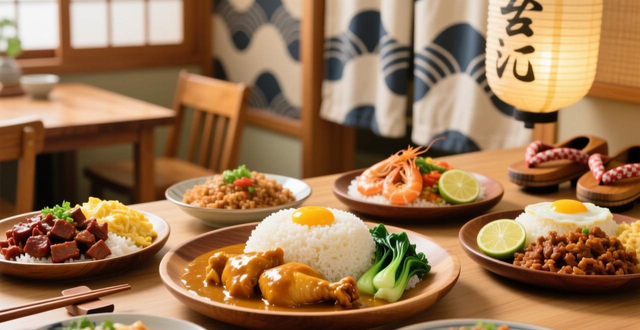
The Japanese occupation period had an impact on it. The rice bowl culture in Taiwan incorporated a distinct Japanese style. Among them, Taiwanese curry is the most common and widely popular.
Take chicken curry as an example. The chicken is cut into pieces, marinated, and then stir-fried.
Leave some base oil in the pot, stir-fry the chopped onions slowly over low heat. After the sweetness develops, add the potato cubes and carrot cubes and stir-fry.
Add water to cover the ingredients, bring it to a boil, skim off the scum on top, wait for the vegetables to cook until soft, and then add the Japanese curry cubes.
The curry cubes melt slowly in the hot soup, and you have to stir them constantly to prevent them from sticking to the pan until the soup thickens and turns golden.
This kind of curry has a smooth texture, fruity sweetness, and mild spiciness. It is loved by the elderly and children.
Pour the curry into the curry, shape it with a bowl, and pour it upside down on the rice on the plate. Place a few pieces of fried pork cutlets or fried chicken cutlets bought from a fast food restaurant next to it. This becomes a luxurious version of "cutlet curry rice". It is crispy in one bite and fragrant in one bite, making people feel completely satisfied.
Cantonese ingenuity: light yet authentic flavor
When you come to Guangdong, the rice bowl also reveals the essence of Cantonese cuisine - respecting the original taste of the ingredients.
Even though plate-top rice is more popular here, rice bowls such as shiitake mushrooms and chicken, and rice bowls with beef and eggs are both quite popular.
To make the Mushroom Slider Chicken dish, you need to select chicken leg meat, remove the bones and cut it into pieces, then marinate it with cooking wine, salt and wet starch to add flavor and make the meat tender and smooth.
Slice the mushrooms after they are cooked in water, stir-fry them with the ginger slices, then add the chicken pieces and stir-fry.
The thickening is extremely thin, just to give the soup a slightly thicker feel and to stick to the rice, but it will never take away from the outstanding features of the ingredients themselves.
The chicken is tender, the mushrooms are mellow, the soup is clear and delicious, and you get the most authentic taste of the ingredients.
Sometimes, the store will give you a small plate of stir-fried seasonal vegetables, or a spoonful of soup, which focuses on balanced nutrition and light health.
Taste of Shaanxi and Jin: Rice feelings in the noodle kingdom
In pasta-producing provinces like Shanxi and Shaanxi, rice bowls are not a mainstream staple food, but they do have unique characteristics.
For example, using local ingredients called potatoes and also local ingredients called carrots to cook beef stew, or using tomato scrambled eggs, which are national home-cooked dishes.
However, some people here prefer to add something "something" to the rice bowl, which is a small plate of old pickles, or Korean kimchi.
Locals know that using sour, crisp and tender pickles to neutralize the greasiness of meat and vegetables can give the taste buds a more layered experience.
At the same time, when making dishes like braised beef with potatoes, local people will use the starch rich in potatoes to naturally form a soup with a higher concentration during the stewing process, without even needing to thicken the soup. The soup is already rich and fragrant enough to tightly wrap the rice, showing wisdom in its simplicity.
From the unique mellowness of Anhui, the unique enthusiasm of Sichuan and Chongqing, the boldness of the Northeast, and the gentleness of Taiwan, a seemingly simple bowl of rice bowl actually contains a thousand flavors.
It is not restricted by form. As my friend who is passionate about cooking said, many dishes with soup can be made into rice bowls. This is the charm of Chinese cuisine that is open to all rivers.
Next time, when you hold a bowl of food with toppings covering the rice in your hands, you should taste it carefully. Maybe you can taste the various customs and customs of a land from this seemingly ordinary taste.
Comments NOTHING