
Lingnan New Year's Flavor·Guangfu Braised Pork with Plum Vegetables: A dish of oily and salty flavor full of nostalgia
In Guangdong, no feast is complete without "cut meat".
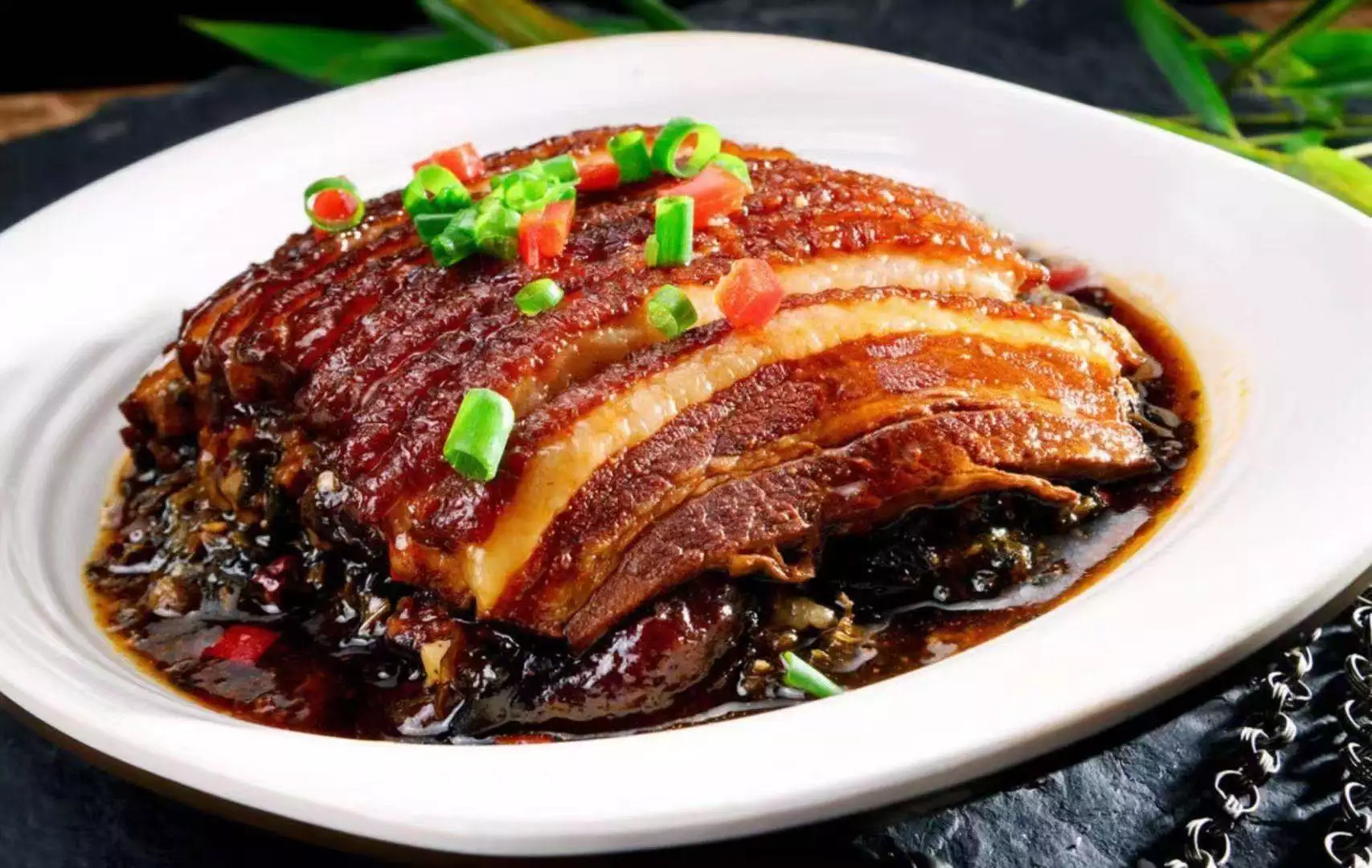
Taking Cantonese cuisine called "steaming" Kung Fu as a representative, there is a classic Cantonese dish called Braised Pork with Plum Vegetables, which is the "finale" on the Spring Festival dinner table of many Cantonese families.
Local people know deeply that the soul of this dish is related to Huizhou Gongcai, which is a kind of dried plum vegetables that has been dried three times and steamed three times to turn into a golden color. It carries an extremely rich fragrance from the dried vegetables.
Choose a piece of pork belly that meets the standards, called "three-story" pork belly, cook it until chopsticks can be easily inserted into the pork skin, then use "pine needles" or toothpicks to poke dense holes in the skin, and then apply Pearl River Bridge dark soy sauce to color it.

Fry in oil until bubbles appear on the surface and look like "tiger skin", then cut into "shuangfei slices" of uniform thickness and thickness, and put the soaked, washed and squeezed out water into the "chicken bowl" together.
Steaming over high heat for a long time allows the lard to completely soak into the core of the pickled vegetables. After being released from the cage and placed upside down on a plate, the skin of the meat is crystal clear and amber, and it is soft but not greasy in the mouth. The pickled pickled vegetables have absorbed the meat juice and oil, becoming black and shiny, salty and rich. Every bite is the "taste of home" in the memory of Cantonese people.
Northern Guangdong delicacies·Nanxiong Braised Pork Stew with Plum and Vegetables: Countryside pride blended with Hakka smoky flavor
Separating from the Pearl River Delta and arriving in Nanxiong, Shaoguan, a mountainous area in northern Guangdong, here, braised pork with pickled vegetables shows a completely different style.
Due to the hot and humid climate in the area, Nanxiong people are good at using cured meat and spicy food to appetize and remove dampness.
They lightly marinate the pork belly, and then stir-fry it with Nanxiong's unique salted duck or sausage, and then add locally made pickles, which the locals call "water vegetables."
The key to adding a unique flavor to the dish is to select a small handful of specially prepared dried chili peppers from the Nanxiong area, and then accurately add a few spoonfuls of wine-making juice with a strong Hakka style. Then carefully transfer the entire combination of ingredients required for cooking into a rough-textured earthenware clay pot, and then rely on a continuous supply of charcoal fire to simmer and cook in a slow and steady way.
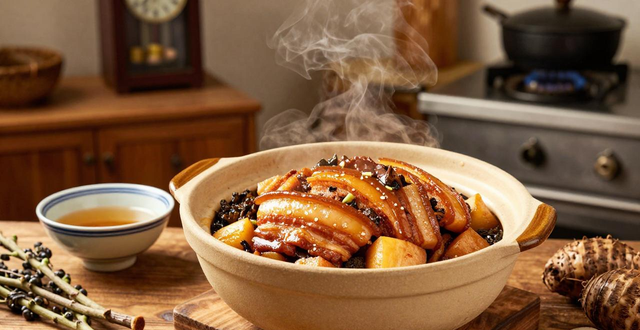
This method abandons the traditional "steaming" and uses "bao" instead.
After the dish is made, the pork is not only cooked and soft, but also absorbs the smoky aroma brought by the cured meat and the mellow and sweet taste contained in the rice wine. The soup is thick and slightly spicy. It is unique to use it to mix with rice. It fully demonstrates the unique flavor of the mountains and wilds that combines "salty, fragrant and spicy" in Hakka cuisine.
Chaoshan Qiaosi·Mei Cai Pork Shaobing and Plum Pork: Sweet and Salty Gongfu Tea Snacks
Chaoshan people, who are good at innovation, have taken braised pork with pickled vegetables to a new level.
They crumbled the stewed pork belly with pickled plums, added Laoxianghuang (pickled with bergamot), which is one of the three treasures of Chaoshan, or added a little sugar and winter melon grains, mixed with Puning bean paste, then wrapped it in hand-kneaded dough, flattened and sprinkled with sesame seeds, and then baked in a special oven.
The crust of the freshly baked Meicai Braised Pork Shaobing is extremely crispy and crumbs fall off when touched lightly. However, the filling inside is moist and tastes both salty and sweet. The aroma of the meat and the aroma of the preserved fruit blend together in a wonderful way, making it an incomparable tea snack when paired with Kung Fu tea.
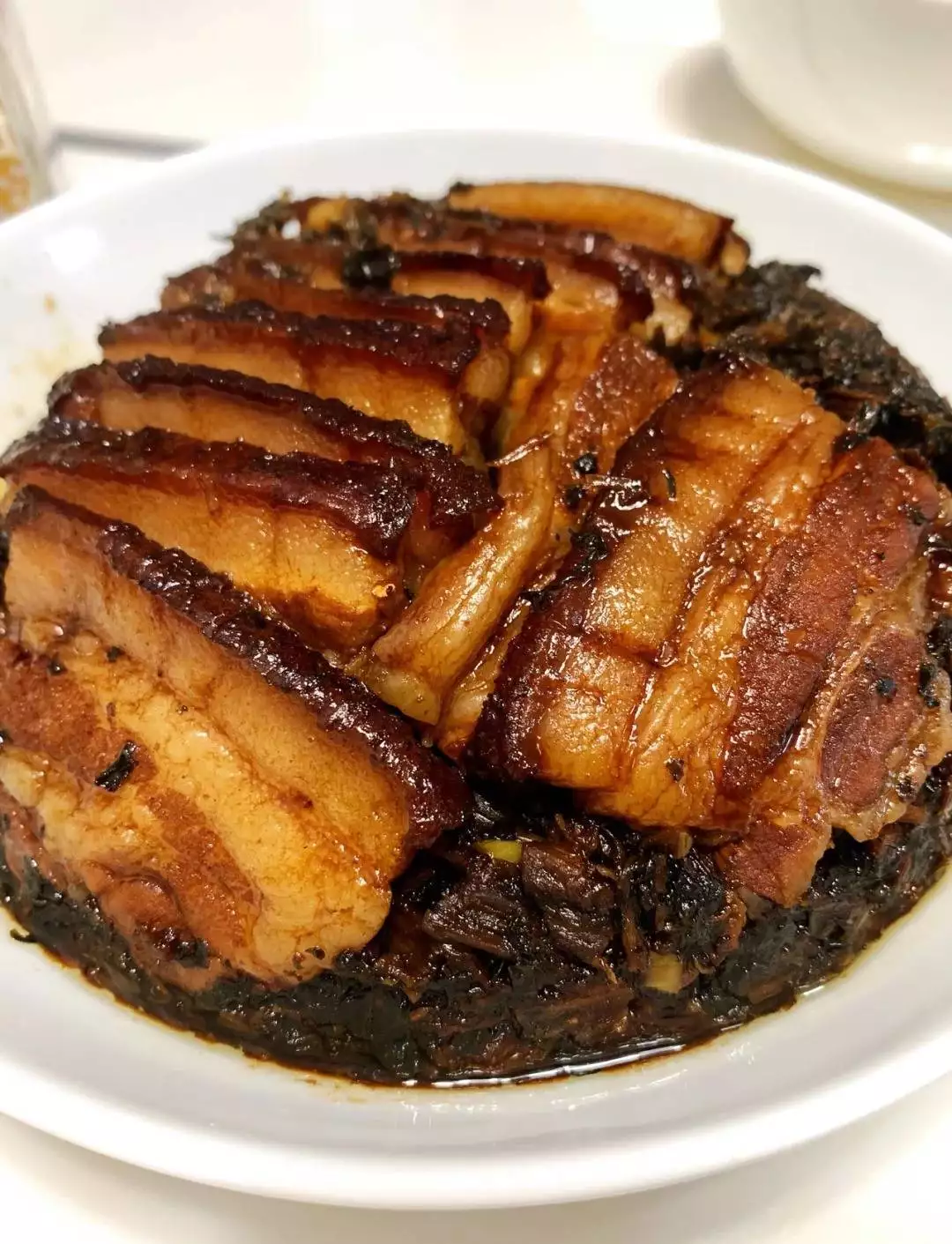
There is also another dish called "Plum Plum Braised Pork", which is made by burying a few Laohua plums in the traditional braised pork during steaming. It is produced in the Chaoshan area.
Under high temperature conditions, the fruit acid and salty flavor contained in the plums are slowly released, which not only relieves the fatness of the pork belly, but also gives the gravy a complex taste with sweet and sour characteristics. After eating the pork belly, the thick plum gravy at the bottom of the plate is often used to dip the fried Puning tofu or mix with Chaoshan dry noodles. It can be said to be extremely wonderful.
Innovative interpretation, new style fusion and healthy vegetarian food: bringing classics into more daily life

Nowadays, this traditional delicacy has a more modern take on it.
In cities that pursue efficiency and health, some restaurants have launched "Claypot Rice with Braised Pork with Plum and Cabbage". The marinated pork slices with plum and cabbage are spread on top of shredded rice and cooked over an open flame. Every grain of rice is dry, the rice crispy rice is golden and crispy, and every grain of rice has fully absorbed the essence of the gravy.
Among those who pay attention to health, the vegetarian version of braised pork with pickled vegetables is quietly becoming popular. Chefs use fried taro slices to imitate the shape of the meat slices, fill them with "dried meat" fried with oyster mushroom slices and konjac, and then cover them with dried plums. The vegetables are steamed, and although there is no meat in the finished product, due to the glutinousness of the taro and the chewy texture of the mushrooms, combined with the salty aroma of the pickles, it is still very delicious with rice, allowing people with different eating habits to appreciate this unique local flavor.
Comments NOTHING