

The success of gold-engraved work is passed on to Jing customs: the historical origins and civilization trajectory of Chinese paper-cutting art
It existed before the invention of paper in the Western Han Dynasty. It used techniques such as carving, engraving, picking, and engraving to lay the foundation for paper-cutting techniques for later generations. It was the work of ancestors who used gold foil, leather, and silk to display their skills on gold foil, leather, and silk. It is said that the form of paper-cutting did not exist at that time. The ancient name of "ribbon-cutting" was later recognized as an outstanding representative of human intangible cultural heritage. It gradually developed and matured through the dynasties. It was not until the improvement of papermaking technology in the Southern and Northern Dynasties that our Chinese paper-cutting art truly appeared in the state of paper-cutting. Five flower-shaped paper-cuts from the Northern Dynasties were unearthed from the Astana Ancient Tombs in Turpan, Xinjiang. These paper-cuts are believed to be the earliest physical paper-cuts discovered so far. They use repeated folding cutting methods and non-blocking image modeling techniques. This modeling technique can clearly present complex, delicate and layered image shapes. It is in the same line as the flower paper-cuts that are popular among the people today, thus confirming that this folk art has a historical inheritance of more than a thousand years.
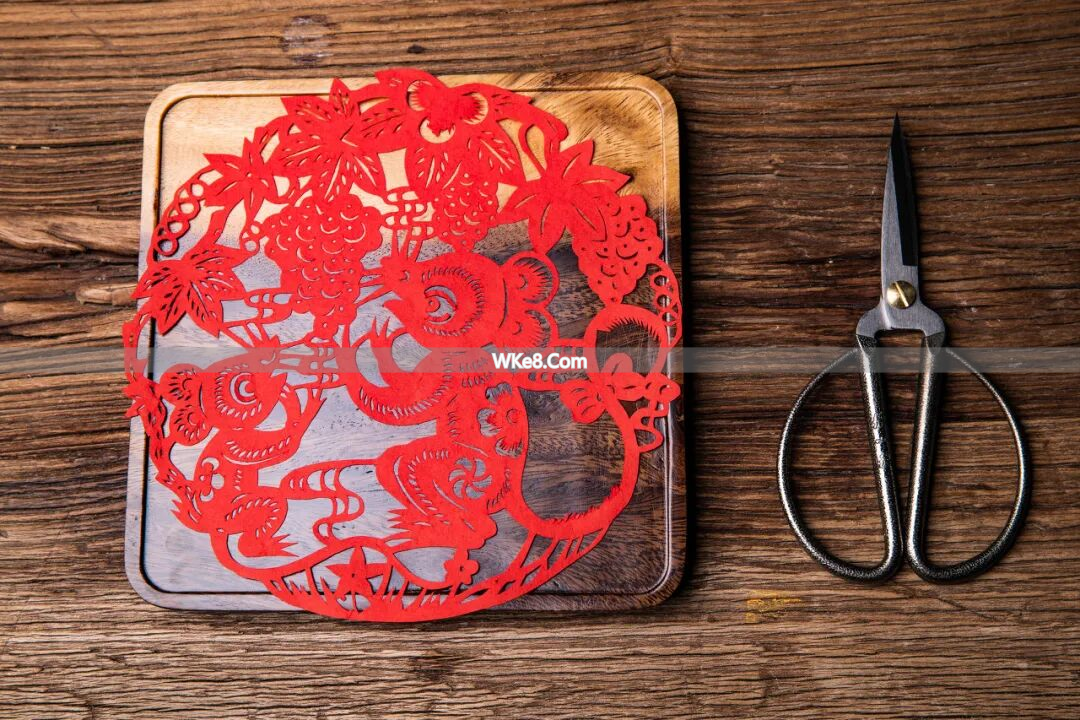
The Tang Dynasty was an important transformation stage for the art of paper-cutting. At that time, craftsmen achieved innovation in techniques and created the independent expression form of "cutting window grilles", the independent expression form of "cutting figures", and the independent expression form of "cutting flowers and birds", which gradually developed the art of paper-cutting from a simple decorative craft into an art category with independent aesthetic value. From the Song Dynasty onwards, the scope of application of paper-cutting has been significantly expanded. It is used as a pattern template in ceramic firing, and it has also greatly influenced the emerging art of shadow puppetry. The carving process of shadow puppet figures is directly derived from the paper-cutting technique. At the same time, the pattern engraving in the blue calico process also uses the yin and yang engraving method of paper cutting, showing the in-depth interpenetration relationship between folk art categories. By the Southern Song Dynasty, artists who took paper-cutting as a profession had appeared in Lin'an City. They used fine techniques such as multi-knife and hollowing methods to make their works more complex and sophisticated, and their artistic value was greatly improved. During the Ming and Qing dynasties, the art of paper-cutting reached its most prosperous stage and was widely used in lantern decorations, fan decorations, embroidery patterns, etc., becoming an indispensable decorative element in folk life.

Cutting the Ribbon to Bring Jin Style to People: Classification System and Cultural Function from the Perspective of Intangible Cultural Heritage
From the academic perspective of intangible cultural heritage protection, Chinese paper-cutting can be divided into four main categories according to its application scenarios and social functions: First, decorative paper-cutting, which is posted directly on doors, windows, walls, and lights. Among them, window grilles are the most representative. The arrangement of window grilles must follow strict folk regulations. Corner flowers, group flowers, and sets of story-type window grilles cooperate with each other, which not only beautifies the living space, but also carries the festival significance of praying for blessings and auspiciousness. Secondly, there are lining paper-cuts, such as wedding flowers, fireworks, candlestick flowers, etc., which are used to decorate gifts and dowries! The wedding flowers are made of red rice paper, and most of the patterns are auspicious patterns such as "dragon and phoenix presenting auspiciousness" and "unicorn delivering children", which play a ritual symbolic function in wedding customs! Thirdly, there is a type of paper-cut which is embroidered base paper-cut, among which shoe flowers are the most common. Some flowers are embroidered on the toe, and some are shaped like a crescent and extend towards the upper part of the shoe. Parts are only cut but not hollowed out. This design is actually based on the technique of changing the needle color during embroidery. It deeply combines paper-cutting with embroidery skills. Fourth, there is a kind of paper-cutting called printing block type paper-cutting, which is specially used for the production of blue printed cloth. In the dyeing workshop, various patterns and formats are pre-engraved. After that, when the customer selects the sample, it is processed and dyed. This "block printing and dyeing" model has brought paper-cutting technology into the field of manual production, thus demonstrating its unique value as a model of "productive protection".
The aesthetic characteristics and skill inheritance system of regional schools
Regional schools with widely different styles have been formed in the long-term evolution of Chinese paper-cutting. This is a representative project of national intangible cultural heritage, each with its own unique technical system and aesthetic paradigm. Paper-cutting in Yuxian County, Hebei Province, with exquisite themes of opera characters, is mainly intaglio and relies on spot dyeing and coloring. It has always been known as "three parts of work and seven parts of dyeing". It can clearly show its skill in the fine knife work, and can significantly highlight its characteristics in the rich colors. Shanxi's Guangling paper-cutting, which embodies the ruggedness of the Loess Plateau and the beauty of Jiangnan's water towns, has a unique style with its slender lines, expressive shapes and delicate knife skills, thus forming an aesthetic character that combines hardness and softness. Shaanxi paper-cutting, known as the "living fossil" of folk art, completely inherits the ancient shapes and patterns since the Yangshao culture. Its themes take into account ancient myths and legends and modern rural life, and carry profound historical and cultural information.
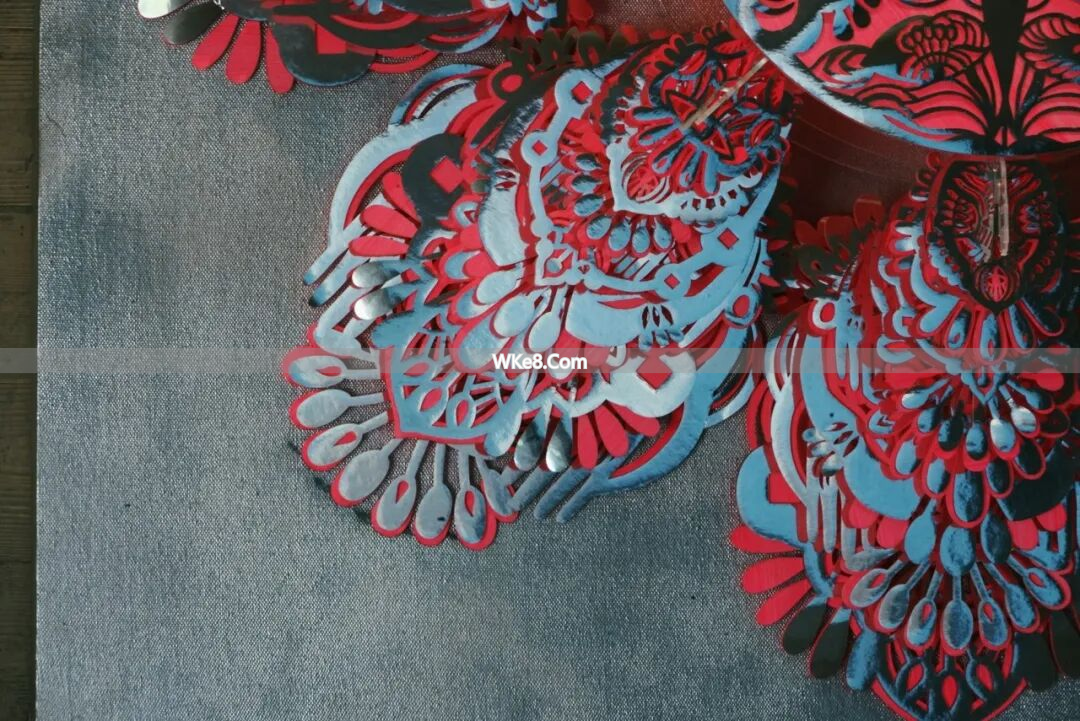
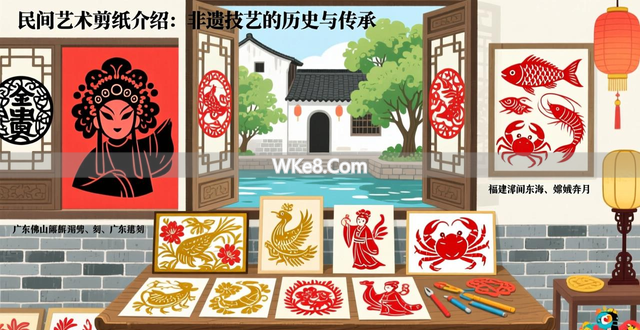
The paper-cutting genre in the Jiangnan region also presents a splendid situation. Zhejiang paper-cutting pays attention to the contrast between the outline of the image and the fine carving of negative lines. The compositions of Jinhua opera window grilles are complex and ancient and simple in shape. Yueqing paper-cutting is characterized by distinctive themes and fine and skillful patterns. It shows the decorative interest of using complexity to set off simplicity and well-arranged density. The paper-cutting of Zhangpu, Fujian, a place on the southeastern coast, features aquatic animals as its characteristic theme. It is elegant and beautiful in shape, and has a rigorous and thoughtful structure. The naive and simple style exudes a strong flavor of seaside life. Paper-cutting in Foshan, Guangdong, uses comprehensive techniques of cutting, carving, and chiseling. The colors are very strong, showing a resplendent effect, including flowers and birds, even insects and fish, characters in operas, and folk stories. Classic themes such as "The Eight Immortals in the East China Sea" and "Chang'e Flying to the Moon" show their diverse styles that are both delicate and delicate, as well as vigorous and powerful.
Living inheritance and contemporary value in the context of intangible cultural heritage protection
In 2006, China's paper-cut works were selected into the first batch and were designated as national intangible cultural heritage. When the time came in 2009, they were successfully selected into a specific category known as UNESCO's "Representative List of Intangible Cultural Heritage of Humanity". This situation significantly demonstrated that this ancient special skill has universal value and has gained international recognition.
When contemporary intangible cultural heritage is protected, we not only focus on the inheritance of the skills themselves, but are also more committed to the reorganization and creation of the folk culture space and community identity attached to them.
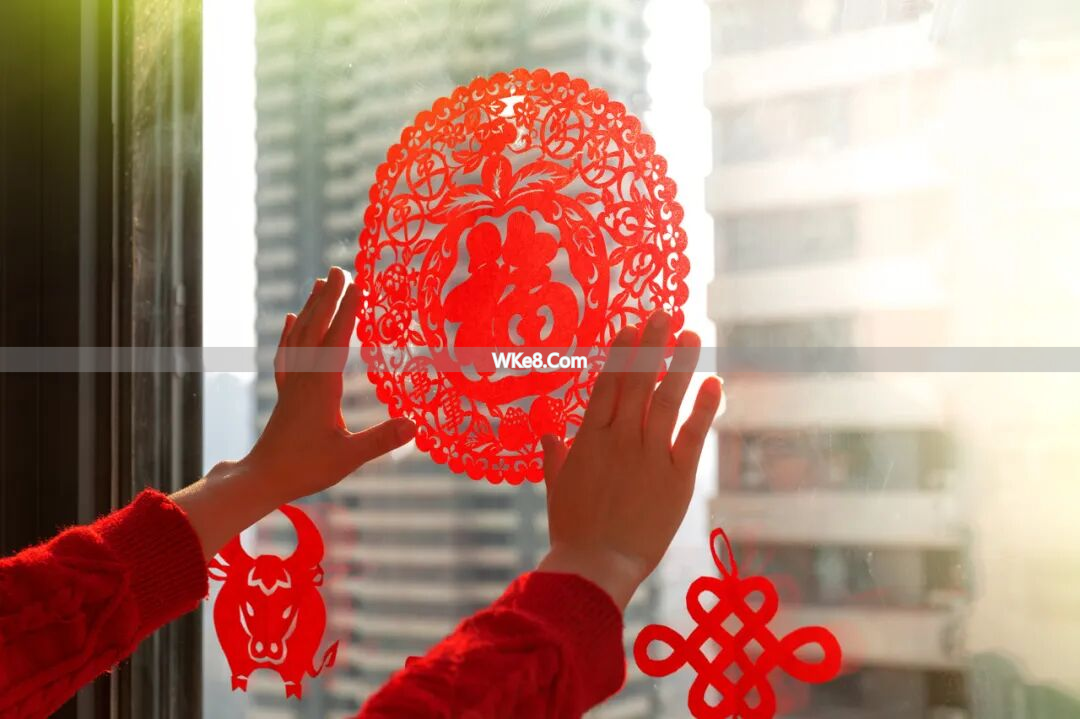
As a visual representation of the cultural genes of the Chinese nation, paper-cutting art has artistic aesthetic value, historical documentary value, and social and cultural significance. It is a living database for the study of folk beliefs, folk etiquette, and regional culture.
In terms of the path of inheritance and development, various places have gradually established a training mechanism for inheritors to promote paper-cutting into the scope of campus aesthetic education courses and explore the creative transformation of traditional skills and modern design.
The art of paper-cutting has been going on for thousands of years, and its enduring vitality lies precisely in the fact that it has always been rooted in the fertile soil of folk life. While protecting the essence of the craft, it is constantly integrated into the context of the times, thereby achieving a gorgeous transformation from folk practical products to cultural symbols, and thus providing the world with a Chinese example of the living inheritance of intangible cultural heritage.
Comments NOTHING