
Hollowing out patterns: the historical origins and cultural context of Chinese paper-cutting art
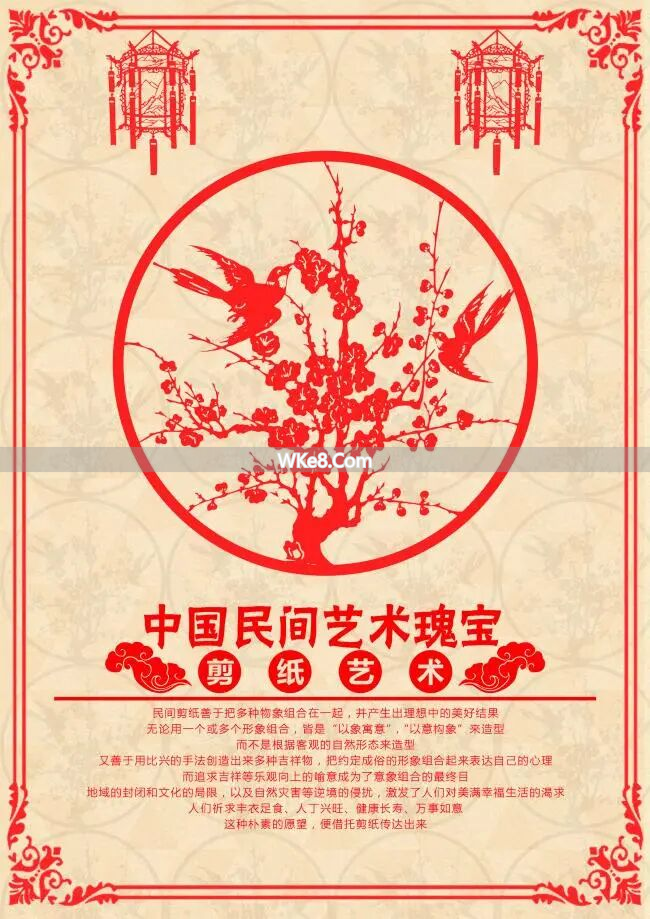
As one of the most original and universal forms of Chinese folk art, paper-cut art has a history that can be traced back to the Northern Dynasties (386-581). Judging from the actual paper-cut objects unearthed from the Astana Tomb in Turpan, Xinjiang, the paper-cutting technique had reached a mature state at that time, with classic styles such as "Monkey Flowers" and "Bird Flowers" appearing. These remains, which are now more than 1,500 years old, have physically confirmed the early glory of paper-cutting as a hollow art. Since the Sui and Tang Dynasties, as the social economy continued to develop and citizen culture began to sprout, the art of paper-cutting gradually became more and more prosperous. It was not only used in festivals and folk customs, but also entered the field of literary creation. In "Cai Sheng" written by the poet Li Yuan of the Tang Dynasty, there is a poem such as "The leaves come out with the golden knife, and the flowers follow the jade to point out new ones", which vividly depicts the superb skills of women at that time when cutting flowers, birds, grass and insects. This poem has become a very precious document for studying the art form of paper-cutting in the Tang Dynasty. During the Song Dynasty, paper-cutting practitioners began to appear, forming a preliminary industrial division of labor; during the Ming and Qing dynasties, the art of paper-cutting reached its historical peak, with its application scope covering all areas of daily life, and the technical system becoming increasingly complete.
Yin-Yang Chiseling: Diverse Techniques and Aesthetic Paradigms of Paper-cutting Techniques
From the technical source of paper-cutting, it belongs to the art of hollowing out and carving on flat paper. Its important key is to rely on the composition principle of "positive lines are connected and negative lines are interrupted" to show the visual image of the virtual and the real. Over a long period of artistic practice, folk craftsmen relied on their outstanding creativity to develop a multi-technique system with cutting and hollowing as the main parts, which covers different categories such as paper tearing, burning, color matching, color lining, dyeing, and outline. The richness of this technique gives the art of paper-cutting infinite expressive power: the finer ones can be like spring silkworms spinning silk, with very slender and continuous lines; the thicker ones can be like swiping with a large pen, very powerful and hearty. In terms of spatial form, paper-cutting can be pasted on a flat surface, placed on top of objects, or hung in the air, thereby creating a multi-dimensional decorative effect. It is precisely because of the simple and easy availability of tools and materials, as well as the flexible and popular techniques, that the art of paper-cutting can transcend class boundaries and be widely distributed in cities and villages, forming a folk art ecology that has regional commonalities but also has its own characteristics.
Meaning in form: the cultural function and symbol system of folk paper-cutting
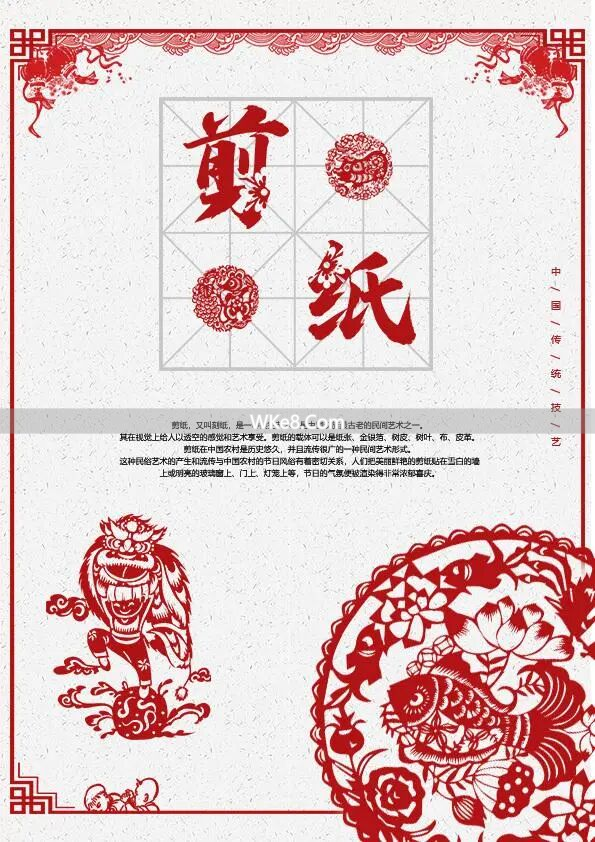
The folk paper-cutting form of living culture carries the rich memory of farming civilization and the expression of collective unconsciousness. In traditional social life, whenever there are major ceremonial events such as weddings and funerals, birthday celebrations, and seasonal events, people will cut out various auspicious patterns on red or yellow paper to decorate the environment and enhance the atmosphere. This act itself is a materialized expression of the ideal of life and the wish for survival. The image symbol system in paper-cutting conveys ancient maxims, beautiful legends and life philosophy with its simple modeling language and flowing line rhythm. The common animals, flowers and plants on the windows, drama stories, auspicious patterns in the fireworks, auspicious words on the door note, no matter which one they are, use metaphors and symbols to condense the Chinese people's persistent pursuit of life ideals such as peace and contentment, reproduction of offspring, happiness, wealth, longevity and joy into small yin and yang combination symbols. This symbolic form of expression forms the unique humanistic connotation and cultural depth of paper-cutting art.
Changes according to needs: the type system and regional characteristics of paper-cut art
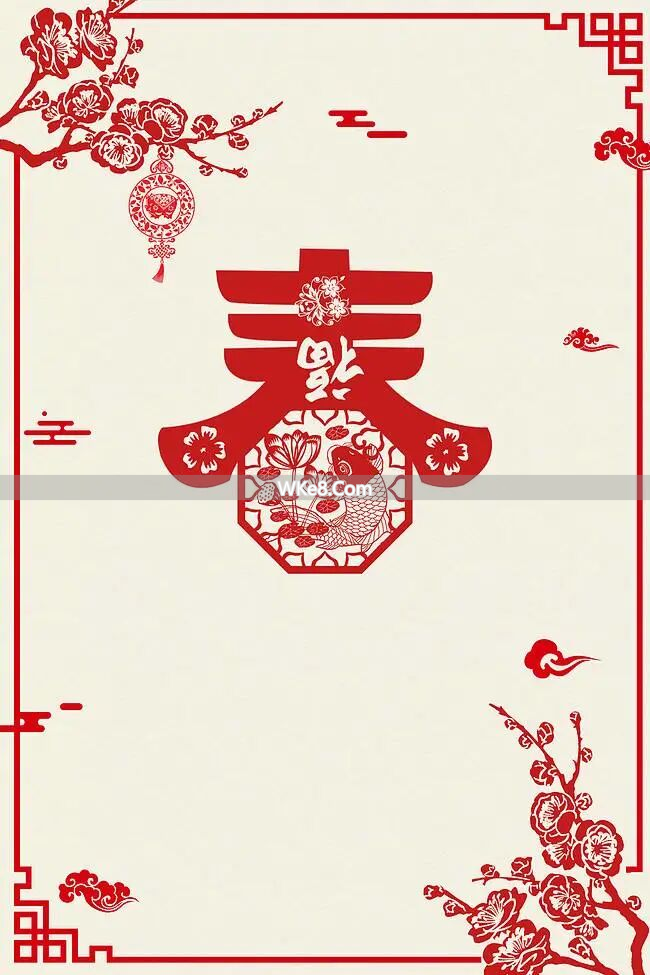
Through the long history of evolution, paper-cut art has created a diverse system that adapts to different spatial carriers and functional requirements. The window grilles that make up this system are part of a very representative category. This category is particularly prosperous in the north. Most farmers in the north use wooden lattice windows. During the New Year and the holidays, the "paper" is replaced with new ones and window grilles are put up. There are corner flowers used to decorate the four corners of the window panes, as well as branch flowers and various conformable patterns. Among Shandong folk, there are also "window crossing" style window grilles that span the window panes, showing the exquisite combination of paper-cutting and architectural space. Among the paper-cut fireworks attached to gifts such as cakes, longevity noodles, and eggs, the "cake flowers" from Chaozhou, Guangdong, belong to this category, as do the "circle potted flowers" called "circle pot flowers" from Pingyang, Zhejiang. Most of their themes are auspicious and joyful patterns, with the purpose of strengthening the blessing meaning of the gift. Door notes, also known as "hanging notes" and "hanging money", are mostly posted on the lintel or on the second beam of the main room. They are in the shape of a banner, with tassels on the lower part. A set of five pieces contains auspicious words such as "the country is peaceful and the people are safe" and "years have more than enough". It has the dual meaning of welcoming the spring to remove old things and praying for blessings to drive away evil spirits. In addition, there are the "Douxianghua" colored paper-cutting used for sacrificial activities, and the oldest group-flower pattern paper-cutting. These diversified and different types of systems together constitute a complex, diverse and rich cultural landscape of paper-cutting art.
Living inheritance: the value continuation and development path of paper-cutting art in the context of intangible cultural heritage
A life is tied to a piece of paper, a new life comes from a cut. As a representative item of national intangible cultural heritage, Chinese paper-cutting continues to play an important role in cultural inheritance with its unique artistic vitality and rich humanistic connotation. In the specific context of contemporary intangible cultural heritage protection, paper-cut art not only faces the urgent mission of inheriting skills, but also shoulders the contemporary issues of aesthetic education, cultural identity and creative transformation. Its simple but profound modeling language, flowing and rhythmic line processing, and symbolic system are profound in meaning and close to people's livelihood, all of which provide a steady source of inspiration for contemporary art creation and design. The protection of paper-cutting art cannot only focus on the recording and preservation of technical skills, but also needs to delve into the value of its historical documents, its social and cultural significance, and its activation and application in contemporary life. Only by respecting the traditional core skills and cultural connotations and promoting the organic integration of paper-cutting art with contemporary life can this ancient engraving art continue to shine in modern society and achieve the ultimate goal of intangible cultural heritage protection, which is to allow cultural heritage to continue its everlasting vitality in living inheritance.
Comments NOTHING