
Thousands of years of knife-cutting and beautiful seals: the historical origins and cultural texture of Chinese paper-cutting art
Paper-cutting, as one of the most ancient folk arts of the Chinese nation, has been spread across the land of China for more than 1,500 years with its amazing and tenacious vitality.
During the Western Han Dynasty, papermaking was invented and improved, which provided a new creative medium for intelligent folk artists. Paper was popularized, allowing the hollow art to complete the carrier transfer from gold foil, leather, leaves and other materials, and eventually formed an independent art category.
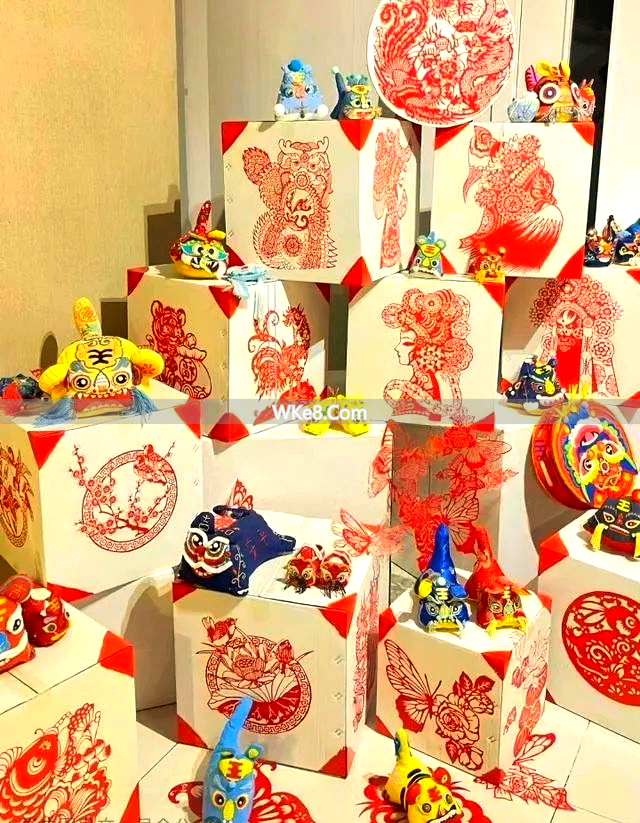
This skill took root and grew in the land of agricultural civilization. It experienced mature evolution in the Tang and Song Dynasties and reached its peak in the Ming and Qing Dynasties. It slowly penetrated into every texture of people's lives, and then became a vivid cultural code that carries national memory and collective aesthetics.
Image system and spiritual projection: the aesthetic schema and social function of folk paper-cutting
The core appeal of paper-cutting art is mainly reflected in the unique visual symbol system it creates.
In accordance with the modeling rules of "using images to imply meanings and using images to construct images", the creators are not limited to the perspective proportions of objective objects, but use Bixing techniques to skillfully reconstruct numerous objects.
Fish leap in the lotus pond, happiness, wealth and longevity gather together, and melons and melons continue to grow. These auspicious combinations that have become established are not simple depictions of nature, but the spiritual projection of people's survival ideals such as adequate food and clothing, a prosperous family, and health and longevity.
In the feudal society that has gone through a long period of time, faced with the cramped living environment and frequent natural challenges, paper-cutting has become a spiritual carrier for the people at the bottom to comfort their souls and express their demands. It has a rich, simple and bright style, which is exactly the intuitive presentation of the unpretentious emotional world of workers. It undertakes various social functions such as cognitive education, emotional catharsis and cultural inheritance.
The craftsmanship of the north and the south each have their own ingenuity: the technical schools and craft characteristics of paper-cutting art
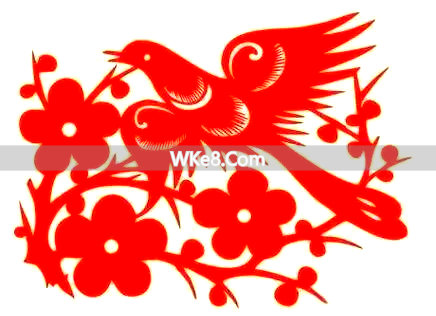
From the perspective of technical system, paper-cutting can be divided into two systems: monochrome paper-cutting and color paper-cutting .
Monochrome paper-cuts with specific basic shapes, including red, green, black, gold and other colors, are often used for window decoration and embroidery patterns.
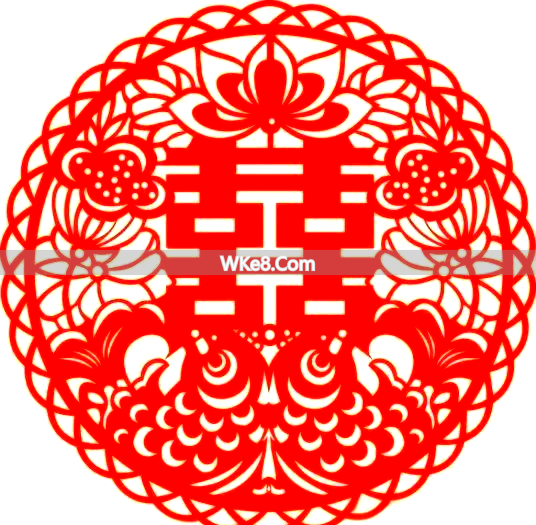
By interweaving and combining negative carvings and positive carvings, artists used "hidden knife" techniques and "stabbing" techniques in the embroidery samples to provide precise guidance for subsequent female embroidery techniques.
Following the development of diversified aesthetic needs, the painting technique of spot dyeing is gradually integrated into it, the painting technique of color registration is also gradually integrated, the painting technique of filling color is also gradually integrated, and the painting technique of wood printing is further integrated into it, enriching the artistic expression of paper-cutting.
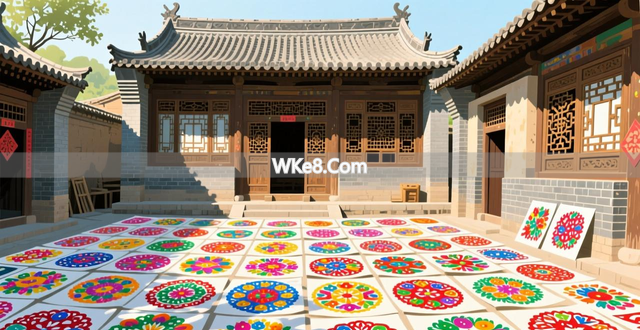
Due to differences in regional culture and aesthetic habits, the characteristics of Yuxian paper-cutting's gorgeous dots and dyes, Foshan's paper-cutting's copper-lined gold and green characteristics, Yangzhou's paper-cutting's smooth lines, and northern Shaanxi's paper-cutting's rough and bold characteristics, etc., have gradually formed the characteristics of these distinctive schools, which together constitute a colorful and colorful craft ecology between the north and the south.
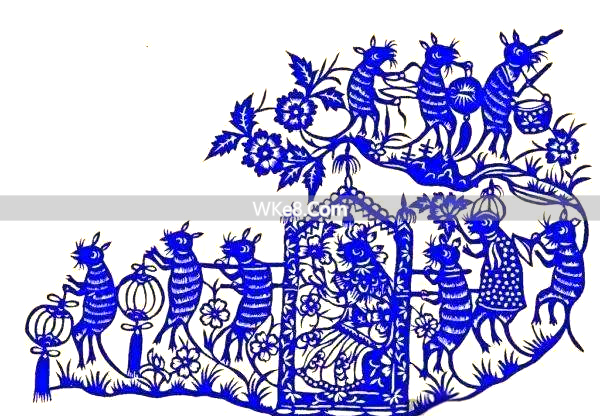
From plane to multi-dimensional: space exploration and activation application of three-dimensional paper-cutting
In the current context of intangible inheritance and innovation, three-dimensional paper-cutting, as an extended form of traditional craftsmanship, integrates the technique of cutting, folding, painting, and the comprehensive technique of gluing.
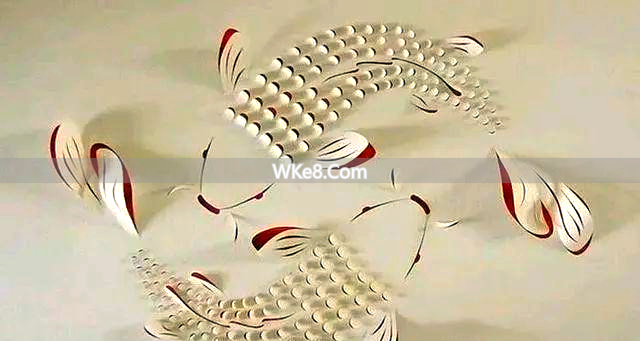
It retains the essence of the image of traditional patterns, and through the creation of spatial structure, it turns the work from a two-dimensional plane to a three-dimensional one, making the work present an aesthetic quality that is both realistic and romantic.
In terms of application, paper-cutting still maintains a close connection with life. Window flowers, wall flowers, and ceiling flowers used as decorations directly participate in the construction of living spaces. Wedding flowers and offering flowers used as gift arrangements carry the meaning of ceremonial communication. Emotional weight, as embroidery patterns for shoes, pillows, and hats, maintains the symbiotic relationship between the tradition of female red and paper-cutting techniques. As a printing and dyeing plate, the blue calico technique transforms the beauty of paper-cutting into the blue rhythm of thousands of clothes.
This breadth of application is deeply embedded in folk life and production practice, which is precisely the basis for the endless prosperity of paper-cutting art.
Heritage protection and rebirth of the times: value interpretation and inheritance path from the perspective of intangible cultural heritage
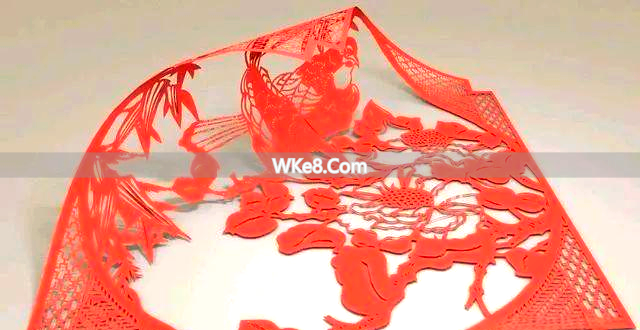
The ancient patterns and visual patterns preserved in paper-cut works can provide rare image and historical data for exploring folk beliefs, searching for the changes and development trends of folk customs, and analyzing regional culture. It has the attribute of a space composed of culture, which shows that it is not only an artistic object that presents a static state, but also a dynamically changing cultural practice that is continuously inspired during festivals and celebrations and through various etiquette and customs in life.
At present, the protection of intangible cultural heritage has changed from just recording skills to comprehensive protection, focusing on the systematic maintenance of the inheritance school system, focusing on the systematic maintenance of the core skills of the craftsmen, and emphasizing the systematic maintenance of the original cultural space.
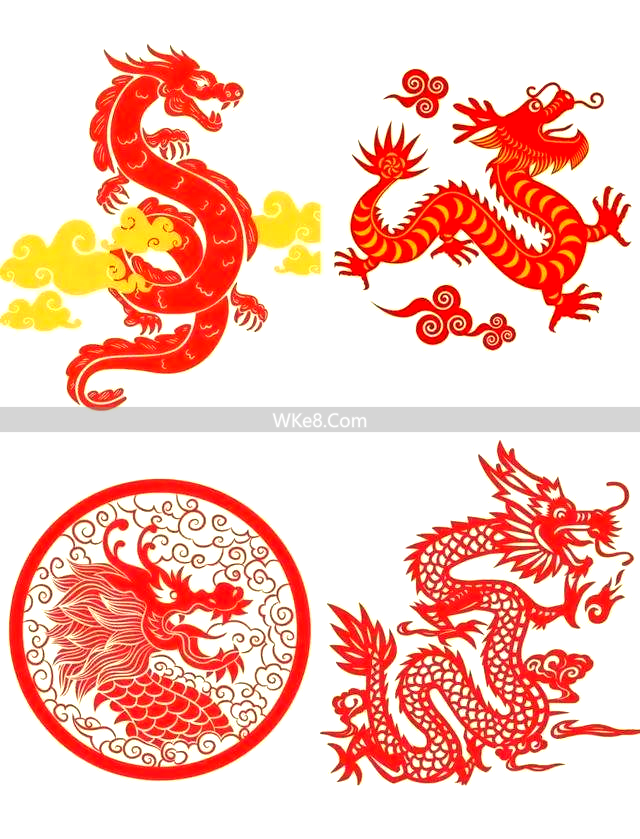
Affected by the impact of industrialization and urbanization, how to bring paper-cutting skills back to daily life and achieve creative transformation and innovative development through organic integration with modern design, aesthetic education, and cultural tourism is a topic that every cultural inheritor needs to think deeply about.
Protecting the blade touched on the paper is to protect the Chinese nation's unique way of seeing through the external environment and specific situations, expressing one's inner emotions and feelings, and yearning to find beautiful things.
Comments NOTHING