
My heart was filled with panic.
At that time, I was watching a Korean drama. The male protagonist in the drama was performing courtesy towards his elders. His knees touched the ground, his back remained straight, and his forehead touched the ground. The series of movements were as smooth and natural as clouds and flowing water. There was a respectful look in his eyes. At this time, barrages floated by one after another, with words such as "I really want to learn" and "This is Confucian culture."
Suddenly I couldn't laugh anymore.
This is originally our thing.
Loss of etiquette, please seek help from others
"If you lose etiquette, please call the wild people." When I read this sentence now, why do I feel a little crying?
In "Etiquette in China", the two countries Japan and South Korea are constantly mentioned. This is not a sign of admiration for foreign countries, but a true feeling of love. In our country, we can only see some shadows of "kneeling down and worshiping" in costume dramas, as well as "sitting on the floor", but in other places, it is a real daily behavior. There is a country whose population composition is relatively homogeneous, and its history has never been cut off in half. It has been passed down from generation to generation.
And what about us? Dynasties have changed, national integration has occurred, Hu beds have arrived, and chairs have become higher. Under such circumstances, we "sit high" and feel comfortable, but we have lost that awe that was so low as to be in the dust.
Don't get mad at the mere mention of kneeling down
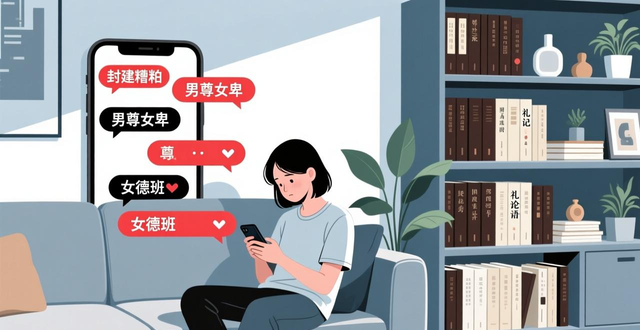
Nowadays, when traditional etiquette is mentioned, many people's first reaction is, "feudal dross", "men are superior to women", and "female Durban".
Especially kneeling.
But have you ever thought about it, before the Song Dynasty, people in ancient times all sat on mats. At that time, the so-called "kneeling" actually meant lifting the buttocks from the heels and keeping the body upright. This was a respectful sign of "getting up soon." Only later did high tables and high chairs appear, and this action became so solemn and so "humble".
The utensils have changed and the "Tao" has been misunderstood.
What we throw away is not the cumbersome form, but the "respect" behind the form.
reconstruction? Start with a meal
Talking about rebuilding the Chinese etiquette system sounds like a big topic. However, I think it is not that mysterious.
Can we start with eating?
No smacking behavior is allowed. When the elders have not used their chopsticks and the food is not all served, you cannot take the lead in eating. When handing scissors to others, you should keep the tip of the knife facing you.
Start with standing and sitting?
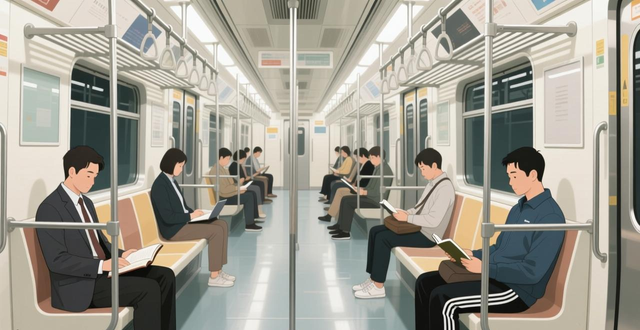
In public places, do not appear to be swaying or occupying two seats by yourself. Go in line while waiting for others and don't block the elevator entrance. This is not cowardice, it is education.
Among the so-called three rites, these are not written in such detail. However, the energy that embodies the ability to put oneself in others' shoes is essentially the core inner part of the rites.
Return adulthood to the "coming-of-age ceremony"
Today's children are considered adults at the age of eighteen. Then what?
In the book, Teacher Haiying discovered the crown ceremony and hairpin ceremony of the Zhou Dynasty, which are not just for one ceremony, but show you time and time again that starting from today, you have shouldered certain things, you need to take responsibility, and you have to become a person who stands upright.
I saw that Quzhou is carrying out the "Three Rites", which are the initiation ceremony, the Mingzhi ceremony, and the coming-of-age ceremony, which are respectively targeted at 6-year-old children, 14-year-old teenagers, and 18-year-old youth. It's really great.
Even if you just imitate, even if you just act, and act, the so-called "style" will be deeply engraved in your bones. Things like a sense of ritual are sometimes ten thousand times more effective than preaching.
Isn’t it nice to give a hand as a gift?
During the epidemic, some people started to bow. How nice.
There is no physical contact, so it is safe; the waist is slightly bent and the hands are hugged, showing such an elegant temperament. It is more subtle than a handshake, and more appropriate and appropriate than a hug.
Who says tradition cannot live in the present?
And those who rail against "female Durban", they're right to rail against it. Treating those bad and old things as precious treasures, and treating restrictions and restrictions as good education is both stupid and bad behavior. But is it possible to avoid indiscriminately dismissing everything that is relevant? Is there any fundamental difference between teaching girls to be dignified in their manners and gentle in their tone of voice, and teaching boys to be responsible and respectful?
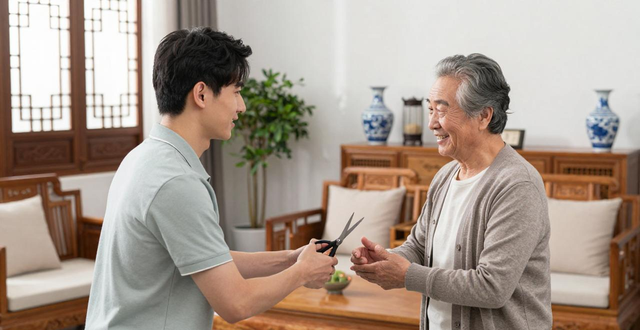
There is a saying in traditional etiquette that when handing something with a sharp point, the sharp point should never be pointed at others. But nowadays, this actually means "Do not do to others what you do not want others to do to you." It is just a different way of expressing it, but the truth behind it has not changed.
Don't rush to scold, understand it first
Sometimes I feel quite sad.
We often criticize something not because we know about it, but because we have heard others say that it is not good.
Focusing on traditional etiquette, can we not be so eager to label it? Let’s take a look at what is behind it? That word "respect", that word "give", and that kind of "sense of proportion", in today's era where everyone is competing to show off and the boundaries are blurred, isn't this what is lacking?
South Korea and Japan have kept it for us for so many years, and it’s time for us to pick it up ourselves.
It is not to copy them exactly, but to make "gains and losses" to select those elements that are in line with the times and can make people live more like a person, clean them up, and put them into current life.
Rituals are great at the right time.
What has changed is the form, but what remains unchanged is the respect for people and the protection of order.
If one day, our children can naturally straighten their backs, show gentleness in their eyes, and behave appropriately in their daily lives, then there will be no need to look for them in "wild" places.
Li, I'm back.
Comments NOTHING