
White, like the white of a worship cap, and also like the green of a girl's hijab.
Suddenly I wanted to write about the layer of "cloth" on the Hui people.
It’s not cloth, it’s history like cloth, wrapped in faith, wind and sand, and the warmth of life.
Under the white hat, hidden is the wind of thirteen hundred years
The first wave of people crossed the ocean from Persia and Arabia.
Wearing turbans and veils, in Chang'an City of the Tang Dynasty, they were like a group of moving exotic symbols.
Later, they married a local girl, had children, their language changed, and their faces became confused.
Only the white spot on the top of the head remained intact.
The robes from the Yuan Dynasty still had Arabian-like tails. The Ming Dynasty issued a ban, so the robes became shorter and Chinese-style waistcoats were put on.
But the hat remains unchanged.
Not for looking good.
This is to keep your forehead touching the ground when you kowtow.
The color of hijab is a woman’s life path
Seventeen years old is green, bright, like spring buds.
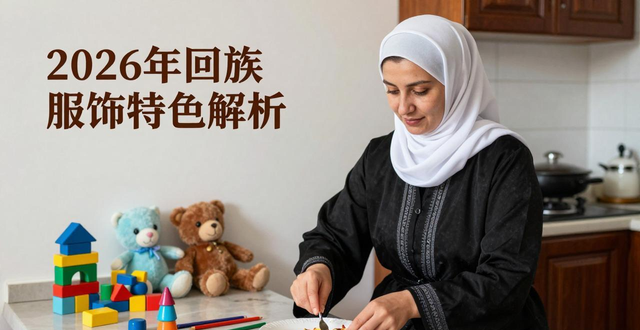
At the age of thirty, I changed to black, and became sinking, with daily necessities, rice, oil, salt, and the cry of my baby.
Sixty years old, clothed in white, clean, as when he came.
Women in the mountains of Ningxia must "pretend" before getting married.
It hurts to twist the hair off my face with a thread, but it is a ritual.
There are certain things to pay attention to when wearing a ring. The ring finger represents the married status, while the middle finger means single. These rules are exactly the same as those in the Middle East.
I don’t know if this is a coincidence, or if the things in the bones are not broken even though they are thousands of miles apart.
In fact, it’s not just white. And...the mix and match is messy
The Hui people in Qinghai wear leather robes outside their robes and long boots on their feet.
At first glance, it seems that I learned it from my Tibetan neighbors.
Over in Yunnan, the headscarves are colorful, like the colors of the Yi people.
The Hui girls in Guangxi wear gauze scarves in summer, which look fluttering when the wind blows.
The most amazing thing is the security waist knife.
Hanging on the man's waist, it is shining brightly.
It is said to be a decoration, but in fact it is also a tool for slaughtering animals, self-defense, and working.
The life that should be like this is not filled with many pure symbols, but full of practicality mixed with earth. This is its original appearance.
Do young people today still wear it?
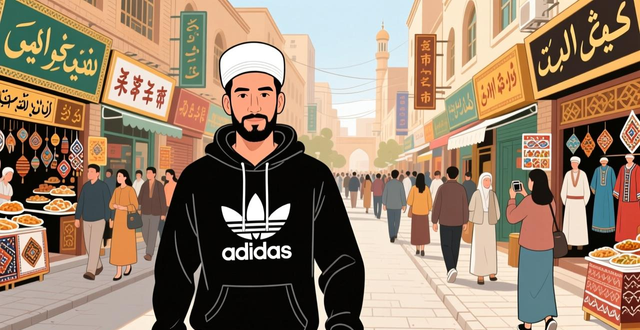
On the streets of Yinchuan, the white hats are still there, but underneath are Adidas.
The hijab has become shorter, made of gauze, pink, and embroidered with gold.
There is a designer named Ma Li from Xining who tightened the waist of the robe and then paired it with embroidery from Egypt. When the model moves, it looks like a runway.
But the day we actually entered the mosque.
The imam still has to wear a nine-foot-long "desdal" and a green robe that reaches his ankles.
Women should cover their entire body and not show any hair.
The two states just go hand in hand.
No one found it strange.
What I'm afraid of is that the needle and thread will break.
In 2006, Hui costumes were included in the national intangible cultural heritage list.
But the inheritor is old, and young people are unwilling to learn.
The hand-crocheted white hats were replaced by Yiwu machine goods.
Almost no one knows how to tie a turban.
Ningxia has set up a training center and invited old artists to give lectures.
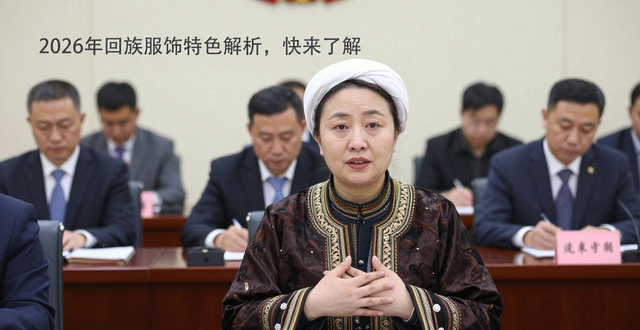
CPPCC members in Urumqi are shouting that financing is difficult and talent is lacking.
Is it useful?
have no idea.
At least someone is pulling the thread.
The last thing I want to say is
In fact, there is no such thing as pure “national costume”.
All mixed race.
The soul of Arabia, Chinese cloth, and local needlework are all worn on the body.
Like those old embroidery pieces, there are flowers on the front and dense threads on the back.
Messy, but true.
Because we are alive, we will change.
As I write these words today, there are clouds outside the window.
White.
White like a church hat.
Comments NOTHING