
When you walk into this house, you will know that it is different. The white walls are clean, there are no portraits that seem to stare at you, and even photos are extremely rare. This is not because I don’t like taking pictures, but because I have this idea in my heart that some existence cannot be framed by shapes. When worshiping, the place needs to be empty and quiet, leaving only one direction.
Those tops, those robes
When you see the crescent moon from a distance, you know you have arrived at the temple. Some of the tops are completely Arabic-style, extremely pure, and some are simply blended in with our old pavilion. There is an Islamic moon standing on the cornice. It doesn't feel weird when you look at it, but feels more friendly.
Why do the Hui people love to wear little white hats?
Those white hats worn on the heads of men are really eye-catching. It doesn't have a brim, it just has such a thin layer of stuff that is buckled on top of the head. This situation is like placing a handful of snow on your head, and it is said that this is called "clean and unstained". I have always felt that that kind of white is an extremely crisp white that won't bother you with any fancy thoughts.
The age code under the hijab
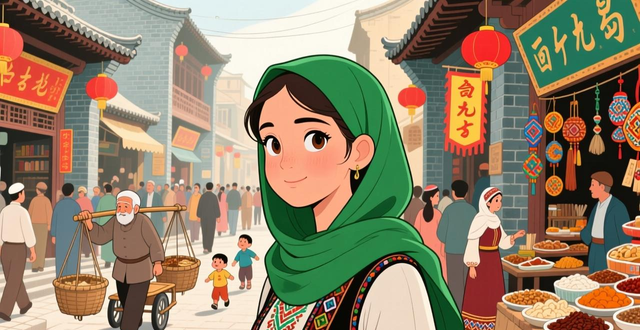
If you go and look at a woman's headscarf, it's really exciting. Some are green, some tend to be cyan, and some are completely white. If you put these on your head casually, your ears and neck will be covered airtight. For young girls, wearing green will look particularly fresh; while for those who have reached a certain age, the choice is calm white or black. Young girls walking on the street today don't wear headscarves for long periods of time every day. Most of them only pick up the headscarf again during festivals and gently place it on their heads. In an instant, the unique atmosphere of the past quickly returns.
I once met a girl who came back from get off work. She folded her hijab neatly and placed it in her bag, then put on a small suit and went to take the bus. She said, just keep it in your heart, the form is not that important.
There are some rules, it's soft
Previously, men began to grow beards in their early twenties, some leaving only a handful of goatee, while others densely covered their entire faces. Now, if I take a look in the subway, nine out of ten of them are naked. Only the old man basking in the sun at the entrance of the alley still had a white beard fluttering on his chin, which trembled when the breeze blew gently. This beard seems to have been borrowed from time and finally returned to time.
There are fewer young people who don’t smoke and don’t drink alcohol than before. During the holidays, beer begins to be placed on the table. Although the old man would frown slightly, most of the time he just sighed helplessly and let them do it.
Happy events, but also busy events
Two or three days before the wedding, the man has to carry steamed buns and mutton and deliver them to the woman's house in a lively manner. This is called the "make-up ceremony". There are a lot of things to pay attention to when getting married. If conditions permit, a floor of red felt must be spread from the main entrance to the door of the new house; if conditions do not permit, the bride's feet cannot touch the soil and must be carried in by her brother or uncle.
Why do you need to recite Nikah on your wedding day?
When the imam arrives, the noisy courtyard will suddenly become quiet. The imam sat upright and asked the newcomers questions, once, and again, until the "yes" was spoken, and then he began to say "Nikaha". The sound made by the scripture was not high, but it seemed heavy and pressed on the hearts of everyone present. After the ceremony, the wedding candies and jujubes were quickly thrown out. Adults and children scrambled for it, and the joyful laughter seemed to knock off the roof.
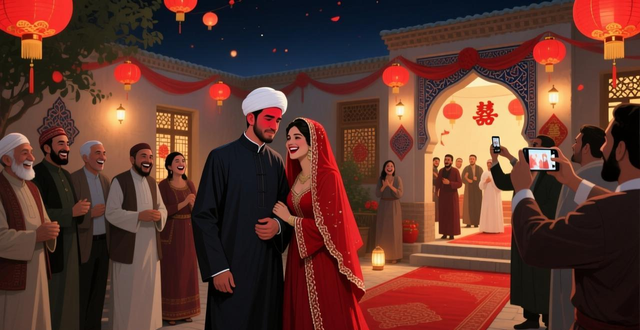
Then came the bridal chamber, the idea being to be more cunning and clever, the bride and groom's faces became redder and redder, and everyone became more and more elated. After it was over, it was late at night and everyone dispersed.
Walk too quickly
Why do Hui people have to be buried within three days after they die?
The old man who left is called "impermanence", which makes it less scary to hear it. If the stay lasts no more than three days, it must be cleaned quickly - that is, "watering", and it must be wrapped properly with the white cloth with scriptures written on it. This is called "kaifan". Then the old man was placed in the "tabu box" in the temple, lifted up and headed towards the cemetery. The imam chanted sutras in front, and relatives followed behind. No one burst into tears, and they just sent each other off quietly.
As for the tomb, it was dug directly into the soil and was not built with bricks, stones and lime. It is said that people descend from the soil, and eventually return to the soil and leave. This is a clean ending.
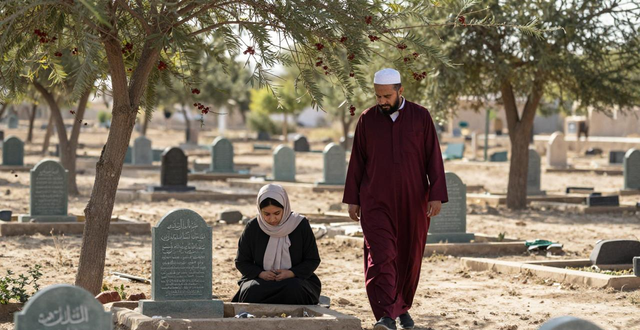
Later, on Juma Day, Eid al-Fitr, and Eid al-Adha, relatives will go to the cemetery to walk around, sit for a while, and then talk to them.
The scene of soaking in tea
Gaiwan tea, located in the northwest, has an astonishing level of sophistication. Fill a bowl full of tea leaves, rock sugar, wolfberry, red dates, longan, raisins, etc. This is called "Eight Treasures Tea" and is also known as "Three Bubble Tea". When the lid was opened, the aroma rushed straight to the face. Once a guest comes to visit, the first thing that must be done is to offer such a cup of tea. In front of you, the host will gradually put them into the bowl one by one, then pour boiling water over them, and then hold them with both hands and hand them over with fear. That solemn and solemn attitude can warm people's hearts more than any number of words.
In that part of Gansu, there is a phenomenon of people raising pigeons. Pigeons with gray and white feathers coo on the eaves of the house. Some people claim that these pigeons are sacred birds, and usually they will not be eaten unless the patient's physical condition is really in short supply. After asking the imam for permission, one will be slaughtered to replenish the body.
The days are moving forward
On the occasion of Eid al-Fitr, every household puts out incense sticks and rice dumplings to form a table. The cattle and sheep slaughtered during the Corban Festival need to be divided into three parts: one part is given to the poor, one part is used to give to relatives and friends, and one part is kept at home. These old rules from the past still exist.
There may also be situations where they gradually become weak. For example, in the past, you had to wash your hands before getting water, and the remaining water could never be poured back into the well. However, now that everything is running taps, where are there still wells? Those old rules were covered with stone slabs just like the old well.
Every nation is in the process of change, just like a river. The mainstream is still the current, but the scenery on both sides is no longer what it was a hundred years ago. Some things are gradually disappearing, and some things are growing again. This is probably the state of being alive.
Comments NOTHING