
It's strange to say that my impression of the Hui people actually started with a scolding.
When I was a child, I lived in a small county town in Gansu with no outstanding features. My neighbor was a Muslim family. The old man’s white hat was always cleaned and spotless. One time, I was so greedy that I squatted down by the door to nibble on the pig’s trotters that I had braised at home, and he just happened to walk out.
He didn't say anything, but my dad later told me that you can't eat that in front of someone else's house.
At that time, it was the first time that I realized in a dazed way, oh, it turns out that there are some lines between people that we cannot see or touch with the naked eye.
It’s not just as simple as not eating pork.
When searching for "Hui culture" on the Internet, most of the pop-up messages say, "Hui people adhere to Islamic beliefs" and "Hui people do not eat pork." Yes, but not entirely.
For example, if you ask a Sichuan person whether you eat hot pot every day, he will feel that you both know and don't know.
Believe, really believe.
But that kind of letter is not something you just talk about. It seeps into life.

I once saw the Hui owner of a ramen restaurant. He got up at four in the morning, not to go ramen, but to do morning rituals. Such a pious appearance is hard to understand for a person like me who is used to sleeping until he wakes up naturally, but he will be deeply shocked.
That person who stutters is so greedy to death
Who said that Hui people only have ramen? I was the first to refuse to accept it.
The delicacies of the Hui people are full of fireworks.
"Nine Bowls and Three Elements", when you hear this name, you will feel a picture emerge. There are nine bowls, arranged in three rows horizontally and vertically, placed on the table. The aroma of beef and mutton in them seems to be able to spread up to two miles away.
There is also something called the "Top Ten Bowls", which includes yellow-faced meatballs, braised haggis, etc. It is said that this craft first started in Shandong and took root in the northwest. Now it has become a signature feature used by many local Hui people to attract business and build their image.
At that time, in a Hui township in Xinjiang, above the market, there was a big pot frying steamed buns. They were golden and bright in color, and they were so crispy that they would fall apart. Next to it, there is the aroma of oil that has just come out of the pan, which makes people feel hot. When it is torn open, a smell of wheat will be emitted.
At that moment, he didn't care about his ethnicity or not, he was just greedy.
Jianghu in Gaiwan Tea
And tea.
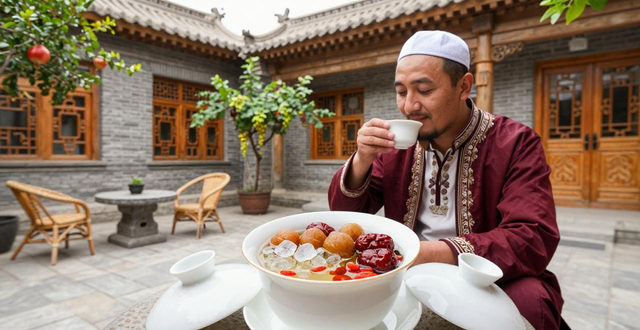
Gaiwan tea named "Three Fortresses" is a drink of the Hui people. The bowl contains tea leaves, rock sugar, longan, red dates, wolfberry, etc.
The first time I drank it, I was at the home of a Hui friend. His grandmother poured tea for me. The lid of the bowl gently touched the edge of the bowl, making a clanking sound.
A friend said that after scraping it for a few times, the smell will come out.
I thought at the time, this is some kind of magical way to drink.
Later I realized that what was scraped away was impetuosity and what was left was human kindness.
Stop staring at the buildings
Many people are keen to take pictures of Hui architecture, especially those very beautiful mosques with green domes and crescent moon symbols.
But I hope you can take a look at the unique National Palace in Dachang. The designers used 56 arched door openings to symbolize the 56 ethnic groups. At night, when the lights are turned on, the reflection of the doorway is reflected in the water. This is not just a building, but the phrase "we are a family" is vividly presented.
Oops, it’s too far off topic.
In fact, I write so much just to make one thing clear.
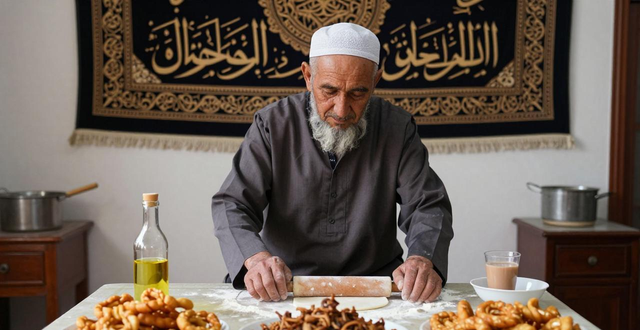
The Hui people are not some distant concept, they are specific people around us.
It was the Hui aunt who crowded at the same table with her Han and Kazakh neighbors on New Year's Eve, competing to eat dumplings.
It’s the hands that help you fill a bowl of steaming Laba porridge in front of the big pot during the Laba Festival;
It was also the tolerant and silent figure from behind when I was nibbling pig trotters at the door.
They are adhering to their own rules and integrating into this larger land.
Maybe this is China
You can tell who is who, but you feel that everyone is the same.
The difference is the customs, but the same is the hope for good days.
Just like the tea in the bowl, the tea has its own unique taste, the longan has a different taste, and the rock sugar has its own flavor. However, when they are brewed together in one place, it can be called life.
I suddenly felt hungry while writing this, so I went downstairs to find a bowl of ramen. Put more coriander, boss!
Comments NOTHING