
I don’t know which year started, but traffic jams became a daily occurrence on every working day. It's not like it's moving slowly, but it's completely stationary. You stare at the taillights of the car in front of you, dazed, pondering, and saying harsh words. Then you saw the news - Guangzhou is going to charge a "congestion fee."
Although the official said that the recruitment will not be launched for the time being. But the thorn in my heart has already penetrated.
84.7% of people were opposed to it, and I was one of the 84.7%. However, after thinking about it, did I object because I really felt sorry for the money, or because I was just habitually opposed to all "new charges"?
I hate the idea, but I also hate being stuck in traffic
Not many people agree, just like the flash of red in the stock market. This group of people insists on coordinating the overall situation and that individual interests must be subordinated to public interests. It sounds particularly high-end, even a little annoying.
But if you think about it seriously, if there really is such a one-yuan payment, after collecting it, buses will travel faster, subway lines will become denser, and the air condition will become better... Would I be willing?
I still don't want to. Because I don’t fucking believe it.
I don't believe that this money will be actually used on the road. I don't believe that the congestion situation will be alleviated after charging the toll. I don't believe that the fees that are charged will not evolve into a clueless project that will eventually be difficult to see even the slightest trace.
It's not just about money. This is a matter of trust bankruptcy.
I got it in New York, and the effect seems to be okay.
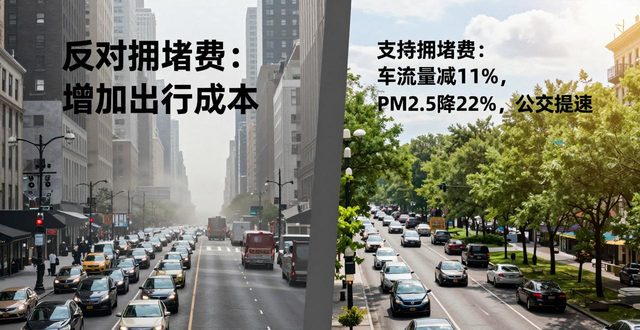
After inquiry, it was found that New York has indeed charged this fee since last year. Entering the core area of Manhattan, you need to pay US$9 during peak periods. After one year, the traffic volume has decreased by 11%, the fine particulate matter in the air has dropped by 22%, and even the speed of buses has become faster.
It's quite ironic. On the other side, there is a reduction in the number of vehicles, while on this side there are people who are adding traffic jams. On the other side, the funds collected are used to build subways and install elevators, but here we are debating whether we should try it or not.
I’m not saying that to make New York successful we have to copy it. What I want to emphasize is that they actually took action, and the data is there, there is no falsehood.
Those who have cars are scolded, and those who don’t have cars are also scolded.
The most interesting thing about this controversy is that those who criticize the most fiercely, apart from car owners, are also a group of people who do not own cars at all.
"I don't have a car, but I still object." This voice is everywhere.
Why? Is it because the poor are destined to support charging? Is it because we can’t afford a car that we have to happily embrace every new policy that makes travel more expensive?
The blogger "Literary Shiraishi" is quite correct: Those of us who have no money are actually the same type of people as those who grit their teeth and keep cars. Why are we so eager to torture each other?
Where does money come from, where does it go, and whether one day it will be our turn to have to pay to even walk. Such fear is more congestion than the congestion itself.
Some people say this is charging "IQ fees"
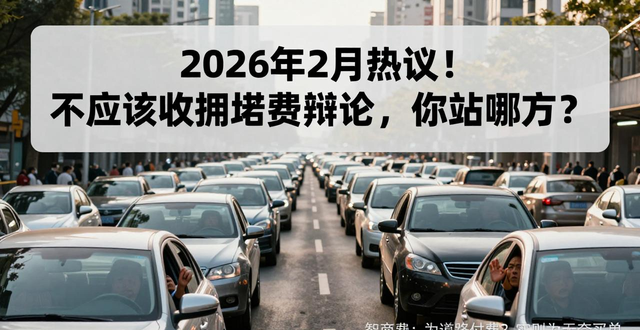
There is a term on the Internet called "IQ fee", which means that when you feel that you are paying for the road, in fact, you are paying the price for your own helplessness.
The width of the road is so limited and the vehicle congestion is so serious that money is ultimately used to screen, that is, whoever can pay the fee can pass. This is not solving the congestion problem, but auctioning the right of way.
For those with more wealth, their time has a higher value and they are willing to pay such a fee. For those who are in poverty, their time value is relatively low, so they will be discouraged and have no choice but to take the bus, take the subway, or simply not go out.
It sounds a bit harsh, right? However, this may be the real situation hidden behind the "public interest".
Is it fair? never
In fact, what makes me most uncomfortable is not the fee itself. It's that feeling of powerlessness.
We paid fuel tax, road maintenance fees, vehicle and vessel taxes, insurance premiums, every refueling trip, every ticket, and every annual inspection. Then you told me that it was not enough and that I needed to charge another amount so that I would not be stuck on the road?
What about the money before?
Singapore has started charging congestion charges since 1975, and London did the same in 2003. After decades of collection, the city has not collapsed. But it has been made clear from the beginning: what the money will be used for after it is collected, where it will be spent, and who will benefit from it.
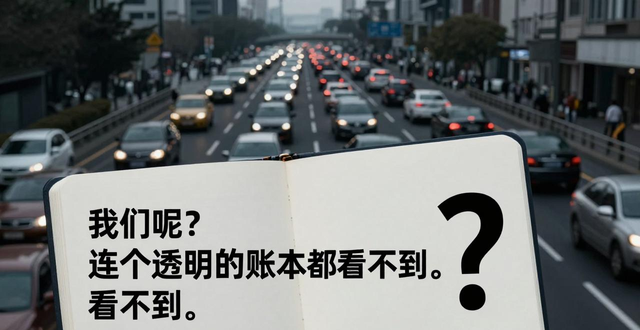
What about us? You can't even see a transparent ledger.
Actually I don’t hate the fees, I hate being arranged
Finally, I want to understand one thing.
It’s not the words “congestion charge” that make me hateful. What fills me with hatred is the feeling of always being informed, decided, and arranged.
If one day, the government comes forward and says that we have to charge fees, but we will use the money on a certain subway line, publish the bills every month, and report on the progress every quarter. Five years later, you will see a different Guangzhou.
I might hesitate and then say, OK, give it a try.
But when we talk like this now, we always break up after the quarrel. As the heat subsides, the next round arrives. Moreover, no one knows where the money goes.
Therefore, 84.7% of the negative votes did not vote for that amount of money.
The vote was - we really have had enough.
Comments NOTHING