
here we go again. It’s “congestion pricing” again.
It seems that every once in a while, this word has to be dug out from the pile of old books and newspapers to be aired, and then a group of people will argue about it, but in the end nothing will happen. This time, the deputy minister of the Ministry of Housing and Urban-Rural Development made a slight mention, proposing to cancel the expressway toll and instead impose a congestion charge. Before the words could even finish, the Internet exploded. This is to be expected.
In fact, who the hell is willing to pay?
Really, no one would want to. Even if you tell me that as long as you pay two yuan, everything will be smooth and smooth along the way, my first reaction is: Why do you have to do this?
It's not just about money, it's about feeling offended. The car belongs to me, the road belongs to the state, I paid taxes, bought fuel, paid insurance, and now I'm being exploited again when I go out? Anyone would be anxious, especially in Beijing, where there are already vehicle number restrictions, high gas prices, and road sections like Shuangjing and Xizhimen that are as congested as dogs. Why do you still want to charge a toll?
New York, that “guinea pig”
Just when I was watching the news these days, the congestion charge in New York has been implemented for a year, but it has not completely disappeared.
The old man known as Trump was eager to kill him on the first day he took office. He cursed "total destruction of New York" countless times. However, a set of data is quite intriguing: the number of vehicles in the toll area has decreased by 11%, the amount of dirt in the air has dropped by 22%, the speed of public transportation has become faster, and even those engaged in takeout delivery said that the number of orders received has increased.
There were indeed scoldings. Those in poor conditions believed that this was an act of discrimination against the steering wheel, while small business owners were worried that all customers would leave. However, what was the final result? Ticket sales on Broadway were more popular than before, and restaurants did not close down.
Worked in London for 23 years
Don’t think this thing is new. London had already started doing this in 2003. At that time, the mayor was almost scolded badly. Now, it has become a textbook case in urban governance.
There is also Singapore. People started doing this as early as the 1970s. Now the whole city looks like slippery silk when running.
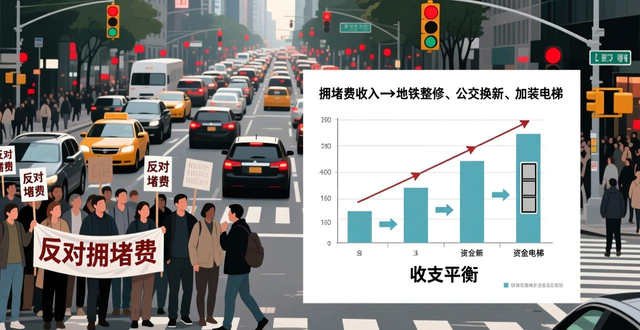
Those who have achieved success have one thing in common: the money recovered has actually been used to renovate subways, replace buses and install elevators. You charge me a toll and then turn around and offer me a faster route, so that the account is evened out.
Beijing’s dilemma
In fact, Beijing mentioned this matter ten years ago at the earliest. In 2010, it stated that it would conduct research, and in 2013, it claimed that it would demonstrate it. It is still in the state of "research" and "demonstration" until now.
Why can't I push it?
It’s not that there is a lack of technology. ETC has been widely used. There are cameras everywhere on the streets. From a technical perspective alone, it is extremely easy to collect money. The difficulty lies in the people’s hearts.
What many people have in mind is this: You can't even build the roads properly now, the buses can't be squeezed in smoothly to achieve the predetermined situation, and the subway is so crowded that it seems to be compressed into a sheet, but you told me that after paying for it, there will be no congestion? Who on earth would believe it?
This is called the "qualification issue". If you have not prepared the alternative plan properly, you are not qualified to reach out to the hand asking for money, otherwise it will be equivalent to robbery.
Look, where did the money go again?
This is the core pain point.
Why New York can withstand the criticism is because it locks the money it collects in a "treasury" and uses it specifically to repair subways, install elevators, and buy electric buses. It collected US$560 million in one year and plans to leverage 15 billion in infrastructure investment.
People can point to the camera and say: Every penny you pay is in the line under your feet.
What about us?
I'm actually quite conflicted
As someone who drives every day, I instinctively hate this thing.
However, as a commuter who is stuck in traffic jams every day, I couldn't help but think: If I could pay 20 yuan to get from West Second Ring Road to China World Trade Center in 20 minutes, would I pay the money?
I hand it over.
The reality is that no one can make a guarantee. If you hand over the money, but it ends up being stuck on the road without being cleared, then the money will become a thing that is laughed at. And it's the kind of insulting joke that makes people laugh maliciously.
The majority who don’t speak
The people who criticize the most fiercely on the Internet are those who own cars. However, you know that in that area of New York, those who really support the tolling initiative are those who take public transportation, walk on foot, and ride bicycles - a large number of groups that usually have no say.
Compare them on the bus who smell sweat due to congestion with you who are stuck in the car and blowing the air conditioner. They are the biggest victims of congestion.
Who gets priority on city roads?
Collecting money is not the purpose, the purpose is to make you drive less
This way of using prices to differentiate between groups is called "demand management," in economist parlance. In reality, roads are limited in width and have a lot of vehicles, so: let those who have a real emergency, a real wealth, and a real willingness to pay a premium, drive in. For those who are not in such urgent need, it is recommended to take the subway.
It sounds cold-blooded, but this is the logic of allocation of scarce resources.
But we still have to go back to where we started
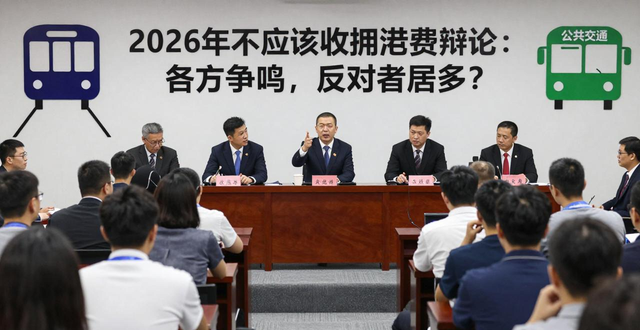
All discussions about congestion pricing eventually hit a wall: public transit.
If there is no way to get on the subway and the bus only runs every half hour, but you make me pay to go into the city and don't give me an alternative, then I'm sorry, but you are acting like a hooligan.
It's the same as falling in love. You can't make me give up on my ex without being nice to me.
So, make a noise
Noisy is a good thing.
Talk about noisy, this shows that there are still people who care about whether the city is alive or dead. To say noisy means that the final conclusion has not yet been reached, and there is scope for gaming.
I only hope that those who make the final decision will not only look at the voices of millions of car owners. Also look at the people who crowd the subway during the morning rush hour with their faces pressed against the glass. They are the foundation of this city.
As for Beijing?
I think it will happen sooner or later.
The plan shows that the subways must be intertwined into a network, and buses must be fully covered. When that day comes, when public transportation is ready and there are no problems, then we can discuss the cost issue, and maybe the scolding will be reduced.
But probably no less. It's human nature to curse.
If money is spent in a clear place and the road is built in a real place, even if the curse continues, the body will actually choose the faster path.
Comments NOTHING