
To be honest, when I saw these twenty lines of poems, the first thought that popped into my mind was: Are you annoyed? It’s pastoral related again. Those in the circle of friends who show the peaceful appearance of the years, with the positioning of "picking chrysanthemums under the east fence", are praised one by one below. However, I understood that it was all pretend.
Our generation still doesn’t know what real pastoral is.
When you open the window, what you see is the clothes hanging to dry in the building opposite, not "Green Tree Village". When walking on the road after get off work, the music playing in the headphones is rock music instead of "listening to the sound of frogs". The pastoral we long for is nothing more than a utopia under a filter, a one-time sacrifice for the spirit.
But why, after thousands of years, are we still reading these?
Pastoral is the bottom line for the poor and the retreat for the rich.
Tao Yuanming, the old man who made "Return to Hermitage" into a top-notch IP, if he thinks about it carefully, "he wakes up in the morning to deal with the wasteland, and returns with the moon to hoe", which is really tiring. The grass is thick and the bean sprouts are sparse, which shows that he is not an excellent farmer. Now he is the kind of literary middle-aged man who will die if he raises too much meat. However, it is precisely this "unprofessionalism" that gives him warmth.
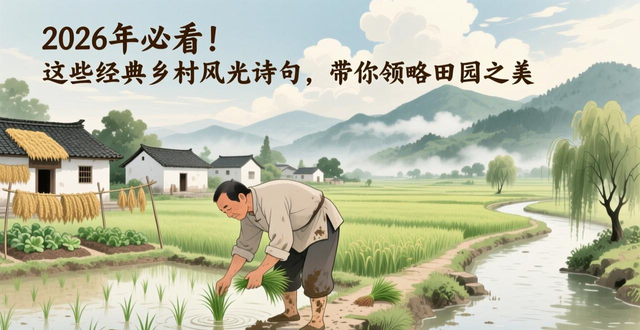
He was not escaping from labor, he was using labor to escape from the officialdom that was suffocating him.
Which of us today is not struggling with involution while staying at the workstation until late at night? The words spoken by people in ancient times, "Looking sideways at the countryside, the cattle and sheep are returning in the back alleys" actually broke all of our inner defenses. The reason is that we don’t have a “village”, just shared houses; there are no “cows and sheep”, only subways that we can’t squeeze into.
Even more cunning is Wang Wei. He wrote poems like "Egrets fly in the desert paddy fields, orioles sing in the gloomy summer trees." They are so beautiful that they cannot be vividly described in words. But he was a high-ranking official, and the Wangchuan property he owned was comparable to the luxurious villas built on the top of the mountain at that time. The scene of "The noisy bamboo returns to the coon girl" in his works is a scenery enjoyed from a high place, as an objective object that gives people aesthetic appreciation.
And what about us? We are the Huan Nu, the "Tian Fu He Li Li".
Therefore, don’t imagine the pastoral past of the ancients too easily.
The sound of frogs contains not only good harvests, but also loneliness.
In fact, what I love the most is what Weng Juan said: "The mountains are green and the rivers are white, and the rain is like smoke in the sound of Zigui." Why is this? It must be because this poem contains characters. The first two sentences are as beautiful as a picture scroll, and the last two sentences are "There are few idle people in the countryside in April, and they are planting sericulture and planting fields." , which instantly pulls people back to the real ground. It is a sense of urgency of being chased by farm work, and a real smell of fireworks.
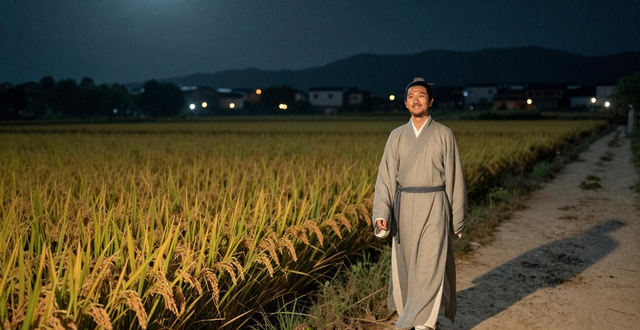
And Xin Qiji, "The fragrance of rice flowers speaks of a good harvest, and the sound of frogs comes from them." How lively! But if you think about it carefully, you will see that he was an insomniac, walking alone and listening quietly on the Huangsha Road at night. The joy of a good harvest is the happiness he imagined others had. At that moment, he integrated himself into this land and temporarily forgot that he was a general whose ambitions were difficult to realize.
This kind of contradiction is the most touching thing.
As Fan Chengda wrote, there are scenes of harvest carnival in the countryside such as "light thunder amidst laughter and singing", and there are also difficult survival conditions such as "bloody fingers flowing out, pills and ghosts withered". We only excerpt the former. Considering that life is already very hard, who would be willing to suffer another sin in a poem?
In fact, we all have a barren land in our hearts.
Try to take a look at the 20 poems. Wang Wei accounts for almost half of them. Everyone loves Wang Wei, just because through his hands, he can depict the emotion of loneliness so beautifully. "The sweet-scented osmanthus falls when people are free." In such a leisurely state, you can clearly see the falling sweet-scented osmanthus. You must know how lonely this must be? However, Wang Wei cleverly transformed this loneliness into a luxury product that is favored by everyone!
When we miss the countryside, we don’t miss the place, but the feeling of being needed. In the fields, if you remove weeds, they will disappear; if you plant seedlings, you will have a harvest in autumn. This kind of conclusive causal connection is simply a luxury in urban life full of variables.
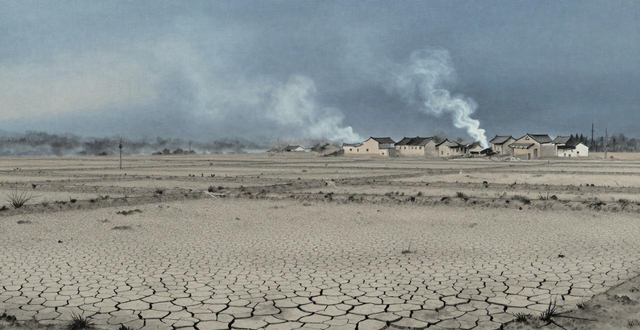
So, the "desert paddy fields" mentioned in those poems are actually the vacant places in our hearts that we long to fill up. The "smoke in the ruins" that appears is our homesickness that has no suitable place to settle.
We read poetry not to go back to the past.
But late at night after working overtime, I walked out of the office building. When a gust of earthy wind blew in my face, I was suddenly stunned, and then the words "Maihuaxuebaicaihuahua" came to my mind.
At that moment, you are not a slave to KPIs or a prisoner of mortgages. You are just a child standing in the wind, smelling the smell of your hometown.
This may be the last dignity left to us by the ancients, hidden in the fragrance of rice on the edge of the fields.
Comments NOTHING