
It's quite strange to talk about it. When I sat down in front of the computer to write a speech called "Real-name Management Measures for Railway Passengers," the first thing that popped into my mind was not those regulations one by one, but my mother.
Last year, she came to see me. When she took out her ID card at the train station, she acted as clumsily as a pupil who had made a mistake. She didn't know what "personal verification" was, but she knew that the machine made a beep sound, and then the door opened, and she was able to enter.
But what if the machine doesn’t ring?
What if the distant nephew who helped her buy the ticket entered the wrong ID number?
No one wants to go back to the days when scalpers were rampant
The real-name system was not implemented at that time, so I looked up some information and asked many elders. When I was rushing to buy tickets for the Spring Festival Return to Hometown, I relied entirely on luck to get the tickets. I went to queue at the ticket window before dawn, but when the window opened, I was told that the tickets were sold out. When I turned around, I saw a stack of tickets clutched in the hands of the scalper, and the fare had tripled.
It was a kind of naked despair.
So in 2012, when I first heard about the real-name system for train tickets, there were a lot of scoldings on the Internet, some claiming to leak personal privacy, and some making trouble. However, almost everyone felt a strange sense of solidity in their hearts when they boarded the train for the first time with a ticket with their name on it.
The real-name system is a rule, and it is also a source of confidence
On January 1, 2023, the new "Real-name Management Measures for Railway Passenger Tickets" will be implemented. This time it is not just "requiring you to show your ID", but many changes and changes that have quietly occurred are fixed in black and white.
For example, in the past, you had to hold that little blue piece of paper, but now, the QR code on your phone and even your face have become a pass.
The "Measures" state that railway companies need to "strongly promote innovation in management and technology" and provide multiple channels such as the Internet, telephone, and automatic ticket vending machines. This statement is very official. In other words: try not to let people wait in line for a long time in the cold wind.
Face has become the new ticket
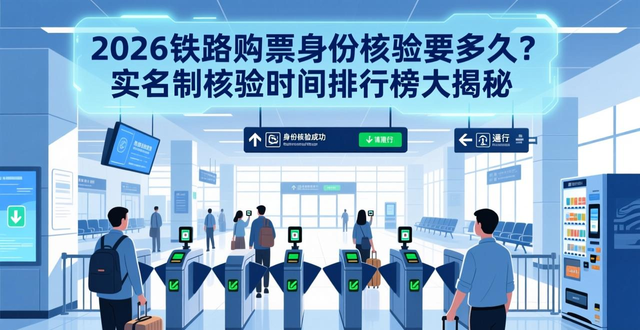
Have you noticed that when entering the station now, more and more people are directly swiping their faces.
The camera captures you and the screen pops out of your carriage seat, all in less than two seconds. When I used it for the first time, I was even a little confused. How could it know it was me? Only later did I learn that this was a comparison between "face recognition technology" and the background real-name database.
The "Measures" mentioned that self-service ticket checking equipment, as well as inspection and other related equipment should be gradually equipped. Behind this lies the iteration of technology and the ultimate pursuit of efficiency.
But that day, there was an old man behind me, holding an elderly phone in his hand. The screen of the elderly phone was broken. He was facing the machine that scanned his face, and he was in a state of not knowing what to do.
At this time, the manual channel next to it opened, and the staff took him over and manually verified it.
The "Measures" specifically emphasize the need to open manual real-name inspection channels to provide necessary services for the elderly and passengers whose documents cannot be automatically read.
You see, behind the cold rules, there must be some gap to let the sunshine in.
Who will protect your name?
Of course, there is no getting around that clichéd topic: privacy.
Every time you buy a ticket, your name will swim in the data ocean, your ID number will swim in the data ocean, and your itinerary will swim in the data ocean. This is like a huge gold mine and a huge powder keg.
There is a provision in the "Measures", which I personally think is of considerable importance. When railway transportation companies deal with the task of protecting passengers' personal information, they must not leak it, tamper with it, sell relevant information, or use it illegally.
This does not simply impose restrictions on companies, but also provides us with a certain level of peace of mind. After all, no one expects to receive a phone call from a scammer who can tell you which train you took last week.
Those little things changed by "real names"
In fact, the real-name system has long penetrated into corners we cannot see.
For example, the "refunded check" that can make people feel annoying. If you lost your ticket before, you would have to buy a new one, which would be a big loss. Now, as long as your record exists in the system, with just an ID card and a few clicks online, the money can be returned.
For those who have the habit of collecting tickets, the ticket used to be a small pink card, but now it has become an electronic ticket on the mobile phone. A girl recorded in her diary that she collected more than 370 old tickets, and there was a story behind each ticket. Now, her travel diary has been transformed from paper to video Vlog.
Times are changing, and so are the ways of recording.
But the memory of "I've been on this bus" has not changed.
Reflection: What’s the price of convenience?
I also have to say something less nice.
As much convenience as we enjoy, we surrender as much freedom.
Every time you scan your face and enter the station, your personal biometric information is transferred. Although railways definitely emphasize safety, technology is advancing and attack methods are constantly evolving. If one day the database is compromised, your "face" will never be restored.
And, what about those who don’t have access to smartphones? What about older people with an inherent fear of digital technology?
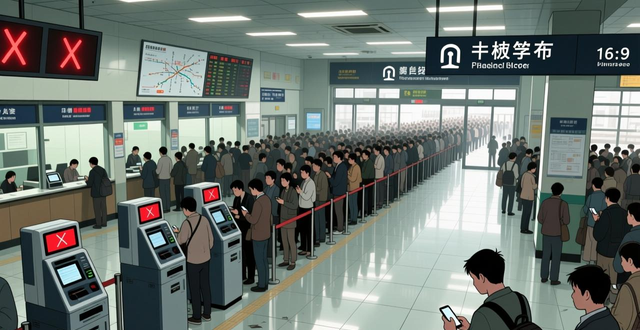
Although manual services are mentioned in the "Measures", in actual implementation, there are fewer and fewer manual windows at some stations. When machines malfunction, long queues will instantly crowd the halls.
Technology advances so fast that sometimes we need to stop and wait for those who are moving slower.
A somewhat idealistic ending
In fact, after writing so much, I suddenly felt that the implementation of the real-name system on railways was a microcosm of the era we live in now.
Constantly, we surrender our privacy in exchange for this convenience. We continue to strengthen management and control in exchange for safety. We are running fast, but there are always some people who are left behind.
If I were asked to stand on the stage right now and describe this "management method" to the people below, I would probably say:
Dear friends, what is written in this booklet is not limited to how to check ID cards and how to check tickets. What it writes about is how we can prevent a 70-year-old lady from feeling so much fear in her heart when she embarks on a long journey independently for the first time. What it writes about is what should be done so that a young man working in a foreign land can still return home smoothly even after losing his ticket.
Rules are cold, but people's hearts are warm.
Behind the real-name system is not just a series of cold numbers, but real and vivid people, and the place they long to reach safely, which is called "home".
I swiped my ID card and the door opened.
Wish you a safe journey.
Comments NOTHING