
The Yanji Internet celebrity wall with flashing neon signs flashed in the middle of the night. Young people were queuing up to take photos holding coffee cups with crooked bilingual characters printed on them. The scene was a bit magical and a bit real. I stared at the photos on the screen in a daze, and my mind was full of Korean villages scattered across the Northeast. How many people are still guarding their hometown of Wentuer State?
In fact, many times when we talk about inheritance and development, we talk too much.
The large rocks were so heavy that it was difficult to breathe. I got to know a Korean woman named Amai, who is over seventy years old and lives in the Minglian area of Shenyang. She said that her son works in South Korea and returns once a year, and her grandson is studying in university in Beijing. Korean is no longer familiar. She always keeps homemade spicy cabbage in the freezer at home.
Koreans, are you still there?
Data says there were 1.83 million people in 2010. What now?
No one knows.
They are located in the Beijing-Tianjin region, the Yangtze River Delta region, and the Pearl River Delta region. They open kimchi factories, engage in Korean translation work, or just become silent workers on a production line in these bustling cities. The flow of population is like a sharp knife, breaking down the originally concentrated villages into chaos. On the other side of the Qitai River, in villages where Koreans live together, only one-tenth of the long-term resident population remains. Showing a hollow state.
This word is so cold.
It's as cold as the northeast wind in winter.
What about culture? What about culture?
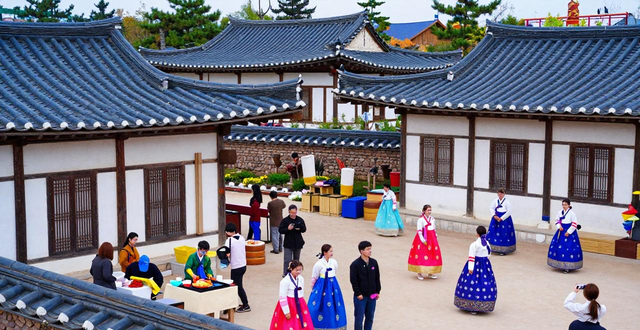
The Yanji Folklore Park is really lively. The tourists are wearing rented Korean clothes and walking back and forth among the antique buildings. They are still holding mobile phones in their hands and making heartfelt gestures towards the camera. They call the production of spicy cabbage an "immersive experience" and the long drum dance a "check-in project". This situation is very good, really very good. At least there are people willing to watch.
But the root of culture is not in those carefully designed performances.
The secret hidden by the stove
Grandma passed down the wisdom of Korean women who use vinegar to sterilize kimchi and add pear shreds to relieve greasy taste. But who will learn this nowadays? They have everything in the supermarket, and they are vacuum-packed, with free shipping nationwide.
Amai said that in the past, making kimchi was a family affair. When autumn comes, women from all over the neighborhood gather together and start a conversation while washing cabbage, while children run back and forth beside them. The kimchi at that time carried the warmth of the palm of your hand, with the kind of warm atmosphere that exists between people.
The instrument is still there, but where are the hands?
The sound of gayageum is very crisp, like water droplets jumping up and down in the mountain stream.
In 2008, the Korean ethnic musical instrument making skills were entered into the national intangible cultural heritage list. There is a musical instrument research institute in Yanji that specializes in this. However, fewer and fewer people can make it, and even fewer people want to learn. A high-quality piano requires material selection, polishing, and tuning. It takes three to five years before it can be mastered. Young people simply cannot wait.
Empty chair at Hui A Festival
Huijia Festival is a festival held for the sixtieth birthday of the elderly. According to common sense, that day should be lively and lively, with children having to kneel down and worship, and relatives gathering together. But what about now? During the Huijia Festival in many Korean families, the tables are filled with dishes, but most of the chairs are empty. The son is in Seoul, the daughter is in Shanghai, and the grandchildren shout "Grandpa, live a long life" on the video call.
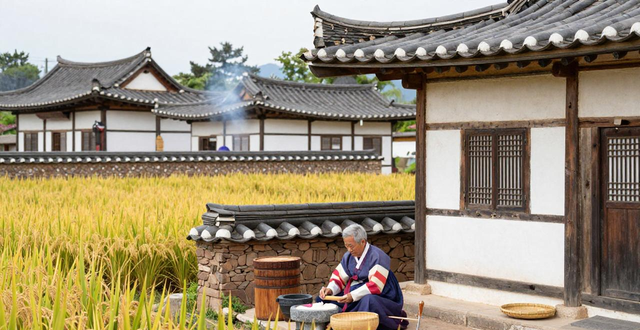
The old man smiled and waved his hand and said, "It's okay, you're busy."
My heart felt empty.
The drumbeat of the beggar dance
I particularly like the begging dance performed by Huan Ren.
At first, in order to build bridges and pave roads, people in the village went to each house to "beg for grains" by beating gongs and drums. The so-called "begging for grains" meant asking for some rice and money, and then everyone took care of the matter together. It gradually evolved into a kind of dance, with everyone forming a circle and the long drums beating loudly. The white cloth strips on the elephant hats looked like rotating clouds.
Mr. Jin Minghuan is eighty years old and is still teaching young people how to dance. When he was seven years old, he stood on his father's shoulders and danced a double-decker dance. At that time, he did not know that this dance would later be called a "national intangible cultural heritage."
neighbors who disappeared
In the past, Minglian was also an area where Koreans concentrated. There were meat processing factories on the roads, places where movies were played, and various small shops. What's going on now? It's all been torn down, it's all been changed.
Hey, the Sita area is indeed hot, and this is due to the popular "Korean" trend. When Korean dramas show something to eat, that place will sell the corresponding thing; whatever Korean star wears, the place will immediately imitate it. However, that is not a culture unique to the Korean people themselves. It is the kind that is borrowed from elsewhere, purely imitated, and carefully packaged for commercialization.
Where is the real Korean culture hidden?
Hidden in the increasingly blurred memories of the Amais is hidden in the mother tongue that I don’t know how long I can still speak, and hidden in those festival celebrations that can no longer gather people.
There are also good ones
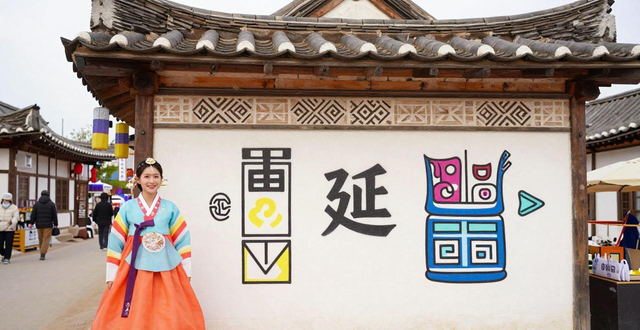
Yanji’s internet celebrity wall actually gives me some comfort.
There are seventy-five bilingual light signs on that wall. When they are lit up at night, they flow like a galaxy. Young people are happy to go there, take photos, and post updates on their WeChat Moments. Even if they are only doing it for aesthetic reasons and not for cultural inheritance, at least the three words "Korean" have left a coordinate to identify the location in their memory.
In the folk garden, there is a landscape with a pomegranate tree, which means that various ethnic groups are hugging each other like pomegranate seeds.
It’s a pretty cheesy metaphor, but when you think about it, it’s right.
Maybe this is the inheritance
It doesn't have to be serious and solemn, nor does it have to be full of sadness and deep hatred. It’s just that among some people, some are still making kimchi, some are still playing the long drum, and some are passing coffee cups under the Internet celebrity wall. The cups are engraved with Korean words that they can’t understand but think are super cool.
Amai finally told me that she still made spicy cabbage this year and made twenty heads.
"What if my son comes back?"
When she said this, her eyes lit up.
Outside the window, it was getting dark. There were fireworks blooming in the distance, and it was unclear which family was celebrating something in advance.
Comments NOTHING