
Teacher Xiaosong, you are very tight on this matter. In winter, children are indeed particularly vulnerable to illness. Once a child gets sick, the entire class will not be able to rest peacefully. As teachers, sometimes we are so focused on teaching that these trivial protective measures are easily forgotten. Let me help you sort it out. How to carry out health education in a unique way is not just about reading a manuscript.
Don't preach, use "scare" and "tempt"
Today's children are very smart. If you tell them "diseases need to be prevented", they will forget it in the blink of an eye. You have to use another wording.
When talking about the symptoms of the flu, don't read it from the textbook. Ask them, have you ever wanted to have a headache that feels like it's about to burst? Have you ever prayed that your whole body was so sore that you lacked the strength to even play games? Tell the symptoms more accurately and horribly, and let them experience the feeling of a fever reaching 39 degrees Celsius and dizziness in their imaginations. This is called "fear appeal" and is quite effective.
Another thing is, don’t always use words like “respiratory infectious diseases”. You describe it as a "cough army" and a "fever monster". Mumps can cause the face to swell like a pig's head, and scarlet fever can cause a rash that looks like sandpaper on the body. It is vivid so that children can remember it firmly.
Outdoor activities, don’t become “herding sheep”

The activities you listed, such as shuttlecock, hoop rolling, and rubber band jumping, are really good. However, the key point is how to play to truly enhance your physical fitness.
Children should not shrink from the cold outside, otherwise they may catch a cold easily. Be sure to warm up before the activity begins, really, this is the most important thing. Tell students that if your body is not warm, the virus will catch you.
Also, when haze weather is more frequent in winter and the air quality is poor, you must not forcefully drive people outside. Outdoor activities at this time are tantamount to murder. You need to maintain flexibility and turn indoors whenever possible, such as doing exercises or shooting a ball. In addition, if you sweat, be sure to wipe it dry or place a sweat-absorbent towel behind your back. Such small things can prevent half of the colds.
Disinfect and ventilate, don’t show off to your leaders
Disinfecting the classroom does not mean just spraying it twice with a watering can and everything will be fine. Door handles are often touched by students, desks and desks are also frequently touched by students, chalk boxes are also frequently touched by students, and even the desk legs with broken corners are often touched by students. These places are where viruses like to hide. It needs to be wiped clean with disinfectant wipes.
There are contradictions regarding ventilation. In the extremely cold winter, the windows were left open, causing the northwest wind to blow fiercely, and the students were constantly shivering from the cold. How could people in such a situation be able to listen to the class with peace of mind? Don't be so rigid. During the ten minutes between classes, the windows must be opened to allow air circulation. The windows must be opened when people leave and closed when people return. During class, you can open the window a little, not completely. And be sure not to blow on the students’ heads, otherwise it will easily lead to facial paralysis.
Washing hands requires a sense of ritual

The rhetoric of "wash your hands frequently" is no longer fresh. No one will listen to it. You have to make them feel that handwashing is a completely amazing and awesome thing.
Teach them the "seven-step handwashing method". Don't be too troublesome and change it into a jingle: inside, outside, clamp, bow, big, stand, wrist. You can have a competition to see who washes the most carefully. Using that kind of hand washing gel, you can see the dirt being rubbed out when you rub it. The children will feel particularly magical, as if they are doing an experiment.
By the way, teach them that they must wash themselves at specific times: after blowing their noses, before rubbing their eyes, after using the toilet, and as the first thing they do when they enter the house after school. Strictly limit these time points, and the corresponding good habits can be developed and finally successfully achieved.
Those "little things" that matter, must be remembered every day
For the fifth item you listed, I will give you a few more cuts:
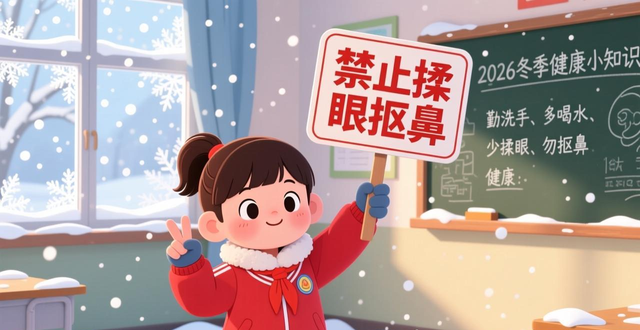
Please do not rub your eyes with your hands, and it is forbidden to pick your nose. This action may seem small, but it is actually a highway used by viruses to enter the body. Do you tell your students that you want to rub your nose? Then be patient for three seconds! The virus is waiting in your hands!
Drink more water, but don't drink cold water. Bring a thermos cup and drink warm water. The intestines will be warmed and the resistance will be stronger. Those who rush to buy ice drinks after class must be careful. They are doing it to themselves.
Focus on talking about picky eaters, don't just say "eat more vegetables" and other empty words. You have to tell them that if they want to avoid getting sick, they have to eat green leafy vegetables and they have to eat meat. Vitamin C acts as a policeman in the body, trapping viruses. If you don't eat vegetables, the police will be laid off, and the virus will take advantage of it.
If you feel uncomfortable, speak up immediately. Many children choose to hold on because they are afraid of missing out on their homework, or because they are worried about the cumbersome procedures for asking for leave. Eventually minor illnesses develop into serious illnesses that affect the entire class. One thing should be explained in detail to them: take a day's rest early, and then you can play as much as you want after you recover; if you have to endure it, you will have to lie in bed for a week. Which approach is more profitable?
Teacher Song, this work is not actually very difficult, but rather trivial. Various related things need to be properly integrated into every word, every look and expression in daily life. When you stand on the podium and add one more word, the children are likely to lose one injection experience. Work hard. Compared with teaching a few simple Chinese characters, this work is by no means equally important. It is a matter of life safety.
Comments NOTHING