
Thirty years.
There is a person who lives from his birth to his thirties. And the engine we have has also gone through a long journey from the initial state of only drawings to being able to fly. When we talk about the Turbofan 15 today and the amazing production capacity period of the J-20A, everything seems to be extremely easy. However, behind it are the conditions of burned turbine blades and countless nights that make people's hair turn gray. But who really cares about this? The media only cares about relevant figures and focuses only on the "catching up" aspect.
The heart finally no longer belongs to others
This engine thing is so damn difficult.
In the past, we called it "heart disease" and bought the Russian AL-31 for twenty years. At that time, the key parts of the fighter plane were under the control of others, and I always felt that I was not confident enough, as if I had a borrowed voice and could not shout the loudest slogan.
After turbofan 10C was installed, until now, turbofan 15 had a thrust of 18.5 tons, and the thrust was finally adjusted evenly.
120 aircraft a year, the "Vyron" on the assembly line
Currently, there are four production lines located in Chengdu Aircraft Corporation, and it is said that 120 J-20As can be rolled off the production line there in one year. What exactly is this concept? Compared with the US F-35's annual production capacity of 130 aircraft, it can already compete with it.
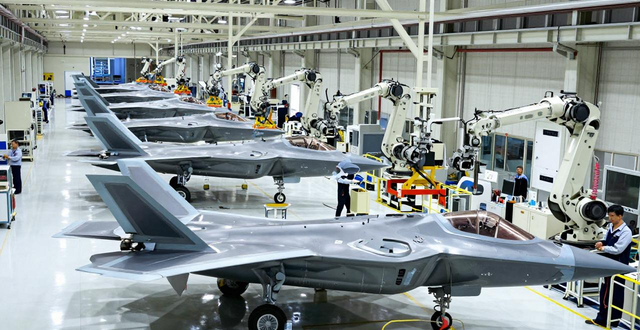
And Chengdu Aircraft itself has said that the production of the basic version has been stopped. At present, all A-type aircraft are equipped with turbofan 15. The yellow-skinned aircraft on the production line are flying out one after another, like dumplings. This mature feeling of "assembly line operation" is the real deterrent. What the enemy is afraid of is not that you have a powerful weapon, but that you can continuously produce powerful weapons.
### Why are Indians sour?
In fact, I quite understand them.
India's aviation industry began to develop at almost the same time as ours, and even earlier its conditions were slightly better than ours. But what is the situation like now? The engines used by India's Tejas fighter jets still have to rely on the F404 produced by General Electric in the United States. They just signed a contract to purchase 99 units a few days ago, and they treat these engines like treasures.
And we are already playing with a vector engine with a thrust of 18 tons.
The sour words in the Indian media mentioned "worry about the interruption of alloy imports" and a certain sense of disparity, like the gap when they saw a scumbag classmate suddenly admitted to Tsinghua University while they were still struggling with quadratic equations. They felt anxious because they noticed that there was no source of questions in the homework they wanted to copy.
That pitiful lifespan figure
There are always people talking about engine life.
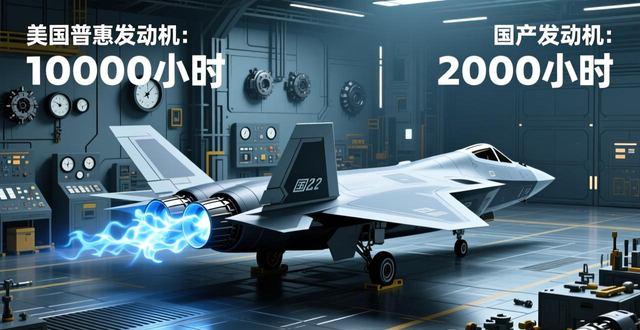
In the past, the engines produced by Pratt & Whitney in the United States could easily reach 10,000 hours, while ours only lasted 2,000 hours. This gap is big enough to make people feel desperate.
Now the turbofan 15 has been increased to 4,000 hours. Although there is still a gap, it is no longer a generational difference. More importantly, this is our own data, our own materials, and our own craftsmanship. Even if it is only 4,000 hours, it is enough to be able to fly, fight, and return safely during wartime. Lifespan is considered for peacetime, while wartime only focuses on thrust-to-weight ratio and maneuverability.
The extreme roll behind Mach 2.4
I particularly like one detail.
Talking about the replacement of the turbofan 15, what kind of actions can the J-20 do? It can roll extremely violently in the sky to avoid attacks, and then instantly adjust to a horizontal state.
Just imagine, there is a behemoth weighing more than 20 tons. It is like a light leaf, being rubbed back and forth by the airflow. As long as the engine makes the slightest movement, the aircraft will probably fall apart. Being able to perform such "extreme survival" actions shows that the engine's extremely fast response speed and extremely high thrust stability have almost reached an extremely exaggerated level. This is not simply a flying move, it is simply conquering the sky. Such courage, such a feat!
Thirty years, several generations, one "Emei"
People like the chief designer Jiang Hefu have gone from high-spirited to gray-haired.
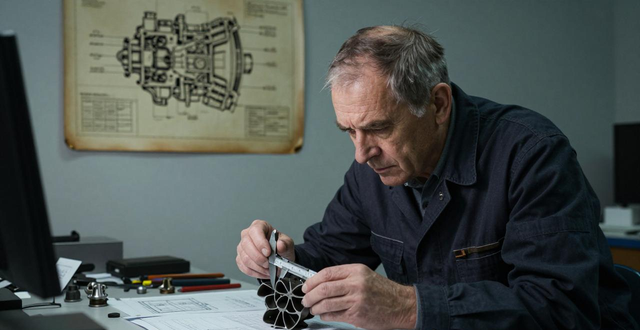
Their generation at that time had never seen such an Internet, nor had they experienced any glory and wealth. They were just trapped in the research room and competed with the blades. Some people say on the Internet that the appearance of the J-20A has made it difficult for Americans to restart the F-22 production line. In fact, what Americans are struggling with is not just the production line, but they are surprised that the Chinese can still tinker with such a thing after being blocked for decades.
In the final analysis, Hangfa is all about time and people's hearts.
The current production capacity of the J-20 and the success of the turbofan 15 did not appear out of thin air. Instead, they were created by generations of people who risked their lives one by one to fill the situation created during the research and development process for more than 60 years.
Indians are still worried about whether the supply of imported alloys will be cut off. However, our Y-20 has already started flying around in the sky carrying a turbofan 20. What is currently presented is not a gap, but a completely different realm.
You ask me how I feel now?
It was the kind of turbid energy that had been held in for a long time and finally came out.
The heart is finally his own.
Comments NOTHING