
How many young people are still willing to participate in the heaven-sacrifice ceremony within the farming culture? When the process of urbanization leads to the transformation of clan settlements into living alone in commercial housing, can those rural family traditions that used to maintain rural order really be loaded into mobile apps and continued to be passed down? This is not simply nostalgia or criticism, but a cultural multiple-choice question that every modern person cannot avoid.
Re-understand the survival rules of traditional culture
There is no reason why any cultural phenomenon occurs. For example, there are strict living rules in Fujian Tulou. On the one hand, these rules are to prevent banditry, and on the other hand, they are also necessary to coordinate the cohabitation of hundreds of people. Furthermore, the Chuanjiang chant was born in the era of wooden ship shipping. It is a labor tool used by trackers to unify their pace and boost morale. These cultural forms had irreplaceable practical value at that time and place.
Some traditions may feel "outdated" today because the social foundations that support them have changed. After the Three Gorges Dam was built, motor boats replaced trackers, and the Chuanjiang chant naturally lost its practical value. This is not a question of the quality of culture itself, but a natural selection caused by environmental changes, just like species that do not adapt to the environment in biological evolution will gradually die out.
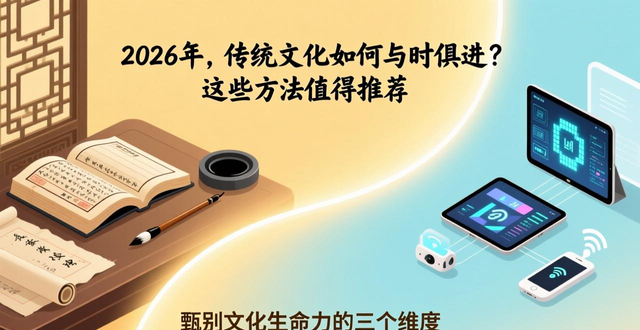
Identify the three dimensions of cultural vitality
From an ethical perspective, there are some villages in the Chaoshan area that have transformed the traditional concept of "more children, more blessings" into extra-birth behaviors, which is obviously in conflict with contemporary population policies. In 2023, a couple in a village in Guangdong had their collective economic dividends canceled due to having a child. This shows that when traditional culture collides head-on with modern governance regulations, there must be standards for choice.
From an ecological perspective, the practice of slash-and-burn farming practiced by some ethnic minorities in Yunnan was once regarded as a wise move within the scope of traditional farming in the last century. However, it is now faced with rigid constraints on soil and water conservation in the upper reaches of the Yangtze River. The local government has guided villagers to replant ecological and economic forests. This behavior not only retains the villagers' attachment to the land, but also meets the requirements of the 2025 forest coverage target.
Cultural rebirth empowered by technology
What is creating miracles is the short video platform. During the Dragon Boat Festival in 2024, the live broadcast of the Foshan Diejiao Dragon Boat Race exceeded 200 million people. Netizens not only watched the game, but also used drone aerial photography to see clearly the details of the dragon boat drifting in the narrow waterway. It is this kind of visual impact that turned what was originally a local folk activity into a cultural event that is hotly discussed across the Internet.
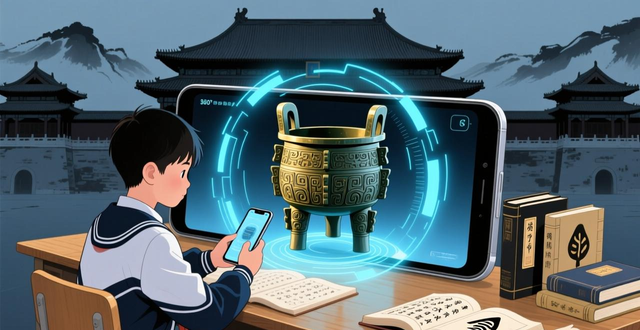
VR technology has made cultural relics "alive". The Palace Museum will launch a "Digital Cultural Relics Library" in 2025. Users can use their mobile phones to observe every inscription and rust stain on bronze vessels by rotating them 360 degrees. A 15-year-old middle school student from Xi'an used this function to discover an unrecorded inscription on a Western Zhou Dynasty stone. This made his interest in oracle bone inscriptions far more than playing games.
The return of culture in community building
Mingyue Village is located in Chengdu. It is a typical case. This village is 90 kilometers away from the urban area. It is an ordinary village. In 2018, it began to invite pottery craftsmen to settle in, thereby restoring the traditional craftsmanship of Qiong Kiln. There are now 47 cultural and creative studios in the village. Under the guidance of artists, aborigines combine local bamboo weaving with pottery. The products are sold nationwide through live broadcasts, and old craftsmanship has become a new livelihood.
The "Old House Saving Action" launched in Songyang County, Zhejiang Province is more thorough. The government provides funds to provide subsidies to encourage villagers to repair their dilapidated old houses according to traditional skills. The condition is that the original features such as wooden structures and patios must be retained. Nowadays, some of these old houses have been transformed into boutique B&Bs, while others have become village-level museums. During the Spring Festival in 2025, they will receive 120,000 tourists, and the old villagers have taken on the role of interpreters and cleaners.
Deep seeding in the education system
A primary school in Beijing changed the Peking Opera class to "Peking Opera Exploration". The children not only learned singing tunes, but also delved into the relationship between facial makeup colors and characters' personalities, and used mathematical knowledge to measure the size and proportion of the stage. The teacher found that when cultural knowledge was turned into an inquiry topic, students were far more enthusiastic about actively searching for information than passively memorizing it.
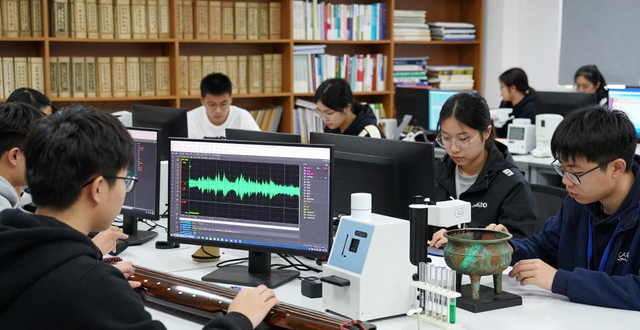
The "Intangible Heritage Inheritance and Digital Innovation" micro-major opened by Fudan University in 2024 clearly states in its admissions brochure that science and engineering students are welcome to sign up. In class, students from the computer department used algorithms to analyze the spectral characteristics of guqin music, while students from the materials department conducted research on the chemical reactions of bronze rust. Such interdisciplinary collisions have turned traditional culture into new material for scientific research and innovation.
Identity awakening in global dialogue
After being suspended for three consecutive years, Li Ziqixuan recently made a comeback. The first video released in 2024 quickly exceeded 100 million views within 3 hours. Some foreign netizens left messages saying that they watched her use traditional techniques to make soy sauce. She started by planting soybeans and recorded the whole process, and finally figured out the reason why Chinese food has "pot gas". Such a specific and subtle presentation of lifestyle is more convincing than any promotional video.
What is quite commendable is the cooperation between the Dunhuang Academy and the National Museum of Afghanistan. The two parties will jointly organize an exhibition called "Buddha on the Silk Road" in 2025, which will compare Gandhara art with Dunhuang murals. When the audience notices that the clothing patterns and folds of the Afghan Buddha statues are very similar to those in Dunhuang, they will naturally understand the true meaning of the blending of civilizations. This resonance far exceeds abstract cultural preaching.
It has never been that the vitality of traditional culture lies in the glass cabinets of museums, but in the way you and I treat the upcoming Qingming Festival and the choice of words when telling family stories to children. When you face the question "Why do we celebrate this festival" asked by the next generation, what answer will you give? Welcome to share your views in the comment area and like it so that more people can participate in this discussion about the future of culture.
Comments NOTHING