
Let’s just say, why are domestic mobile phones suddenly out of reach?
It is remembered that a few years ago, Xiaomi launched a Redmi model priced at 499 yuan, and the entire mobile phone circle trembled three times, with the amplitude of each tremor being one third.
At that time, with 2,000 yuan tightly in hand, within the scope of domestic brands, I could choose configurations or appearance without any hindrance, which made the sales staff roll their eyes in helplessness.
How is it now? When you step into the store with two thousand yuan in your arms, you will most likely go in with your waist straight and come out with a slumped wallet. In the end, you have to listen to the clerk's words: "Brother, why don't you take a look at the model that came out last year?"
So magical.
Why is it so expensive? Was it Liang Jingru who gave her the courage?
Of course not.
You are right to say that the manufacturer is distracted and wants to cut leeks, but it is not entirely right.
The first reason is called "I want to live, and I want to live decently."
What kind of play was that in the past? A hand-to-hand fight began in the sea of blood, with mobile phones priced at a thousand yuan fighting each other until the sky was dark. The manufacturer just finished shouting "amazing price" and turned to check the financial report. Well, the sales volume has increased, but the profit is as thin as a razor blade. They are all working for the supply chain.
Huawei, in those years, worked hard to move towards the high-end, and vivo also worked hard to move towards the high-end in those years. At this time, everyone suddenly realized that fierce competition in the low-end market would only result in packing up and leaving.
After Huawei's Mate series and P series gained a foothold, everyone saw the benefits, and Xiaomi was also anxious. Redmi Pro went straight to 1999. Although rice fans complained, Mr. Lei felt bitter in his heart. If he didn't move towards high-end, how would he rely on R&D? How can we compete with Apple and Samsung?
The second reason is that now that you have “work” in your hands, your waist will naturally become stronger.
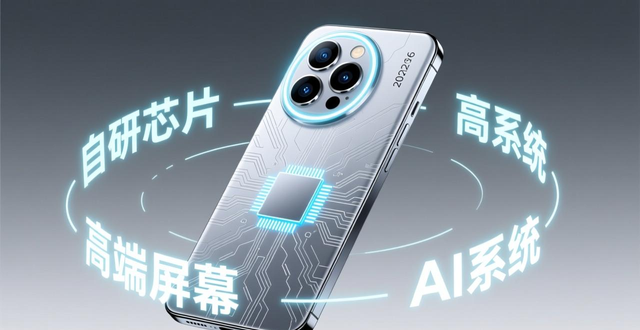
These days, if you don’t have some unique skills, you dare to sell it for four or five thousand?
Looking at the patent list, mobile phone manufacturers were in a state of annihilation in the past few years. Huawei has a self-developed Kirin chip and a self-developed operating system, OPPO has flash charging technology, and vivo has a micro-cloud platform. These are undoubtedly protective barriers created with a large amount of capital investment.
Do you think the price is high? However, some people are willing to spend money to buy it because of the unique advantages of "taking pictures of the moon more clearly" or "charging in just a few minutes brings a smooth and convenient experience".
And it’s getting worse this year. Just look at the news. Huawei’s Pura 90 Ultra is equipped with a 200-megapixel periscope lens. Vivo X300 Ultra is equipped with dual 200-megapixel lenses. There’s also that “bean bag phone” with super high AI permissions that allows you to order takeout for yourself. This isn't a mobile phone, it's like holding a small space station in your hand.
The third reason is that we really can’t blame the manufacturer entirely for this matter.
Go and take a look at the news. What will be the state of memory chip growth at the beginning of 2026? The price of DDR5 memory has increased by 455%. Isn’t this outrageous?
The reason is quite darkly humorous. It is not that the number of people buying mobile phones has increased, but that artificial intelligence has become too popular. Many major manufacturers are hoarding goods crazily and starting to build large models, consuming all their memory production capacity.
After inspection, the original factory found that selling products to AI data centers can earn high profits. In this case, who would be willing to sell lower-priced goods to you and use them to make mobile phones?
In this way, it is transmitted to the terminal. There is a mobile phone priced at 1,500 yuan, and the storage cost alone may account for half of it, so how can the manufacturer sell it? Either increase the price, or secretly reduce the configuration, replace the metal middle frame with a plastic one, and make cuts in places where you can't notice it and don't feel it strongly.
Behind the price increase: some people party, some people leave
This is very interesting.
You will find that this Spring Festival, the mobile phone market has witnessed a spectacle:
On the other hand, Huawei and Apple have vigorously launched "Spring Festival Promotion" activities, and some models have been directly reduced by as much as 4,000 yuan.
On the other side, Xiaomi, OV, and Honor are sitting firmly on Diaoyutai. Except for state subsidies, their prices will not drop by a penny.
Why?
Given that Huawei has huge profit margins, has the ability to cut prices, and can take this opportunity to complete a wave of inventory clearance, while doing so can also consolidate its high-end image, it chose to do this. However, due to upstream cost pressure, brands such as Xiaomi have been suppressed to the point where they are almost breathless. The original profit amount is very small. If they continue to cut prices now, they will fall into a situation of losing money on each sale. In the end, they have no choice but to settle down.
This sense of tearing directly forces consumers to become "sober in the world."
At this moment, those young people in the county town walked into the mobile phone store and immediately began to ask: "Shop, do you sell the flagship model mobile phone with the characteristics of the past two years?".
Hey, don't say anything yet. I have to say that this is indeed a smart choice. For the same two thousand yuan, if you buy a new thousand-yuan mobile phone, you will get a plastic middle frame and a lens with a code scanning function; however, if you buy a flagship model launched two years ago, which has a metallic body, true optical zoom capability, and a flagship chip, the experience will be better.
What is this called? "Reverse displacement". This generation of consumers has been forced to become actuaries by the wave of rising prices.
So the question is: can this price be reduced?
Disaster.
Note that the clear situation is this: the price increase of memory chips will continue until at least 2027. The next generation of Qualcomm Snapdragon chips will shift to the 2nm process, which will directly increase the cost by more than 40%. These are all costs generated by rigid demand, and once they rise, they will not come down again.
Then look at the hidden cards. The manufacturers have gone through great troubles to raise the price. Who would be willing to go back? What Lei Jun said in the past, "touching people's hearts, the price is kind," now sounds like a love story from a previous life. The essence of business is to pursue profits. If you can sell 5,000 and earn 2,000, how can anyone be willing to sell 2,000 and only earn 50?
Therefore, in the next three to five years, domestic mobile phones will most likely present a strange scene:
Leading brands are participating in price competitions above 5,000 yuan, competing on image quality, AI-related capabilities, folding screen performance, and even starting a competition over whose robot dances better.
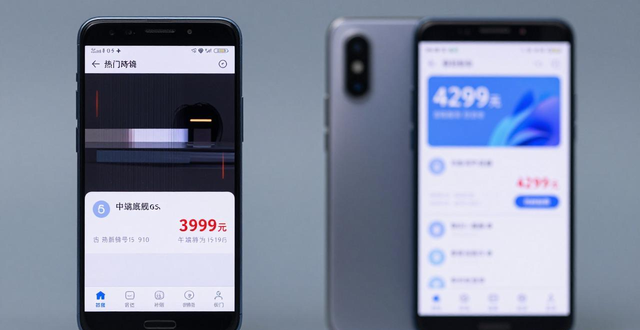
The mid-range market is in an embarrassing situation. The price has increased, but the experience has not improved accordingly, and it has been cut off by older flagships.
——The low-end market is shrinking at an accelerated pace and will either be marginalized or completely reshuffled.
Finally, I want to complain a few words
Today's mobile phone manufacturers are a bit like a group of actors eager to transform.
Some are trying every means to put the label "AI" on themselves, as if it would be embarrassing to hold a press conference without a large model; some are working on robots, planning to integrate your whole family into the ecosystem it builds.
It’s hard to say this is wrong, after all, you have to tell a story to capital.
However, for ordinary users, the era of replacing a new mobile phone every year and experiencing the feeling of soaring is indeed over.
The current replacement cycle has lengthened to almost four years.
Mobile phones have changed from "fast-moving consumer goods" to "durable goods" and are treated the same as refrigerators and air conditioners.
This may be the truest footnote on this matter:
It’s not that domestic mobile phones are getting more expensive, but our relationship with them has changed.
It is no longer a trendy item that needs to be replaced every year, but an increasingly heavy digital ticket in your wallet that cannot be escaped.
Comments NOTHING