
One night while scrolling through my phone, I saw a post. In this post, the poster said that his father entertained his old comrades with homemade medicinal wine, but in the end the two of them almost ended up in the emergency room. It was not caused by fake wine, but because there was a whole aconite soaked in the wine.
The comment area below seemed to explode, with many people asking: Huh? Aren’t ginseng and deer antlers also used to make wine? Why doesn’t Aconitum not work?
You see, this is what most of us think. When the weather turns cold and the joints ache and the waist feels uncomfortable, the first reaction is to get some wine and soak in something to nourish the body. Prepare a glass jar and high-strength liquor, and then add a handful of bright red wolfberries and a few ginseng with extremely long whiskers. Just looking at this will make you feel at ease!
However, we got one thing wrong.
Is medicinal wine wine?
no. At least it's not just wine.
The pharmacist in the hospital expressed it very straightforwardly and clearly: medicinal wine is essentially a medicine. Wine is just a transporter. Its function is to quickly transport the various ingredients present in medicinal materials to various parts of your body at once.
In the past, I heard old people say that "alcohol is the first among all kinds of medicines." This is indeed true. However, the current problem is that the various bottomless things we put into wine continue to develop in more bizarre and outrageous directions.
The longer you soak it, the more replenishing it will be?
I used to think that way, and I always thought that the essence would come out after soaking for a year and a half. Unexpectedly, after checking the information, I realized that it is usually enough to soak medicinal materials for fifteen to thirty days. If the time is prolonged, the medicinal effect will be lost, the alcohol content will also decrease, and it may even deteriorate.
It’s really not that the older it is, the better, nor is the more medicinal materials the better.

What you think is "aphrodisiac" may be fatal
I was shocked recently when I read the consumption tips issued by the government.
For example, Cao Wu, Sichuan Wu, and Aconite. Does it sound familiar to you? It is found in many so-called "secret recipes" among the people. However, these medicinal materials contain aconitine, which is extremely toxic. Sometimes it's just such a small piece. Once mixed into a glass of wine and drank, people will have problems.
There is also Nux vomica, which is also highly poisonous. As for insect drugs such as scorpions and centipedes, it’s not that you absolutely cannot use them for soaking, but you must know how to prepare them, know how to control the dosage, and understand what kind of physique you have.
But the reality is that many people don’t understand. I just thought, “This stuff is good, let’s soak it!”
Why do I always hear about people getting into trouble while drinking?
Because everyone thinks of “making wine” too simply.
It always feels like making bayberry wine or green plum wine. It can be achieved by adding more sugar to make the fruity aroma stronger. However, Chinese medicine is not a fruit, and its quality is not determined by taste.
Moreover, many people watch what their neighbors are doing and follow suit, or they go to the mountains to dig out the folk remedies and buy them in the market after hearing about the folk prescriptions of an "old Chinese doctor".
You have no idea what's hidden under that whisker.
Who is the least allowed to touch medicinal wine?

For people of my father's generation, they always think that their bodies are very strong. Once they have any minor problems, they think that they can recover by drinking some medicinal wine. However, for older people, their metabolism is slow, and their liver and kidneys are already in a state of gradual decline. The ingredients in the medicinal wine cannot be excreted from the body, but will cause damage to the body.
There are also people among those who have high blood pressure, heart disease, gastric ulcers, and liver disease. Alcohol itself is a stimulus. Coupled with the power of the medicine, it is like adding a blazing fire to the body.
Pregnant women, children, and menstruating women are also not suitable.
Are those classic medicinal wines really effective?
efficient. But scoring people.
For example, there are wines such as ginseng wine and wolfberry wine, which are suitable for people who have low energy and blood and are listless. For people who have strong fire energy, if they drink these wines, they may suffer from nosebleeds, insomnia, irritability, etc.
There is something called Guogong wine and Fengliaoxing wine. Its function is to dispel wind and activate blood circulation. It is mainly aimed at treating joint pain. However, if you happen to have a Yin deficiency constitution, the result of drinking it is that your body will become drier and drier.
Other wines with aphrodisiac properties, such as wine soaked in deer antler and wine brewed with fur seal kidneys. To be honest, many people nowadays are bound by the concept of "nourishing". This does not mean that they will be energetic and brave after drinking it. It means that it can only be consumed when kidney yang is deficient. Drinking this by people with kidney yin deficiency is like pouring oil on a fire.
What is the correct posture for drinking medicinal wine?
Do not drink on an empty stomach. The best time to drink is during or after a meal, which will cause less irritation to the stomach. At the same time, do not drink it with dishes, let alone treat it as a drink to add interest to the dinner table.
Let it warm before drinking, don't keep it cold.
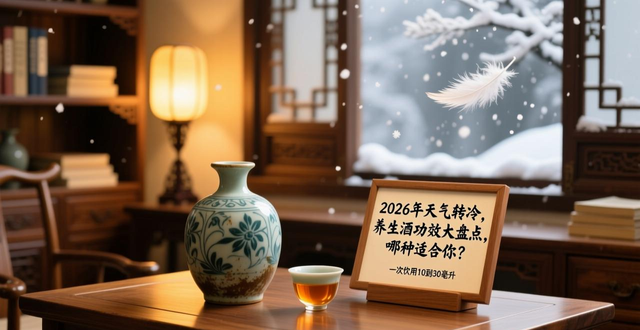
Furthermore, how much is appropriate to drink? It's not measured by being drunk. Usually, the amount consumed at one time is between 10 and 30 ml, which is actually just a small sip. You must never have this idea: "It's cold today, so I'll drink a few more sips to warm up." You know, doing that is not warming up, but getting yourself into trouble.
The most important red line
If after reading this article, you also have a glass jar filled with medicinal wine at home, then I suggest you do one thing: open it, smell it, and see what’s inside.
If you encounter aconite, pour it out without hesitation. If you encounter aconite, pour it out without hesitation. If you encounter nux vomica, pour it out directly without hesitation. If you encounter a leech, pour it out directly without hesitation. If you encounter a cocklebur, pour it out directly without hesitation.
If it is something relatively mild like ginseng or wolfberry, you also have to ask yourself, what kind of body type do I have? Do I really need to drink it?
Well, you should know that there is such a little-known knowledge: if you are taking antibiotics such as cephalosporins and metronidazole, you must not come into contact with medicinal wine, otherwise it will be life-threatening.
To be honest, after writing so much, the most important thing I want to express is that as Chinese, we have an almost obsessive desire for the matter of "toning". We always feel that what we eat and drink will help our body get better.
But that's not how the body works.
What it needs is awareness, respect, and appropriate cessation. A bottle of wine soaked in unknown herbs is not enough to survive this winter.
Medicinal wine is medicine, not wine. This sentence is worth keeping in mind.
Comments NOTHING