
Just yesterday, I was talking to my colleagues, feeling empty in my stomach and always thinking about something to chew. Then she threw me a pack of hawthorn slices and said, "Hey, it's appetizing." I tore open the package and stuffed a piece in. My cheeks tightened with soreness, and I instantly became energetic. But before the piece of hawthorn could be swallowed, a news message popped up on the phone, saying that someone ate half a catty of hawthorn in one go, and as a result, a stone as big as a fist grew in his stomach, and he was sent to the emergency room.
I chewed half of the hawthorn slices, and suddenly they got stuck in my throat. I couldn't swallow them or spit them out.
The "horror story" about hawthorn
The story is about a Mr. Zhang in Hangzhou. On a crisp autumn day, he was sitting on a rocking chair in the yard, enjoying the sunshine while eating sugar hawthorns. He failed to control his appetite and ate half a pound of sugar hawthorns. What are the consequences? For half a month I couldn't eat, my stomach felt bloated, I felt nauseated, and I passed black stool. After that, I ran to the hospital for a check-up and found that there was a 5*8 cm stone in my stomach, shaped like a duck egg.
When the doctor asked, the culprit was that half a pound of hawthorn.
Who should be blamed for this incident? Do you want to blame Hawthorn? However, our ancestors started planting this kind of thing 2,500 years ago. It was called "Plum Plum" in "Erya". In the Ming Dynasty, Mr. Li Shizhen even specifically named it. Traditional Chinese medicine regards it as a treasure. Its nature is slightly warm, and its taste is sour and sweet. It is classified into the spleen, stomach, liver and other meridians. It has the functions of digesting and strengthening the stomach, promoting qi and dispersing blood stasis. It is well explained.
But now the situation is completely different. Eating hawthorn actually leads to the formation of stones in the stomach. Why has this fruit, which is supposed to help digestion, turned into a dangerous weapon for producing stones?
Tannic acid is really not a joke.
The "culprit" hidden in hawthorn is called tannic acid. And gums, pectins, a bunch of stuff.
When you are in a fasting state, the stomach is filled with acidic water. At this time, the tannic acid enters it. Once it meets the protein, it quickly colludes with each other to form a tannic acid-protein complex. This complex is difficult to dissolve in water and settles at the bottom of the stomach. When mixed with pectin and cellulose, it snowballs and grows larger.
It became a stone.
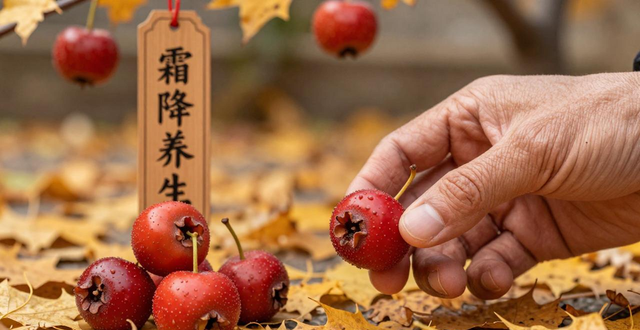
Some people say that I should eat at the head office after meals, right? It helps digestion.
"Helping digestion" or "increasing burden"? this is a problem
Modern research has confirmed that hawthorn does have the effect of aiding digestion. It is rich in maslinic acid, citric acid and malic acid, which can stimulate the secretion of digestive juices. However, the problem is that if you eat a few hawthorns after you have just eaten a full meal and your stomach is full, once those organic acids are stimulated, gastric acid secretion will increase, making you more likely to suffer from acid reflux and heartburn.
Dr. Zhang Lantian made it clear that chewing two or three hawthorns after a meal is indeed helpful for digestion, but the premise is that the amount is in the range of "two or three", rather than putting a lot of it into your mouth.
The key point is that the acid contained in hawthorn has a pH value of about 3.2, which is basically similar to vinegar. Think about it, what would it be like to drink vinegar on an empty stomach?
The sugar trap is more terrifying than the hawthorn itself
There are still some people who are worried about the high sugar content of hawthorn, claiming that its sugar content is between 22% and 25%, and further stating that people with diabetes cannot eat it. Regarding this matter, I have to say something for Hawthorn - this is really unfair.
Pectin, especially organic acids and polyphenols, are present in hawthorn. In this case, they can slow down the rise in blood sugar after a meal. However, it is those hawthorn products that can really cause serious problems. For example, in order to neutralize the sour taste of fruit peel, hawthorn cake, and candied haws, how much sugar must be added!
Some manufacturers claim "no preservatives added", which is fine, but they use sugar to keep it fresh, but more sugar is added. If you eat a pack of hawthorn slices, your sugar intake will be even more shocking than eating white sugar directly.
How to choose? The old fruit farmer’s “hand-eye skills”
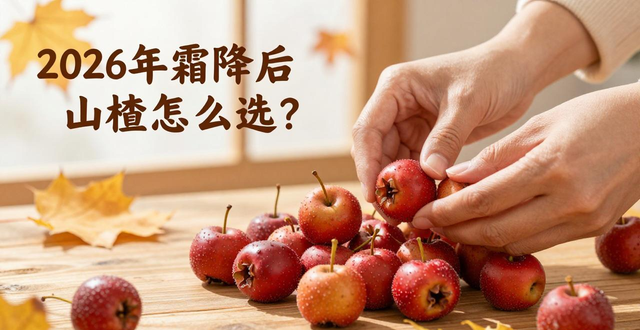
I specifically asked Zhang Lantian, and she said there are tips for picking hawthorns.
Look at the color. The skin should be red and bright, and the flesh should be white and yellowish or reddish, then it must be sweet.
So, for those candied haws and hawthorn snowballs, it is best to go to supermarket stalls or chain stores to buy them. At least you can have a baseline in terms of raw materials and hygiene.
Frozen hawthorn vs dried hawthorn, the “sweet and salty battle” between the north and the south
Hawthorn is quite interesting to preserve.
Place fresh hawthorn in an airtight state and refrigerate it in the refrigerator. Because it is not afraid of cold, it can be stored for a period of time. If you want to store it for longer, consider freezing it. Frozen hawthorn can retain vitamin C and flavonoids to the greatest extent, and it will have a "jelly feeling" when bitten, which is particularly popular among northerners.
People who eat dried hawthorn have a higher population ratio in the south. They use dried hawthorn to make tea and stew soup. After sun-drying, the dietary fiber and pectin content in it increases due to thickening and agglomeration. However, the vitamin C contained in it decreases sharply due to the same drying process. The decrease is very large, that is, it plummets from 53 mg to 20 mg per 100 grams.
You see, this is just like the debate between sweet and salty tofu nao, each has its own reason.
The correct way to eat hawthorn

After all, you have to respect hawthorn.
Do not eat when you are not on an empty stomach, do not overeat, and do not consume more than 100 grams in one day. People with poor gastrointestinal conditions and excessive gastric acid secretion should be avoided as much as possible. Pregnant women should also avoid contact with it. Hawthorn can contract uterine smooth muscle and can easily cause accidents.
If you really want to eat, chew two or three after meals to relieve greasiness and aid digestion, which is just right.
What to do with the remaining hawthorns
Don’t be afraid if you buy too much.
It won't be a problem if you leave it in a ventilated place for two or three days. If you want to store it for a longer period of time, seal it in a plastic bag and put it in the refrigerator. If it still doesn't work, freeze it. Although the taste will be a little worse, at least it won't be wasted.
When making hawthorn jam at home, you need to put enough sugar in it. There will be no problem for a short time after putting it in the refrigerator. However, you need to pay attention to the hygiene every time you use it, and don't let bacteria take the opportunity to get in.
I finally swallowed the hawthorn slice that day.
Just drink a glass of warm water, chew slowly, and swallow slowly.
While swallowing, I thought about it. Perhaps all the good things in this world have to pay attention to the word "degree". If it is excessive, it will become a disaster.
Comments NOTHING