
In 214 BC, the canal was opened.
The Qin army's warships sailed straight towards Lingnan along this artificially dug waterway. It is hard to imagine that more than 2,000 years ago, a group of craftsmen wore straw sandals and forcibly separated the Yangtze River and the Pearl River in the mountains of northern Guangxi. This waterway is thirty-seven kilometers long and is only ten meters narrow at its narrowest point. However, it is the vital lifeblood of the entire unified empire.
At some point, I stood on the edge of the mouth and thought, when the orders issued by Qin Shihuang arrived here, did the people who participated in the excavation of the mountain know exactly what they were carving?
If there were no Lingqu Canal, would Lingnan still be Lingnan?
According to historical records, before the Qin Dynasty, that place was called "the land outside Yangzhou". It sounds like a very distant place, as if it is a different world.
The mountains rise very tall and steep, and the water flows over a long distance. The plowshares promoting reclamation and cultivation in the Central Plains cannot cross the Wuling Mountains, and the shells produced on the Lingnan coast cannot be transported to Xianyang. Until the water in this channel penetrated into the soil, diverted 30% of the water from the Xiangjiang River and flowed into the Lijiang River, pouring all the culture of the Central Plains, iron tools for making agricultural use, Chinese characters for writing, etc. into this "uncivilized area."
History is so unreasonable sometimes.
A narrow canal is more effective than a hundred thousand troops.
Those stones will outlive the dynasty
If you look at Lingqu, you will find that it does not look like a "historic site".
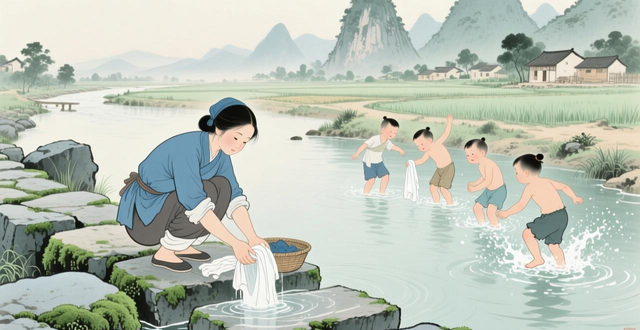
Moss grows in the gaps between the stones, and the women in the village are still washing their clothes by the canal. Children in summer plunge into it, splashing water. This situation is no different from that in the Tang and Song Dynasties.
Those steep gates are the "water elevators" invented by the ancients. During the dry season, the gates will fall down to hold the water level high, so that ships can climb over the mountains step by step. In the 1980s, experts from the International Commission on Dams came to inspect it. After being stunned for a long time, they gave an evaluation, that is, "the father of the world's ship locks".
In fact, there is no such thing as a "father".
It was just a craftsman from two thousand years ago, squatting by the river, facing the gap, and thinking about it all afternoon.
It "came alive", this is the most terrifying thing
Lingqu almost died a few years ago.
The water quality has deteriorated to Category 5, and the garbage piles on the shore are so high that people hold their noses while passing by. However, in the past few years, you went to check again and found that the Nan Canal was open to navigation again. Its length is twelve kilometers, and ships can sail from the Qin Dynasty to the present.
The national examination section has obtained Class II water for four consecutive years.
What is Category II? Even if you can hold it up and drink it, the fish will still live well.
This is not about repairing an antique for others to take photos of, but about making a river breathable again. More than 200 million yuan was invested in water replenishment operations. During dry periods, 48 million cubic meters of water was transferred from the reservoir, and a canal that was about to dry up was finally filled again.
In 2026, the world wants to see this
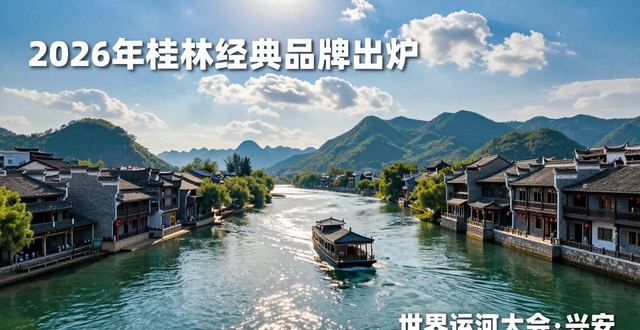
In October this year, the World Canal Conference will be held in Xing'an.
The people who come to see this 37-kilometer-long "small ditch" are experts who have seen the Suez Canal and the Panama Canal. They may be confused and ask: Why is it so narrow? Why is it so obvious?
Yes, it's that shallow.
It is this shallow water that feeds more than 50,000 people along the coast, irrigates more than 60,000 acres of fields, and also raised Hepu Port, making it one of the earliest ports of departure for the Maritime Silk Road.
Sometimes I wonder if Qin Shihuang would be proud if he knew that this canal was still in use.
The real "fandom" is not the influence of Internet celebrities.
Now people in the Xing'an area plan to build the Lingqu Canal into a "golden tourist route" to connect it with the green scenery of Mao'er Mountain and the red resources of the Xiangjiang River Battle.
It's a good idea.
However, I became more and more fond of those subtle changes. The arcade on Water Street has been restored to its original appearance. In the rice wine shop of the merchant, there are so many young people wearing Qin clothes taking pictures that they can’t stand their heads. There is an AI robot named "Xiao Ling" who explains the principles of the steep gate to children in the museum, and the explanation is more detailed than the tour guide.
You see, it’s been two thousand two hundred years.
It finally doesn’t have to be just about war.
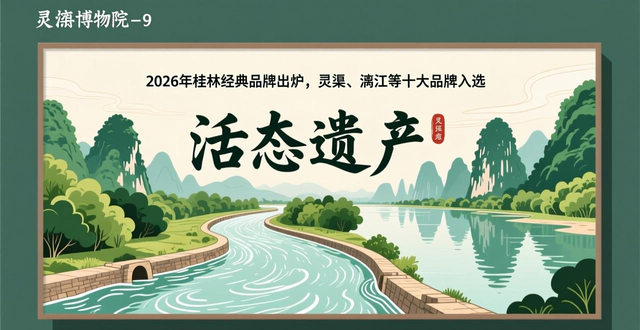
There is an exhibition board in Lingqu Museum with a sentence - "Living Heritage".
What is liveliness?
It is in such a state that it continues to be irrigated, fish farming activities are carried out at the same time, it can release floods when it rains, and it can retain water when there is a drought. Moreover, some children by the canal will choose to jump in, and some elderly people will play chess on the shore.
This canal has not yet become a ruins.
It was still panting.
Located at the water-dividing place of Huazui, looking at the water flow, it shows a tendency of separation, with half of it belonging to the Xiangjiang River and the other half to the Lijiang River.
Craftsmen probably more than 2,000 years ago would not have thought that their little "little idea" at that time, which was to enable the ship to cross the mountain, would actually become the confidence for this city to move into the world.
This is probably what the so-called "unprecedented" means.
It's not an earth-shattering event.
It's just a canal that has been flowing for two thousand years and is still flowing.
Comments NOTHING