
The ancients said in the past: "The stomach is an organ that holds water and grains, and is the most important source of the six organs." The key to following the principles of diet is to be obedient and harmonious.
However, people nowadays live in a hurried and fast pace, and often lose control of their diet. This situation often causes the "sea of water and valleys" to suddenly become like a strong wind and huge waves in the sea, and the gastric qi becomes unsmooth. Once the gastric qi flows in the opposite direction and surges up, it forms a "gastroesophageal reflux" that is very disturbing.
Most people in the world seek help from medicinal stones, but they often overlook that in the herb garden of traditional Chinese medicine, there is a flower that looks ordinary, but can achieve the effect of "rectifying chaos", and that is Inula.
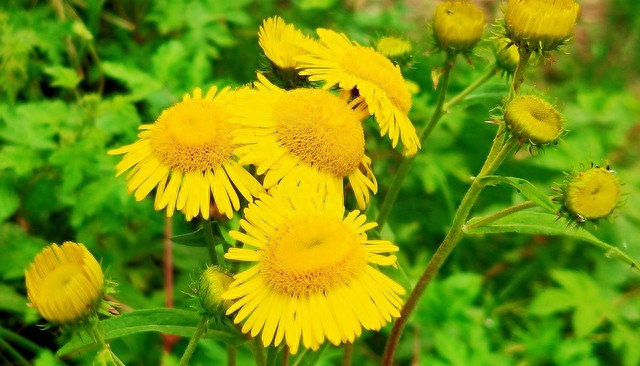
It is not as graceful as the peony, nor as quiet as the orchid. However, in the golden autumn season, with its bitter and pungent nature, it silently mediates the ups and downs of the human body's qi.
The beauty of the Inula lies in its true secret of the word "fall".
Traditional Chinese medicine treats reflux not just as the physical backflow of acidic water, but also looks more deeply into the Qi disorder behind it. This situation is called "stomach Qi ascending".
Stomach qi is supposed to descend, transporting the decomposed water and grains into the intestines.
If there is no restraint in eating, emotional damage, or sitting for a long time with little activity, the gas in the stomach is blocked and moves upward instead of downward, so acid water and chyme will flow upward, causing symptoms such as heartburn, acid reflux, and belching.
To maintain the spleen and stomach, most people like to use tonic products, such as ginseng and astragalus, in order to strengthen the Qi.
However, for symptoms such as "upward reverse", it is like a blockage in the sewer. If the pressurized water injection operation is carried out blindly, it will cause the sewage to overflow even more.
At this time, it is necessary to use products that "clear down" the stagnation and relieve the stagnation, so that the turbid qi can be made to flow downward.
Inula is the key medicine that specializes in "reducing adverse effects".
Inula is recorded in the "Shen Nong's Materia Medica". The book calls it "mainly responsible for condensation of qi". It also mentions "fullness under the ribs", "palpitation", "removing water", "removing cold and heat from the five internal organs", and "tonifying the middle". It also mentions "reducing qi". These short sentences have already clarified its effect of "reducing qi".
It enters the lung and stomach meridians, and its nature and flavor are bitter, pungent, salty, and slightly warm.
Bitterness can reduce diarrhea, pungentness can cause dispersion, and saltyness can soften hardness.
It can dissolve phlegm and dampness entrenched in the epigastrium, dissolve food accumulation, and resolve qi stagnation. It is like an experienced river worker dredging the mud and straightening out the water channels, thereby guiding the upturned stomach qi to resume its downward path.
Therefore, it does not directly neutralize gastric acid, but regulates the pathological condition of "stomach qi ascending" from the fundamental source, so that the acidic water has no object to rely on and will naturally subside.
Compared with simply inhibiting gastric acid secretion, this shows the wisdom of traditional Chinese medicine in "treating diseases based on their root cause".
Clinically, people often use Inula and Daizhe together. This practice is actually derived from the famous prescription "Inula Decoction" in "Treatise on Febrile Diseases" written by the medical sage Zhang Zhongjing.
Ochre has the property of suppressing and settling. When used together, one of them has the effect of regulating qi and reducing phlegm, while the other can suppress and reduce stomach qi. It is like setting up two checkpoints for upward gastric qi. It has a unique effect on severe cases such as acid reflux and heartburn.
If the abdomen is full due to food stagnation, the effect will be more significant if tangerine peel is used to regulate qi, harmonize the stomach and strengthen the spleen. If cold evil invades the stomach and causes vomiting, add ginger to warm the spleen and stomach and stop vomiting. The effect will be miraculous.
This is the beauty of the compatibility of Chinese medicine, where the emperor and his ministers complement each other.
However, everything in the world has advantages and disadvantages.
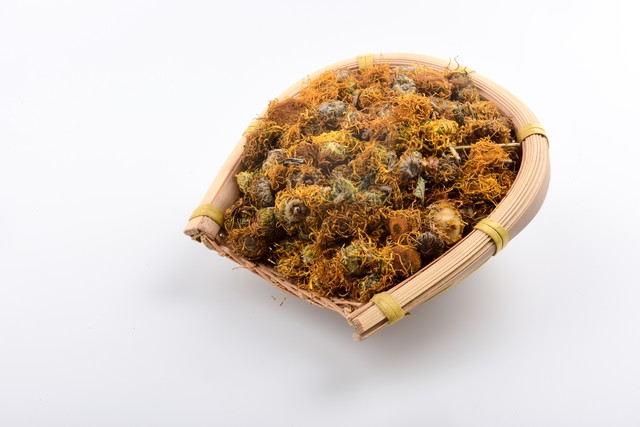
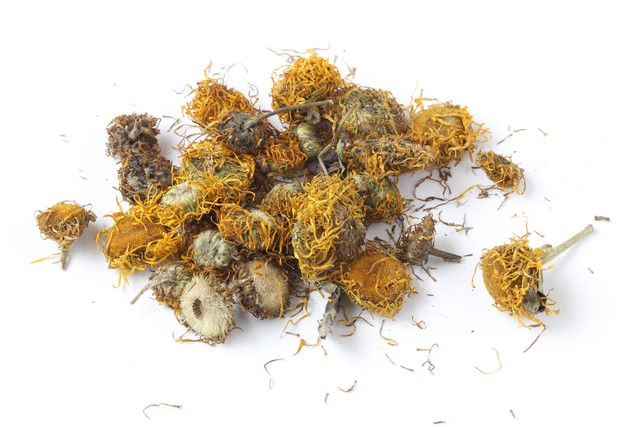
Inula is very good, but its entire body is covered with tiny villi. If it is not wrapped in gauze and then decoctioned, the villi will fall off into the soup. After taking it, it will irritate the throat and cause coughing. This is not worth the gain.
Therefore, the ancients were very careful when using medicine, and there were rules for everything from picking, processing to decoction.
Wrap it in gauze and fry it, filter out the fluff, and get the clear soup, so that it can fully demonstrate its benefits and avoid its harm.
This is not only a technology, but also a kind of reverence and prudence for life.
Observing the use of Inula is actually a microcosm of understanding the traditional Chinese food and health culture.
It reminds us that the key to diet lies not only in "what to eat" but also in "how to eat" and how to intelligently coordinate according to the signals sent by the body.
Do not lie down immediately after a meal, and eat less before going to bed. This is a life wisdom that conforms to the downward flow of stomach qi.
However, the inula is in this adaptable environment. When the Qi machine occasionally "derails", nature gives us a "balancing agent".
It conveys to us that to maintain the body, we must not only understand the benefits of "toning", but also understand the ingenuity of "tong".
When the stomach qi descends smoothly, all the meridians will be harmonious and smooth, and the water and grains can be transformed into essence, nourishing the whole body.
This unobtrusive little flower, with its special abilities of "lowering qi and reducing phlegm, harmonizing the stomach and stopping vomiting", silently protects our stomach, allowing us to enjoy the peace and tranquility that originates from the depths of our organs when we taste the various flavors of life.
Although it cannot replace modern medicine's diagnosis and treatment of organic diseases, it is a way to regulate functional discomfort, a means of maintaining the spleen and stomach, and a gentle and firm touch of Eastern wisdom.
Comments NOTHING