
The paper-cutting technique, which constitutes one of China's ancient folk arts, contains the aesthetic taste and cultural memory of the Chinese nation that has accumulated over thousands of years.
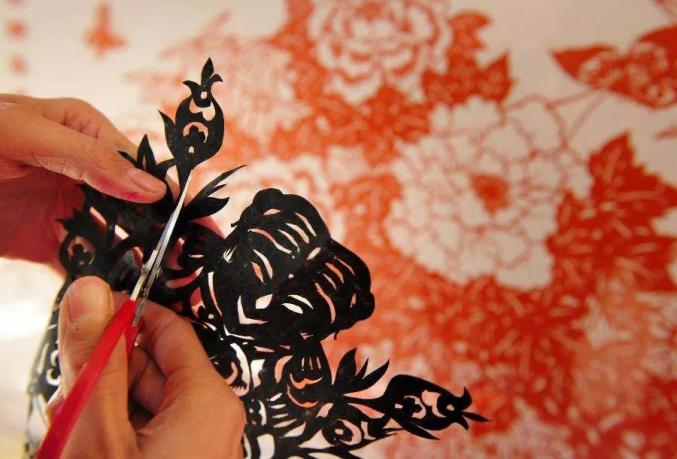
It uses hollowing out as a language and paper as a medium to construct a transparent and vital art world where virtuality and reality interact with each other.
This is not just a craft, it is a concrete expression of the wisdom and emotions of the working people. It is an intangible cultural heritage rooted in the countryside and flowing in the blood.
Historical origin: from ancient carvings to the universe on paper
The origin of paper-cutting art can be traced back to distant prehistoric times.
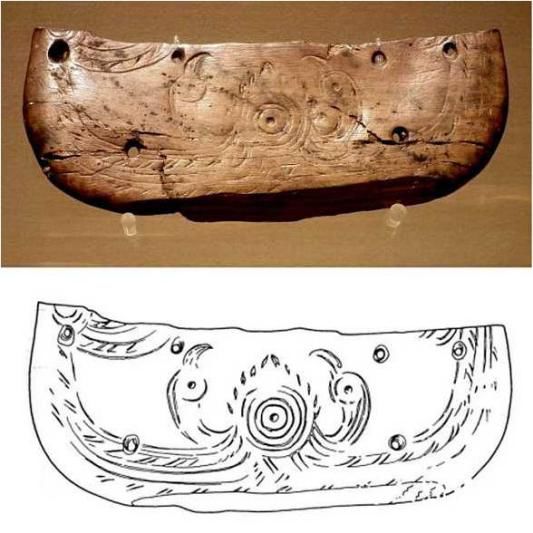
During the Neolithic Age about 7,000 years ago, mature incised lines and positive incised lines appeared on the ivory carvings of the Hemudu Culture.
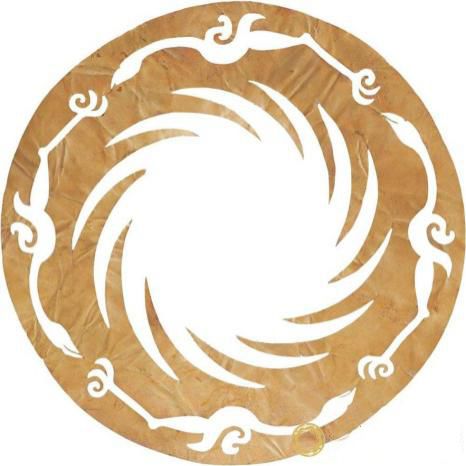
The famous "Two Birds Rising Sun" ivory butterfly-shaped object has a blazing sun in the center and two pairs of birds looking at each other on both sides. Its shape shows symmetry and solemnity.
On the one hand, this confirms the primitive ancestors' totem worship of the power of nature. On the other hand, the hollowing out consciousness contained in the carving techniques has laid the aesthetic and technological foundation for the paper-cut art that followed.
As tools continued to evolve, ancestors began to carve hollow patterns on leather, tree bark, and leaves. This form of "silhouette" was the direct predecessor of paper-cutting.
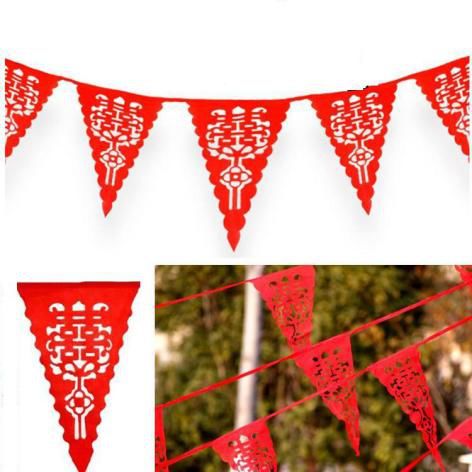
By the Han Dynasty, the custom of "cutting ribbons and making flags" on the first day of spring became very popular. People cut and carved silk into small flags, then gave them to each other and inserted them in their hair, which was called "color flags."
Silk fabric engraving was in this period. Although the material was expensive, it already had a core modeling logic that was consistent with paper-cutting.
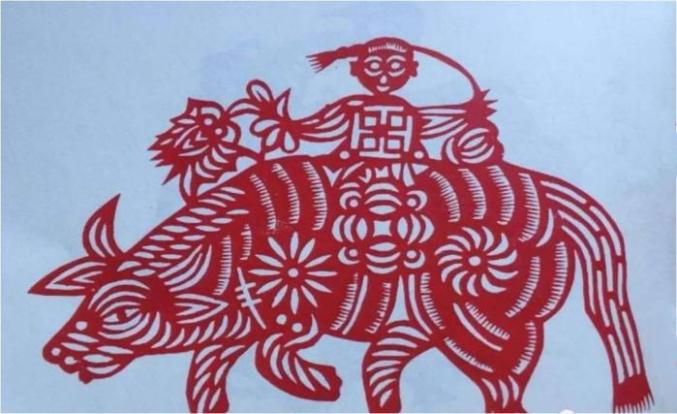
What really popularized the art of paper-cutting was Cai Lun's improvement of papermaking in the Eastern Han Dynasty.
Because paper is cheap and easy to obtain, this hollow art can come out of the palace and noble mansions and then enter the homes of ordinary people.
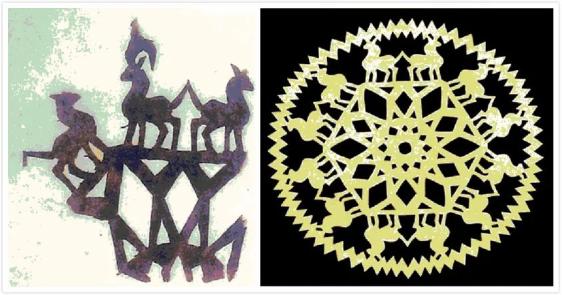
As currently known, the earliest paper-cut object was unearthed in Turpan, Xinjiang, and belongs to the "Tuanhua of Tsushima" from the Southern and Northern Dynasties.
Although the damage was very serious, after restoration, one can still vaguely see the agile posture of the three horses surrounding each other, which proves that the art of paper-cutting was already quite mature at that time.
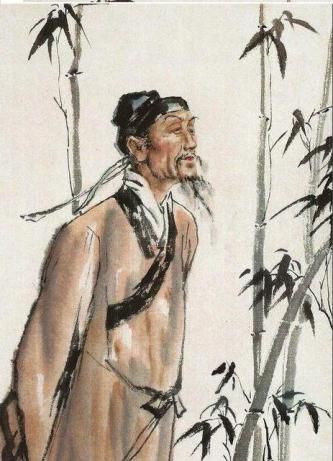
During the Tang Dynasty, the art form of paper-cutting became more and more popular and became a trend. Du Fu wrote this poem in "Peng Ya Xing", "Warm soup washes my feet, paper-cutting calls to my soul." This has become a precious literary commentary on this folk activity. It reflects that paper-cutting can play a role in soothing the soul in folk beliefs, and has practical functions such as exorcising evil spirits and praying for good luck.
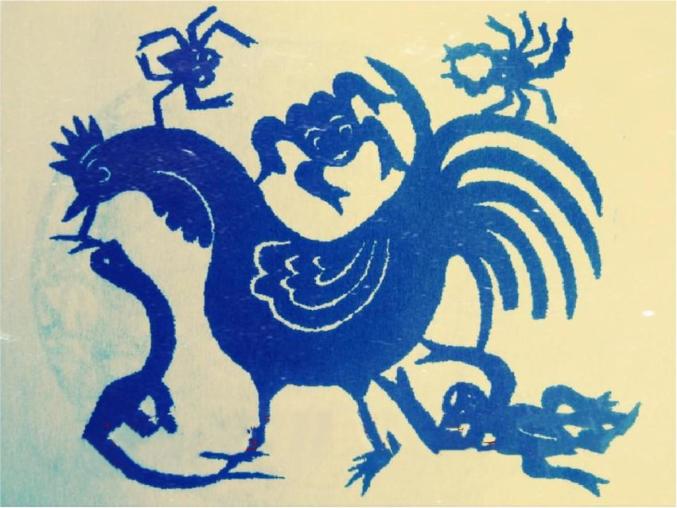
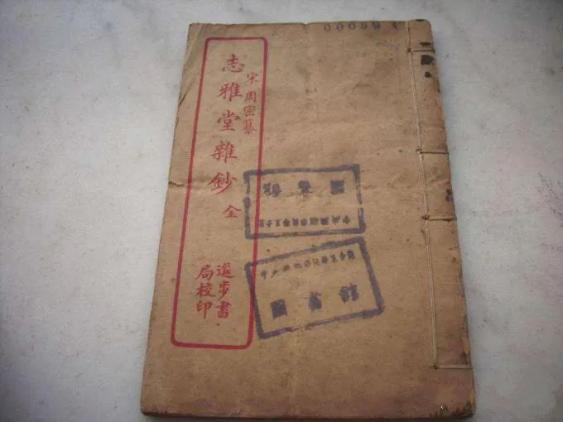
Zhou Mi of the Song Dynasty recorded the prosperous situation of paper-cutting in Bianliang City at that time in "Zhiyatang Miscellaneous Notes". It also preserved for the first time the name of the paper-cutting artist - "Yu Jingzhi". This person could cut out various types of calligraphy styles with extreme sophistication. This is enough to show that paper-cutting has become a unique skill in the Song Dynasty and is highly praised by people.
The essence of craftsmanship: the hollowing out method of combining yin and yang
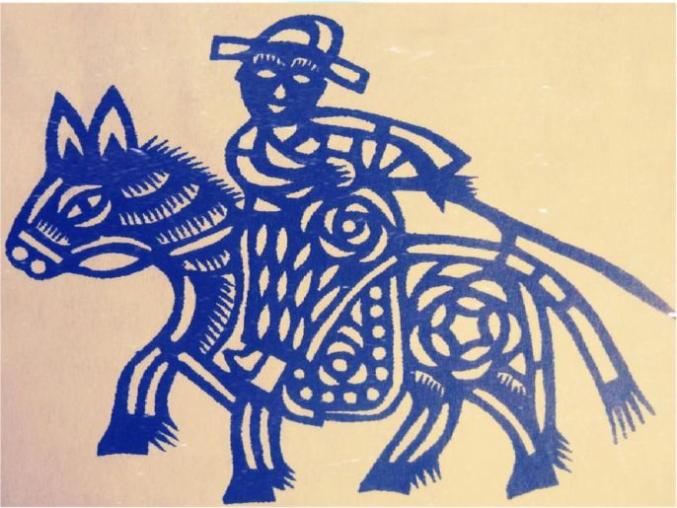
The key core skill of paper-cut art lies in the dialectical application of the two methods of "yin and yang". This is the perfect projection of traditional Chinese philosophical ideas in folk crafts.
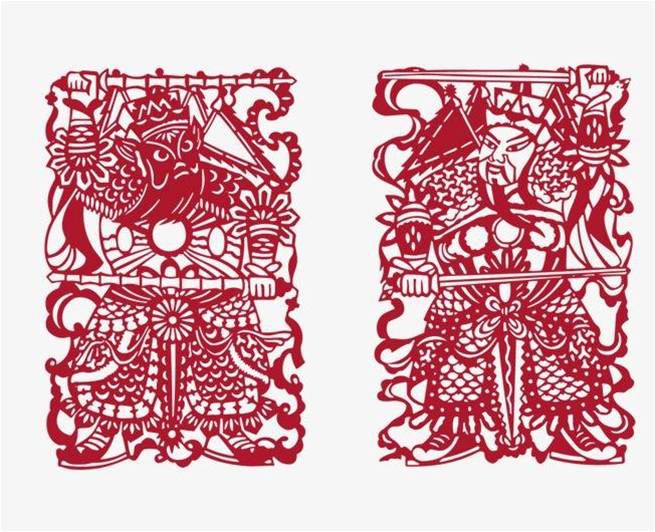
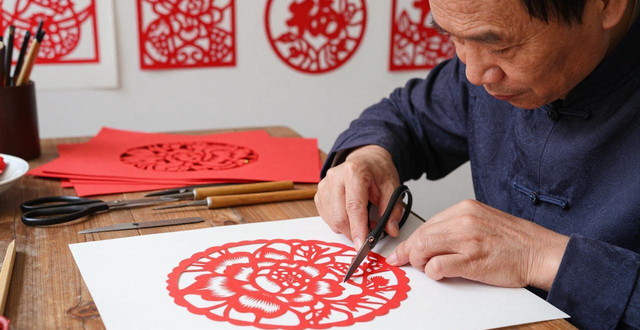
Yang-engraved paper-cutting can also be called "hollowing out and leaving lines", which means to retain the original outline lines of the pattern and cut off the blank parts other than the lines.
It has such characteristics that the lines are connected to each other, showing an exquisite and transparent state, and its works have a smooth and clear nature. Many of the fine paper-cuts in the South show their advantages by this method.
Paper-cutting with concave carving means that the pattern itself is cut and carved, and the shape is revealed through the backing of the background or supporting paper.
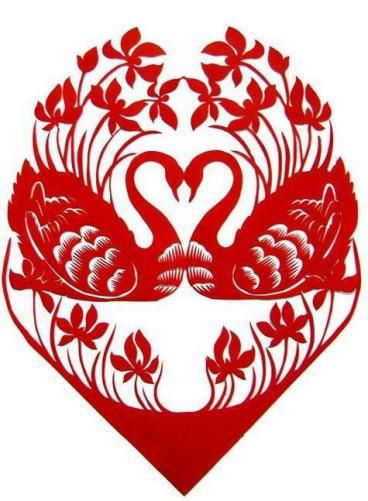
There is such a characteristic that the lines are disconnected from each other, and the feeling produced by the block surface is very strong, thus presenting a heavy visual effect and a sense of simplicity. This situation is relatively common in the rough style of the north.
Among the masterpieces handed down from generation to generation, it is rare to use only one technique.
Craftsmen often skillfully combine the two methods of yin and yang. The yang contains yin, and the yin contains yang. As a result, the layers of the painting become rich and diverse, and the virtual and the real complement each other, thereby achieving the highest artistic realm of "sparse and airtight".
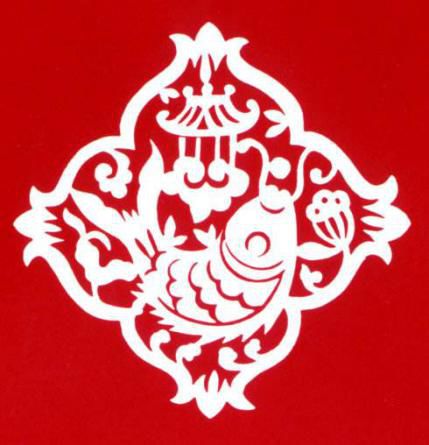
The use of patterns is also systematic.
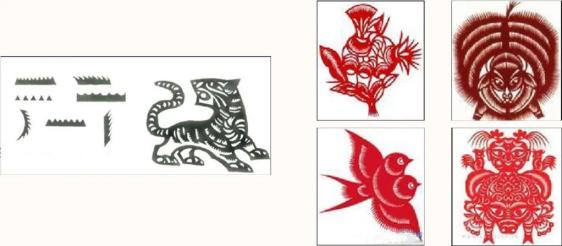
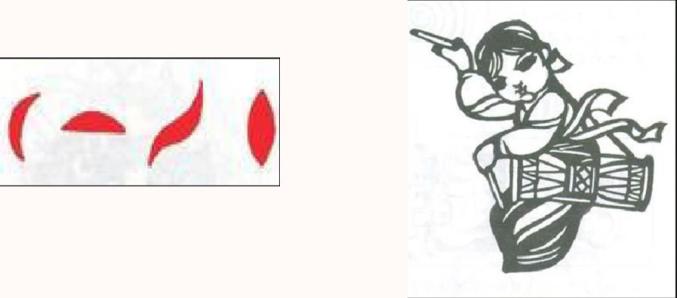
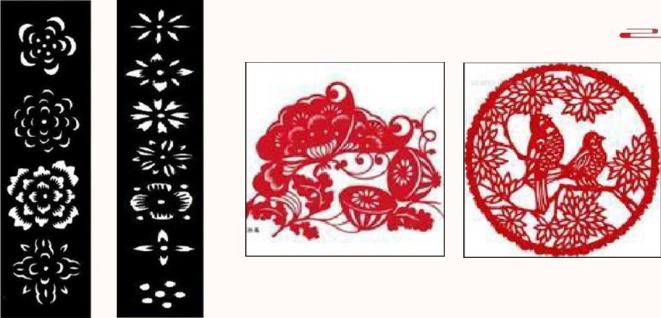
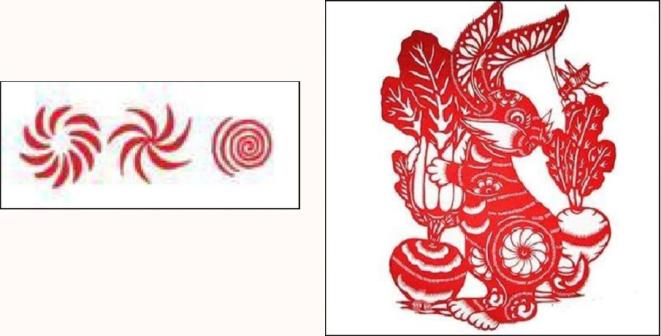
The pattern called zigzag pattern is used to show the hair and down of animals, and its hardness and softness can change according to the object; the pattern called crescent pattern is mostly used in clothing patterns and petals to give flowing rhythm to static patterns; swirl patterns, water patterns, cloud patterns and fish scale patterns, etc., each have a specific modeling function, and together they constitute a unique symbol system of paper-cutting art.
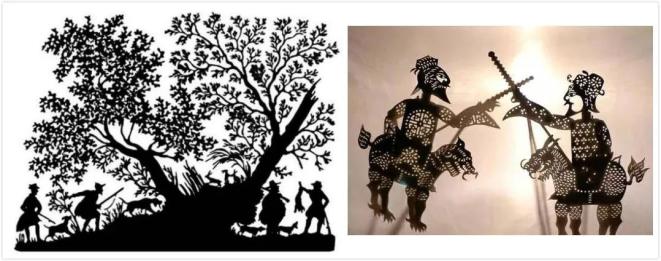
As for the more pure "silhouette", it pursues the precision of the outer contour and the smoothness of one go. What this tests is the craftsman's extremely high ability to summarize the charm of the object.
Cultural inheritance: rebirth of intangible cultural heritage integrated into daily life
The vitality of paper-cut art lies in its close connection with people’s lives.
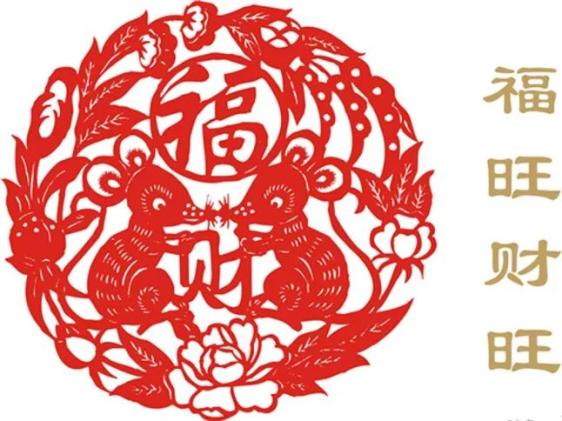
From the "luck, wealth, longevity and joy" in the Yuan, Ming and Qing Dynasties to the "God of Wealth" pattern that expresses good wishes, paper-cutting has always been a carrier for people to express their longing for a happy life.
It appears on window lattice and door lintels (window grilles, door stickers), and is used as decoration on the ceiling (ceiling flowers, lanterns). It is also accompanied by various customary rules in festivals and many important and key rituals in life, and is interdependent with each other.
Entering the contemporary era, the value of paper-cutting, an art regarded as an intangible cultural heritage, has been re-recognized and activated.
It is no longer limited to square inches of red paper, but is integrated into modern design with an open attitude.
Just like the architectural appearance of the Polish Pavilion at the 2010 Shanghai World Expo, it uses cut-out patterns and changing light to create a very modern "paper-cut" aesthetic. Another example is the etched glass window of the Chen Clan Ancestral Hall in Guangdong, which combines glass craftsmanship with paper-cut patterns to create a transparent and elegant decorative effect.
In contemporary lighting design, cultural and creative products, and even clothing design, paper-cut elements are often visible. Its characteristics of interlacing light and shadow have been subtly transformed, thus adding a soft and timeless cultural charm to the modern living space.
Originating from the ivory carvings of the Neolithic Age, they have been used in folk customs during the Song, Yuan, Ming and Qing dynasties, and have reached the contemporary cross-border integration stage. With its vitality, paper-cut art has witnessed the continuous extension of Chinese civilization.
It embodies the simplest aesthetic concepts of the working people and embodies the Chinese nation's unremitting pursuit of a better life.
This ancient hollow art is not only a very precious cultural heritage, but also a vibrant spiritual inheritance. Its unique artistic charm and cultural genes will surely continue to shine in the new era.
Comments NOTHING