
Treasures from Laos: Ingenious gifts from Indochina
When the morning fog on the Mekong River dissipates, monks in Luang Prabang walk barefoot on the streets, and the golden pagodas shine in the sun. Laos is like an uncarved jade lying quietly in the hinterland of Indochina.
There is no noisy commercial atmosphere here, but it breeds the purest handicrafts and gifts from nature.
If you are about to set foot on this pure land known as the Buddhist Kingdom, then why not bring back a few exquisite cultural and creative gifts containing oriental aesthetics for your relatives and friends who are far away, so that the warm atmosphere of Laos can be extended to every detail of daily life.
1. Time condenses: the cultural rebirth of Laos coffee
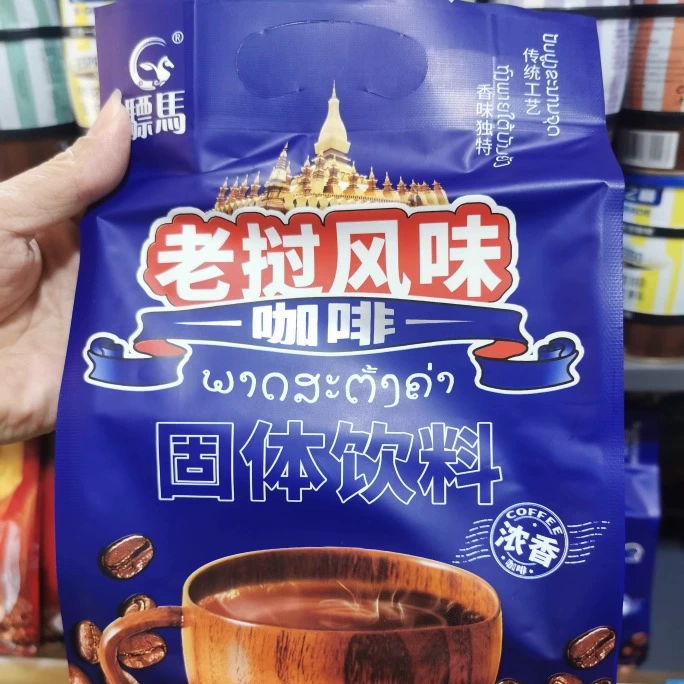
The Bolofing Plateau is located in southern Laos. The volcanic ash soil, together with the tropical monsoons, together produce the world's top arabica coffee.
Different from the industrial feel of instant coffee, the coffee beans here are processed through a traditional washing process. When brewed, the coffee shows a mixed aroma of caramel and nuts, with a sweet citrus flavor in the finish.
Giving a friend a bag of coffee beans packaged in handmade cotton and linen, along with a stoneware filter pot made by a Laotian craftsman, constitutes a tangible slow life philosophy.
After getting up, brewing a drink with your own hands, letting the aroma wake up your sleeping taste buds, seems to take you back to that lazy afternoon again.
2. Fingertip latitude and longitude: Buddhist epic in silk
In Luang Prabang, the ancient capital of Laos, weaver girls still use the ancient "Ikat" tie-dyeing technique.
They weave Buddhist scripture stories into silk scarves, they weave Champa flowers into silk scarves, and they weave elephant patterns into silk scarves. Every warp and weft of the silk scarves is flowing with the memory of the Lancang Kingdom.
The silk dyed by natural plants is selected, and the color is as warm and moist as the water of the Mekong River reflected in the sunset.
Presenting and giving a purple gauze scarf to the elders is not only a sign of respect for traditional handicrafts, but also a courtesy with an oriental charm that prays for warmth to always be with them.
3. The Buddha’s fate: Prajna Bodhi on agarwood
Agarwood has been a sacred object for meditators to calm their mind since ancient times.
Laotian agarwood, which is carved by craftsmen into lotus bracelets or bodhi leaf bookmarks, grows slowly, and the aroma it emits is quiet and long. The growth rings of time can be vaguely seen between the wood grains.
He gave his teacher and friend an agarwood paperweight as a gift. On the simple wooden box, "The heart is as calm as a lotus" was written in Bay-leaf sutra script, making the fragrance of books and wood intertwined on the desk, forming the spiritual world of Eastern literati.
4. Jingwei Tiancheng: The simple philosophy of Laos cotton and linen
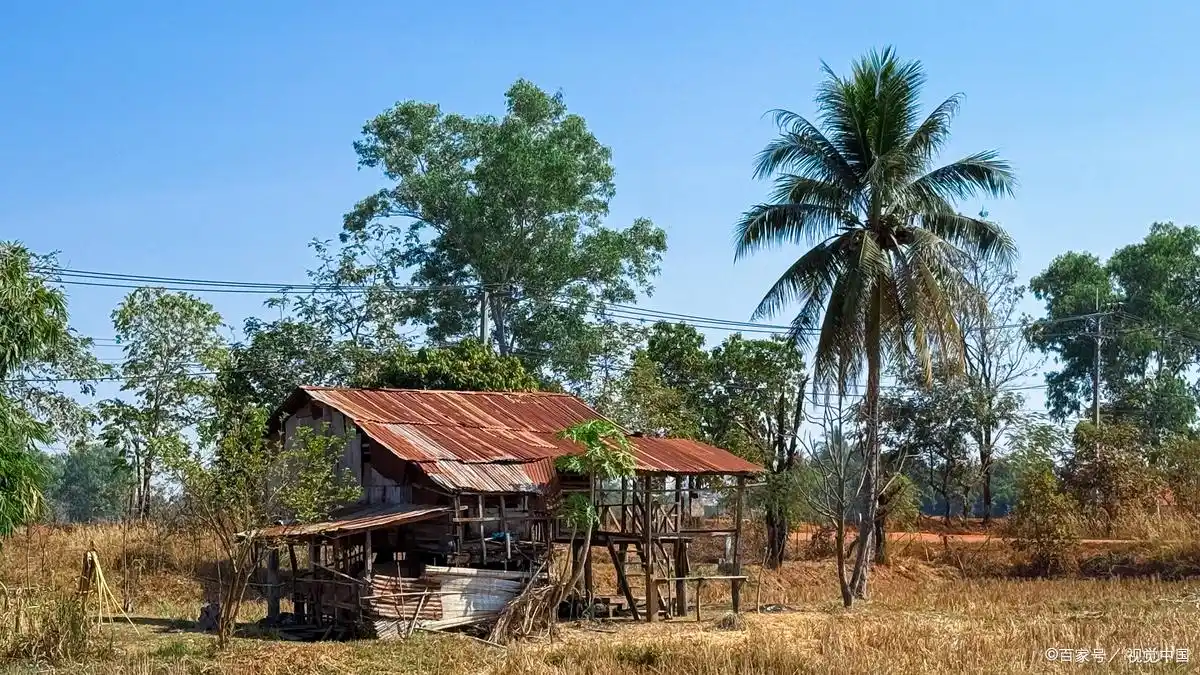
On the Xieng Khouang Plateau, Akha women still grow cotton that has been passed down from generation to generation.
The thread is spun manually, plants are used for dyeing, and plant ash is used to fix the color. Each piece of cotton and linen retains the temperature of the sun and the soil.
Choose an off-white linen shirt with the auspicious hornbill totem embroidered on the hem; or choose a set of tie-dyed tea mats in indigo color. The ice cracks on the cotton fabric are like the mottled murals full of traces of time in a thousand-year-old moment.
Such a gift is most appropriate for those close friends who yearn for the authenticity of nature.
5. Covenant between wood and stone: the poetic rebirth of ancient papermaking
To this day, craftsmen in the Mengwe area still use the papermaking technique from 800 years ago, pounding paper mulberry bark into pulp, embedding Champa petals and ferns, and then drying it into pieces of paper with breathing properties.
Make these papers into lampshades, notebooks, or invitations. The warm yellow light shines through the petals, casting mottled light and shadow. When writing, you seem to be able to hear the murmur of the rainforest.
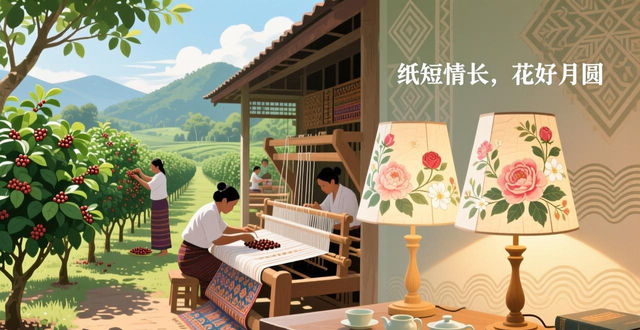
Gift a pair of floral paper table lamps to newlyweds, which means "paper is short but love is long, flowers are good and the moon is full".
6. Lacquerware flow: the Zen beauty of mother-of-pearl inlay
In Laotian temples, lacquerware is a sacred object dedicated to the Buddha.
As craftsmen, the objects with bamboo strips as their carcass were painted layer by layer with raw lacquer that had accumulated over decades, and then embedded mother-of-pearl and fritillary shells, and finally made a tea set, or an incense box, or a fruit plate.
On the dark background, the fragments of fritillary reflect the colorful rays of light, just like the stars in the night sky.
Choose a crabapple-shaped lacquer plate and give it to someone who loves tea. Place a teaspoon and a pot holder. When you rub it every day, it will naturally create a quiet atmosphere.
7. Ancient method of making incense: breathing deep in the rainforest
In Udomsai, deep in the mountains and forests, the Kemu people collect benzoin resin according to ancient methods, then mix it with agarwood, sandalwood and wild herbs, and finally hand-roll them into incense sticks or incense sticks.
Light a cigarette, the smoke is curling up, and the aroma is moist like the rainforest soil and sweet like wild flowers.
For friends who uphold the concept of Zen practice or love incense, equip them with the only incense stick made of Laos green pottery, so that the unique scent coming from the secret place can completely purify and wash away the inner dust.
8. Brocade Tea Banquet: Solidified Palace Movement
On the robes of Laotian royal dancers, brocades woven with gold and silver threads tell the story of past glory.
Nowadays, craftsmen have simplified the brocade technique and applied it to tea mats. The Naga dragon, phoenix and lotus are looming in the dark pattern, and the edges are decorated with handmade tassels.
Spread out such a tea mat and place the purple clay pot on it. When the tea is poured, it is as if you can hear the palace music and dance of the Lancang Kingdom coming across time and space.
9. Bamboo woven elegant utensils: intangible cultural heritage poems at your fingertips
Laos’ bamboo weaving skills are listed as intangible cultural heritage in urgent need of protection by UNESCO.
Craftsmen split the bamboo into strips as thin as hair, and use these thin strips to weave exquisite fruit baskets, exquisite tea baskets, or exquisite flower utensils. The surface of these finished products is as smooth as jade, but the sinews of the bamboo are revealed.
Give a friend a woven bamboo basket, which can be used to pick wild flowers in the spring and placed in the autumn to hold fresh fruits. It integrates the fun of the mountains and wild areas of Laos into the alternation of the four seasons.
10. Ancient tree black tea: the tenderness stored in time
In the primeval forest in Fengshali, thousand-year-old tea trees and cypress trees grow together, and the tea leaves are extremely rich in substances.
The local tea farmers followed the red-drying process passed down from their ancestors, first withering, then rolling, then drying in the sun, and then storing the tea in bamboo baskets for slow fermentation.
After brewing, the tea soup appears in the form of a golden ring hanging from the cup. The entrance is as sweet as dried longan, and the fragrance of wild honey remains at the end.
With a hand holding a firewood beaker, give it to those who are gentle in your life.
These souvenirs from Laos have long transcended the meaning of the objects themselves.
They are the morning and dusk hours above the loom, the long waiting beside the kiln fire, and the difficult search in the dense forest. This is the piety of the craftsman who rubs time into his fingertips.
The friend opened the gift, which was wrapped in burlap paper. At this moment, the friend saw the words of blessing on the Bay Leaf Sutra. At the same time, he smelled the refreshing air of agarwood. At that moment, the friend touched the most moving soul of Laos.
It is hoped that these precious gifts with the warmth given by the Buddhist country will become bridge components connecting the distant and daily life, so that every gift in return becomes a gentle transmission of Eastern aesthetics.
Comments NOTHING