
The Chinese have always attached great importance to the saying that "food is the first priority for the people". When it comes to food, it has long gone beyond just filling the stomach, and has become a thread that runs through thousands of years of civilization. It carries the philosophical wisdom that embodies the concept of the unity of nature and man, as well as the worldly sophistication full of warmth and profound meaning.
If food is regarded as a long picture, then the changes in staple foods, festival food customs, and historical allusions are the most colorful strokes on the picture.
Opening the scroll of food, the evolution of staple food is like a miniature history of Chinese civilization.
In ancient times, our ancestors established the dietary concept of "grains as nourishment".
The "Eight Treasures" appeared in the Zhou Dynasty, and during the Han and Tang Dynasties, Hu cakes were introduced from the Western Regions, and the form of staple food became more and more abundant.

During the Han Dynasty, wheat was grown on a large scale, and then stone mills became popular. Flour entered thousands of households, and then there were various forms of noodles, dumplings and steamed buns.
"Tokyo Menghualu", a book that appeared in the Song Dynasty, records countless noodles-based snacks on the streets of Bianjing. From this, we can see that they have penetrated into the daily lives of ordinary people long ago.
This seemingly ordinary bowl of rice and this seemingly ordinary piece of cake are actually the crystallization of the integration of agriculture and technology, a dialogue between the earth and ingenuity.
Food during festivals is the ultimate expression of Chinese people integrating emotions and philosophy into their daily lives.
The dumplings made during the Spring Festival are shaped like ingots. At the end of the year, they contain the expectation of saying goodbye to the old and welcoming the new. What is revealed after biting into them is the true and wonderful taste of family reunion.
The glutinous rice balls eaten during the Lantern Festival turn into glutinous rice balls during the Lantern Festival. They are in the shape of a "round" and contain the meaning of "round". They pray that people's affairs can be completed successfully throughout the year and that harmony between heaven, earth and people can be achieved.
During the Dragon Boat Festival, rice dumplings have evolved from corn millet to today's various colors. Each piece wrapped in reed leaves is a reminder of Qu Zi's proud character. What is thrown into the river is not only rice, but also the innocent heart that will not fade away after thousands of years.
Mid-Autumn Festival mooncakes, whether they are Soviet-style or Cantonese-style, all use the full moon as their shape. When eaten separately, even if they are thousands of miles apart, watching the same bright moon together, a piece of mooncake is enough to comfort the feelings of lovesickness.
These foods are no longer simply used to relieve hunger. They are a mark of time, a sustenance for emotions, and a bond that connects family and national emotions. They skillfully cook and blend the solar terms of heaven and earth, the memory of sages, and the warmth of human relations into one large piece.
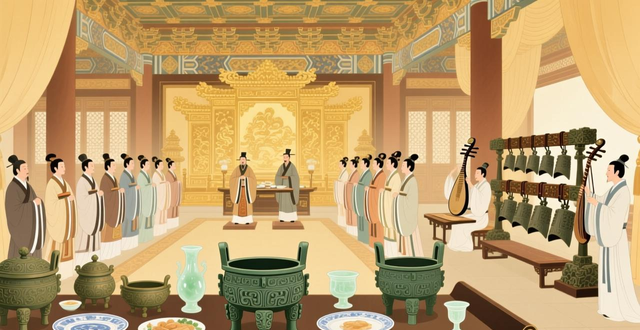
Looking back on the past history of food, there are many meaningful allusions worthy of in-depth consideration, which vividly demonstrate the deep connection between the art of food and the civilization of rituals and music.
Confucius said, "You never tire of fine food, and you never tire of fine food." This is not only a matter of diet, but also includes respect for the things given by heaven and earth, and the pursuit of quality of life.
Yi Yin, a famous prime minister of the Shang Dynasty, carried Ding Zu on his back, and used the "perfect taste" to advise Tang. He extended the principles of fire and seasoning in cooking to become a strategy for governing the country. He said that "governing a big country is like cooking small delicacies".
During the Han Dynasty, Zhang Qian went to the Western Regions and brought back grapes, walnuts, and pomegranates, which enriched the fruit plate of the Central Plains and witnessed the integration of civilizations along the Silk Road.

Cao Cao, who was in the Three Kingdoms period, had something called "The Food System of the Four Seasons", which not only recorded Cao Cao's attention to food, but also revealed the interest in life of a politician and the style of that era.
The stories behind these meals make history no longer just dry words, but full of vivid memories full of human fireworks.
The land and water support the people, and the vast territory has given birth to unique local flavors.
The spicy food in Sichuan and Sichuan is as lively and unrestrained as the local mountains and rivers; the sweet food in Jiangsu and Zhejiang is as gentle and delicate as the misty rain in the south of the Yangtze River; the salty food in the Qilu area has the atmosphere of the hometown of sages; the light food in the Lingnan area reveals an inclusive openness and refinement.
This pattern of "sweet in the south, salty in the north, spicy in the east and sour in the west" was not formed overnight. It is the result of the selection and precipitation of geographical environment, products, climate and human customs over thousands of years.
Behind each flavor, there is a unique cooking philosophy and life logic.
The charm of Chinese food culture lies not only in the delicacy of its taste, nor in the exquisiteness of its skills, but also in the profound connotation it carries.
It is a history that is read through the tip of the tongue, a philosophy that is perceived through taste buds, and a human affection that is played through pots and pans.
Starting from the simple cooking fires for three meals a day, to the precious and rare exquisite dishes during the seasons, the Chinese put their awe for nature, the deep remembrance of their ancestors, the incomparable yearning for reunion, and the deep love for life into them, cooking and cooking this unique cultural feast full of wisdom and warmth.
Only if you understand Chinese food can you understand China.
Comments NOTHING