
Ganpo flavor: unlock the warm code of authentic Nanchang steamed pork with rice noodles
In this beautiful land of Jiangxi, delicious food is like the water of Ganjiang River, with a long history.
However, if we talk about the dish that best embodies the daily taste of Nanchang people, then the steamed pork with bright red color, fragrant and soft characteristics will definitely occupy a high position on the relevant list.
It is not only a "hard dish" placed on the table, but also a wonderful demonstration of the "steaming" skill in Gan cuisine. It carries the heroic city's life-filled wisdom related to food.
Proper selection of materials: embodying the essence of local customs
To make this Jiangxi version of steamed pork with rice flour, selecting materials is the first threshold.
Unlike other provinces, Nanchang people pay attention to the localization and freshness of ingredients.
First, pay attention to the existence of pork belly. Second, you must choose high-quality pork belly with alternating fat and thin. Third, it shows a clear-cut appearance. Fourth, the thickness is moderate.
This kind of meat quality, after a long steaming process, can achieve the so-called fatness without making people feel greasy, and it seems to be melted in the mouth, in the ultimate state of taste.
2. The transformation of soul rice noodles : Jiangxi is a land of fish and rice, and the rice is of high quality.
The essence of Nanchang steamed pork lies in the homemade rice noodles .
The local people have this preference. They will mix indica rice with a small amount of glutinous rice, then wash it, drain it, and then put it in an iron pot. Add star anise, cinnamon and other things, and then stir-fry slowly over low heat until the color becomes golden and the aroma from the rice is very strong.
Machines cannot replace the pot gas generated in this step, nor can they replace the burnt aroma generated in this step. It is this pot gas and burnt aroma that lays the mellow flavor foundation for the entire dish.
3. Regional characteristics of seasoning : Gan cuisine pays attention to salty, spicy and spicy food .
When marinating, in addition to the basic soy sauce and cooking wine, locals usually add a spoonful of Jiangxi's unique chili sauce or dried pepper segments, and then use a large amount of minced garlic and ginger as auxiliary, so that the slight spiciness can penetrate into every texture of the meat. This method can not only relieve greasiness but also refresh people. It is a distinctive label that distinguishes steamed pork from other places.
4. An indispensable preparation : When Nanchang people make steamed pork, they often place a thick layer of something at the bottom of the bowl, which is locally produced red sweet potatoes or taro.
They not only act as a "sponge" to absorb excess oil, but they are also the finishing touch that injects a sweetness and sweetness into the whole dish. They are intertwined with the aroma of meat, rice, and spicy to form a rich layer.
Craftsmanship: "Steaming" Kung Fu passed down for thousands of years
The production process is a fusion of patience and skill, and every step involves the presentation of the final flavor.
A carefully made marinating method: mix the sliced meat with light soy sauce, dark soy sauce, cooking wine, minced ginger, garlic, chili pepper and a small amount of sugar. Knead it several times and mix it thoroughly to make it even. Leave it to marinate for at least half an hour to allow the flavor to fully penetrate from the outside to the inside.
2. Soul coating powder: Pour the fried and ground rice flour into the marinated meat slices. The thickness of the rice flour should be moderate and a little grainy. Then use your hands to gently stir and press to ensure that each piece of meat is evenly coated with a golden coating of just the right thickness, and finally presents the right state.
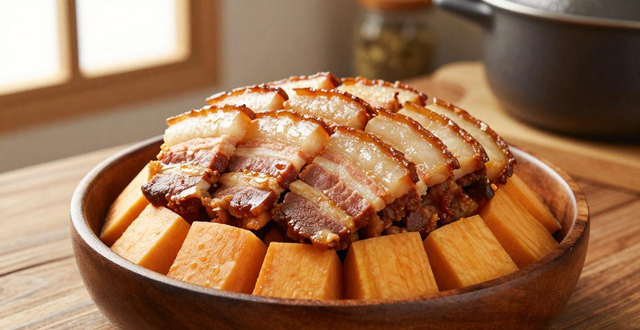
3. Skillful stacking : In a steaming bowl with a certain depth, first place the sweet potatoes or taro cut into pieces at the bottom, and then stack the meat slices wrapped in flour neatly one by one with the skin facing downwards.
This is not only a visual aesthetic, but also has a specific purpose. During the steaming process, the meat juice and oil can penetrate smoothly downwards to moisturize the vegetables at the bottom. At the same time, it can also allow the rice noodles on the upper layer to fully absorb the essence of it.
4. Steam slowly and carefully over low heat: Place the stacked bowls for steaming into the steamer, bring it to a boil over high heat, then switch to medium heat and low heat and steam carefully for a long time and a half for more than an hour and a half.
Time is the best seasoner of this dish.
In the steamy atmosphere, the fat meat is transformed into nectar, the lean meat becomes crispy, and the rice noodles absorb the sweet aroma of the meat juice and vegetables, undergoing a gorgeous transformation.
Ganpo style: the warm memory of a bowl of steamed pork with rice flour

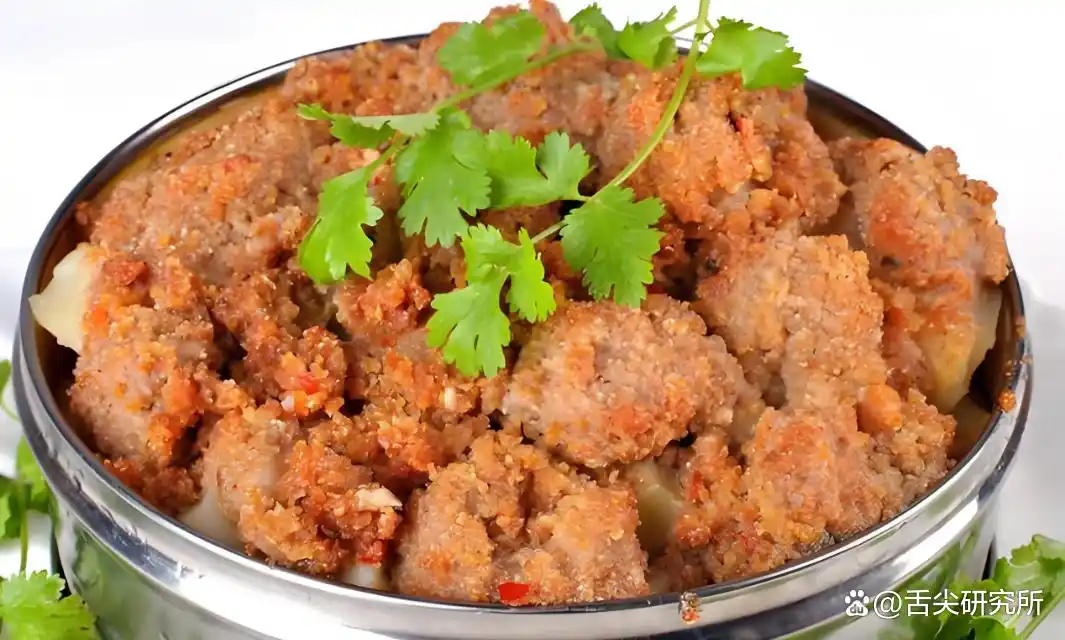
The steaming bowl is brought to the table and the moment you open the lid, the aroma of meaty rice, spicy and sweet potatoes fills the entire surrounding space.
Flavor Tasting : Pick up a piece, the rice noodles are oily and the meat is soft.
When you first take it into your mouth, you are greeted by the burnt aroma and chewy texture of the rice noodles, followed by the soft, glutinous and delicious aroma of the pork belly. Finally, the faint spiciness blooms on the tip of the tongue, dissolving the greasiness just right.
The bottom part of the sweet potato or taro has already become dense and sweet, fully absorbing the essence of the gravy and filling it up, making it a delicacy that children compete for.
Cultural ties : In Nanchang, steamed pork is never absent during festivals, weddings and funerals.
It is a "big dish" that symbolizes abundance and perfection.
It is also synonymous with the term "taste of home". It is what a wanderer longs for most after returning home, a bite of his mother's dishes.
The process of making and sharing steamed pork is itself a heartwarming moment of emotional exchange between family members.
Inheritance and innovation : Today, Nanchang’s steamed pork is also constantly innovating.
Apart from the classic methods, there are also steamed pork with lotus leaves and rice flour (this method will add more fragrance), steamed pork ribs with rice flour, steamed pork intestines with rice flour, etc., and the bottom ingredients have become more and more abundant, with potatoes, pumpkins and other ingredients to choose from.
However, no matter what changes occur, the most important thing is that the culture of "steaming" and the original taste of salty, spicy and spicy have never changed.
In today's fast-paced life, you might as well try to follow the old Nanchang style and spend half a day to steam a bowl of steamed pork tamales for your family.
This is not just a dish, but an attitude about life and a warm inheritance of traditional food culture.
When the tip of your tongue touches the familiar taste, you will find that those slowed down times have turned into the most solid warmth in your heart.
Comments NOTHING