
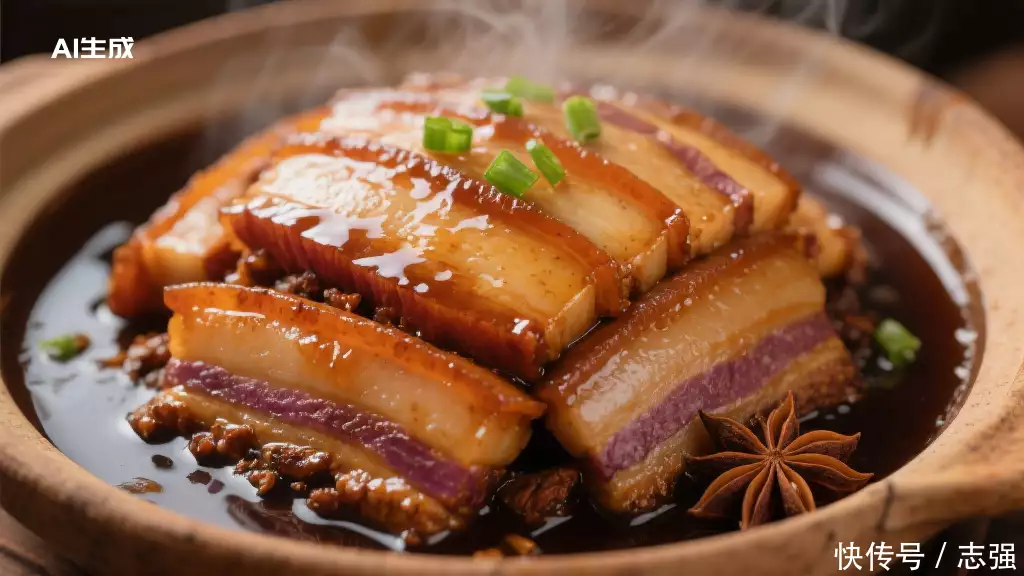
Anhui people’s first autumn dish: braised pork with taro
If there is a flavor that can be used to represent autumn in Anhui kitchens, then it must be the salty flavor of #芋头肉# .
As the autumn wind blows, preparations for this "hard dish" begin on the dining tables between Wannan and Jianghuai.
It is not just a dish, but also the "heavy oil, heavy color, and perfect heat" in #Huicaifoodculture#, which is vividly presented and carries the taste memories of countless Anhui wanderers' autumn in their hometown.
Pay attention to the selection of materials: the essence of local scenery
To make this dish well, selecting ingredients is the first threshold.
Anhui people make taro braised pork and are very picky about the ingredients.
The pork belly selected must be from local native pigs. It must be in a three-layered state, with even fat and thin parts, and the meat must be firm. As for the taro, the first choice is the fresh taro produced in southern Anhui or northern Anhui. This kind of taro has a high starch content, a pink and waxy texture, and a rich aroma.
Mother is in the vegetable market, her figure is so carefully selecting, but she is actually looking for the most precious gift in autumn. Only with such a combination, can it be steamed to create a state where the meat has the aroma of taro, and the taro also has the taste of meat, which is called ### Beauty of Fusion###.
Craftsmanship: a slow-cooking ceremony
In the kitchen of an Anhui family, making taro braised pork is a cooking process full of ritual.
Put the pork belly in a pot under cold water. The first step is to process the pork belly. Add ginger slices and cooking wine and simmer slowly. This step is designed to remove the fishy smell and lock in the meat aroma.
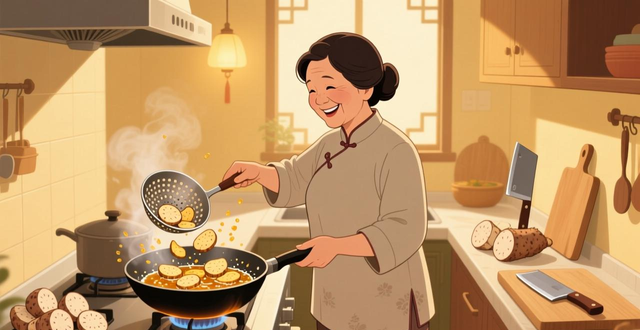
Deep-frying taro requires a lot of skill. You have to put the cut taro slices into a pan and deep-fry them until they are golden and crispy. The heat must be controlled just right during frying. Only in this way can you ensure that the taro will not break or become soft during subsequent steaming, and it can still maintain its original shape after absorbing the meat juice.
The last one is the bowl, with a piece of meat and a piece of taro arranged in a neat manner. The emphasis is on #layering and beauty. This is not only for a good-looking appearance, but also for each piece of food to receive heat evenly and penetrate each other.
A feast for the senses: warmth that melts in your mouth
When the lid of the steamer is opened, the rich aroma instantly fills the entire kitchen.
After a long period of #slow steaming, which lasts for at least an hour, the pork belly has become #red, soft and glutinous, and the fat part melts away quickly in the mouth, without making people feel greasy at all; the taro absorbs the fat and gravy of the pork belly, and then becomes #粉糯香sweet, which will break apart if you pinch it lightly with chopsticks.
The most wonderful thing is the soup at the bottom of the bowl. It has just the right salty and sweet taste, and is full of mellowness. Using it to mix with rice is the most luxurious delicacy for children in Anhui when they were young.
At this moment, it is not just food, but it shows the warmth of #home and is a concrete display of family affection.
Cultural inheritance: the taste coordinates in the minds of tourists
In Anhui’s food tradition, taro and braised pork is a banquet dish, and it is also an #emotional carrier .
Whenever there is a festival or when there are guests at home, this dish is served on the table, which means that the host has the most hospitable means of hospitality.
Nowadays, although many young people have mastered the skills of making this dish, they are always trying their best to restore the taste in their memories.
It is like a silent song, reminding every Anhui person that no matter how far away they are, as long as they taste this bite, which is the so-called #肉肉芋香# , they can find the way back home.
This is not just the satisfaction of the taste buds, but also something called the inheritance of love, which is the most touching taste of life in autumn.
Comments NOTHING