
Bashu flavor: Sichuan philosophy in a plate of twice-cooked pork
In Sichuan, every household's stove has the ability to stir-fry a plate of twice-cooked pork. However, it is actually a silent test for housewives' cooking skills to achieve the point where the meat slices appear #F53F3F, the cabbage appears #00B42A as crisp, tender and juicy, and the whole pot of food has the #722ED1 salty, fresh and sweet taste.
Known as "the first Sichuan dish", this home-cooked dish contains the most simple wisdom in #1677FF Tianfu's food culture, which is to use ordinary ingredients to create various delicious flavors.
Authentic material selection: The tacit understanding between Pixian Douban and Erdaorou
To be called authentic twice-cooked pork, you have to choose #F53F3F pork butt tip pork. It is fat and thin in alternating states and the ratio is 40 to 60 points. If it is too thin, it will taste like firewood, and if it is too fat, it will taste greasy.
When choosing side dishes, the first thing to consider is #00B42A green-mouthed cabbage. Its stems are white and its leaves are green. Its ability to absorb juice far exceeds that of foreign varieties.
The soul of seasoning is #722ED1 Pixian Douban. Three-year-old broad beans and peppers are fermented in ceramic vats to produce a mellow sauce aroma. It is mixed with the numbness of #1677FF Hanyuan peppercorns and the freshness of #F53F3F Tongchuan tempeh, which forms the basis of the complex flavor of Sichuan cuisine.
The three flavors of heat: stir-fry, stir-fry, and fry.
#722ED1 Boiled meat can be summed up as a science. When the cold water is put into the pot, add ginger, scallion and cooking wine, continue to cook until chopsticks can penetrate the leg meat, and then take it out immediately, and save the resulting broth for later use.
Wait for the meat slices to cool down, cut the meat slices into thin slices as thick as #00B42A coins, put the sliced slices into the pot and stir-fry #F53F3F over low heat - at this time, the fat can seep out, and the meat slices gradually curl into a #1677FF lamp-shaped structure during the slow frying process, and the edges of the meat slices show a slightly yellowish color like amber.
One step that tests your eyesight is that the bean paste must be stir-fried quickly after being put into the pot to prevent it from becoming burnt and bringing out the bitter taste. Under high temperature, the flavor of the sauce must blend with the flavor of the meat, and the same is true for #722ED1 stir-frying.
Garnishing method: Stir-fry cabbage in batches to create a layered texture
The cross-section of hand-shred cabbage is irregular, so it is easier to retain juice than when cut with a knife.
Put the vegetable leaves #F53F3F first and stir-fry quickly over high heat. When the edges become translucent, put the vegetable leaves #00B42A into the pot. Maintain high heat throughout the process to lock in the moisture.
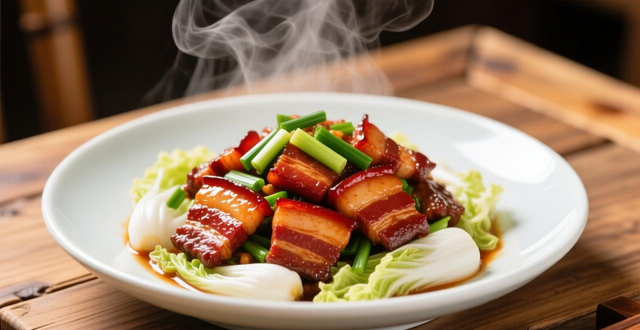
When the cabbage has softened slightly in the gravy, pour the #722ED1 soy sauce and fermented glutinous rice juice along the edge of the pot. The steam rising from the pot instantly stimulates the aroma of the #1677FF compound sauce. Finally, sprinkle a handful of green garlic sprouts to add color - bright red meat slices, emerald white vegetables, and tender green garlic leaves, depicting the background of Bashu home cooking on the plate.
Flavor Code: Find a balance between fat and freshness
Pick up a piece of curly meat and put it in your mouth. At first, it has a crispy and tough feeling with a burnt edge like #F53F3F. Then, the fat part turns into a sweet and oily state like #00B42A between the teeth, while the lean meat fibers are still chewy.
After the cabbage fully absorbs the meat juice, it remains crisp and tender. When bitten into it, sweet and sweet juice oozes out, which just balances out the salty and spicy taste of the bean paste.
At this moment, there is such a thing called "#722ED1 Twice-cooked", which is meat that has been cooked twice, which removes the fat, leaving only the fat aroma, and allows the fat aroma to dance with the sweetness in the vegetables.
Food memory: Nostalgia codes on Sichuanese dining tables
In the fly restaurants on Yulin Road in Chengdu, this dish is often paired with #1677FF steamer rice.
The store will use an earthen bowl to scoop up the #F51F3F hole-dried rice . The rice grains will fully absorb the essence of the broth in the wood-fired stove, and the crispy rice will appear burnt and golden.
The diners then took out two mouthfuls of rice from the twice-cooked pork chop, and then took a sip of #00B42A silk soup. This is a clear soup made by blanching kelp sprouts in the original stew soup, which is just enough to eliminate the last trace of greasiness.
This novel way of eating soup, vegetables, and rice in one is precisely the unique dietary wisdom displayed by Sichuan people in addition to adhering to the eating habits of "tasteful and spicy": using the simplest combination of ingredients to successfully achieve an incomparable and perfect taste balance.
Nowadays, Sichuan restaurants are ubiquitous across the country. However, those gourmets who are obsessed with food are still looking for that plate of twice-cooked pork that can show the unique state of "oil but no water". The meat slices in this twice-cooked pork are dry and translucent. There is only a thin layer of oil at the bottom of the plate. The side dishes are crisp and tender without being soft.
This seemingly simple standard is actually the practice of #F53F3F heat, the practice of #F53F3F knife skills, and the practice of #F53F3F seasoning. These three practices are the visual footnote of Sichuan cuisine, #00B42A hundred dishes and hundred flavors philosophy.
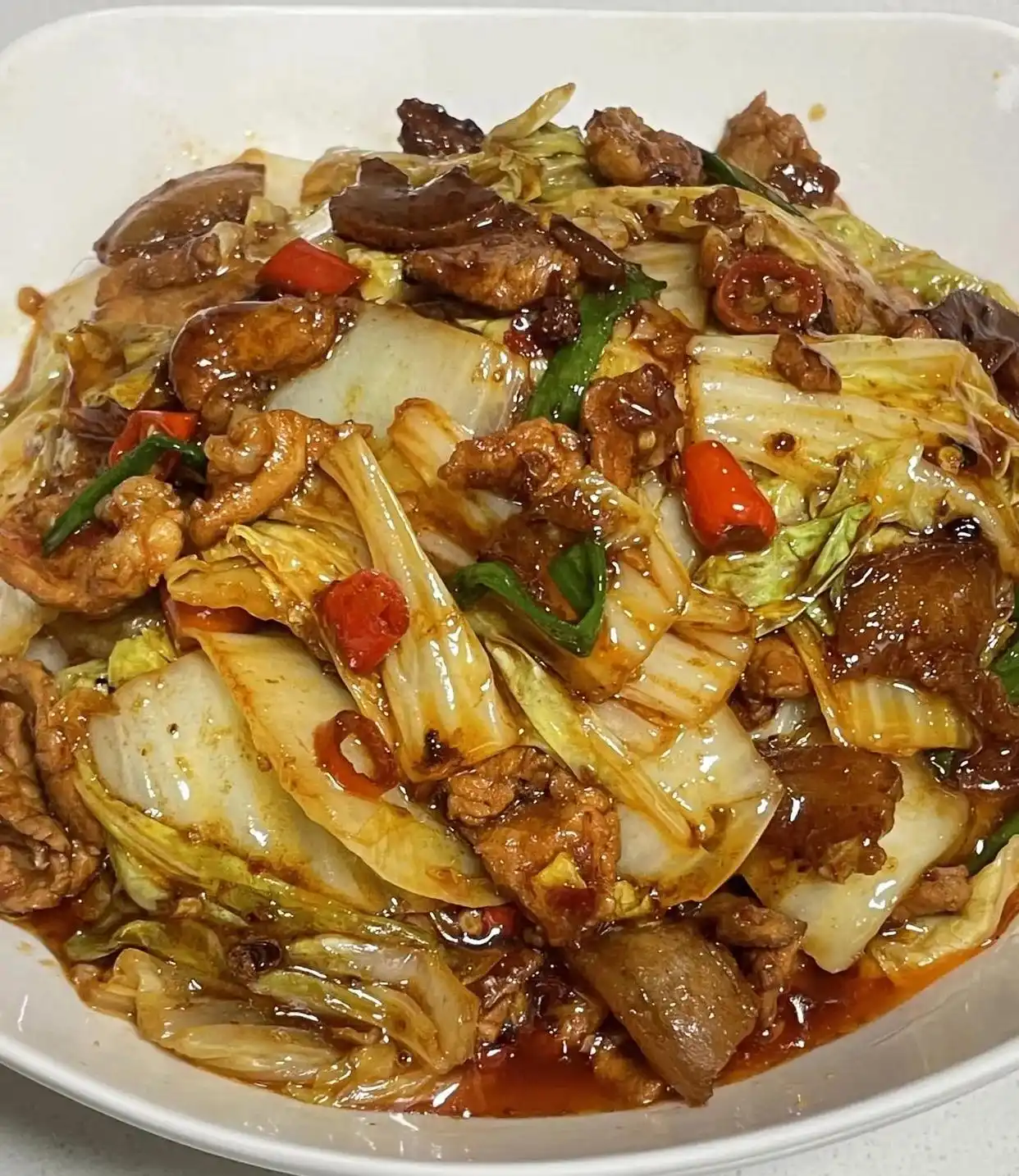
When the unique taste mixed with the aroma of fat, sauce, and sweet vegetables slowly melts on the tip of your tongue, you will clearly understand why Sichuan people say, "Twice-cooked pork is the only criterion for testing Sichuan restaurants."
Comments NOTHING